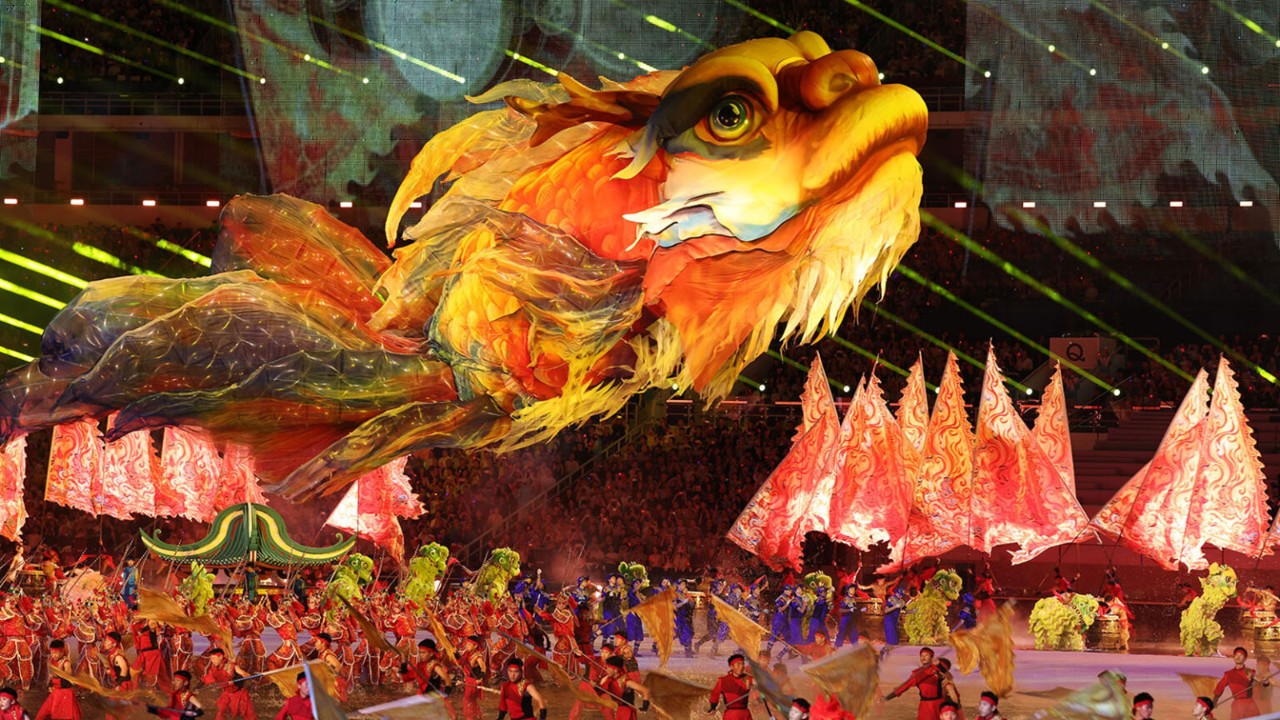

Famous for keeping business and finance activities in sharp and constant focus, all eyes in Hong Kong SAR of China were nevertheless riveted for two weeks in November on the National Games, China’s top-level sports event. Held every four years, in its 15th edition the National Games brought together elite athletes from cities and provinces across China.
To promote the integrated Greater Bay Area (GBA) initiative, it was the first time the National Games were jointly hosted by Hong Kong SAR, Macau SAR of China, and Guangdong province. The GBA will also host the 12th National Games for Persons with Disabilities and the 9th National Special Olympic Games in early December.
According to government figures, the eight competitions – fencing, cycling, golf, rugby sevens, triathlon, marathon, men’s U22 basketball and beach volleyball – brought in an estimated 100,000 tourists, along with thousands of athletes and delegation members, providing a welcome revenue boost for the hotel, retail and F&B sectors.
The broader ambition is to generate long-term economic benefits
Record-breaking
With a record tally of 19 medals, including nine golds, two silvers and eight bronzes – the previous best had been two golds – Hong Kong SAR athletes’ sporting accomplishments are being highlighted as evidence that this is a place where athletes can push the boundaries of their capabilities and achieve success. As well as bragging rights, individual gold medallists each received HK$750,000, silver medallists HK$375,000 and bronze medallists HK$150,000, while each team received HK$1.5m, HK$750,000 and HK$300,000 respectively.
Beyond the athletic competitions, co-hosting the Games is part of a broader ambition of generating long-term sports-related economic and tourism benefits.
Spanning 28 hectares and constructed at a cost of HK$30bn, with a 50,000-seat stadium as its centrepiece, the Kai Tak Sports Park – once the nerve-racking landing point of the former international airport – has been designated to play a pivotal role in developing sports as an industry. In his September policy address, Hong Kong SAR’s chief executive John Lee announced a five-pronged approach to sports development, including greater funding for elite athletes and support for international events.
Promoting services
Citing how athletes and members of sports delegations were able to enter and depart in a matter of seconds through contactless immigration clearance channels, government officials and Games organisers have been equally quick to point out the strategic role Hong Kong SAR plays as an East-meets-West ‘gateway’ into the Chinese mainland. As well as flying the flag as a world-class venue for staging sporting events, successfully co-hosting the National Games is seen as an opportunity to promote Hong Kong SAR’s professional services and ‘soft infrastructure’, underpinned by international standards, intellectual protection and global connectivity.
Thought leaders from the sports and business communities have put forward various suggestions of ways that professional services can play a role in driving the regional sports economy. They include coordinating standards, facilitating cross-border collaboration for sports technologies and supporting the development of the GBA as an international sports brand.
After such a demonstration of capability to host a large-scale sports competition, with the 2036 Olympics choice on the horizon and no indication of a Chinese bid to date, there is even talk of Hong Kong SAR, Macau SAR, and GBA cities presenting a joint bid to host that year’s summer Olympic and Paralympic Games.