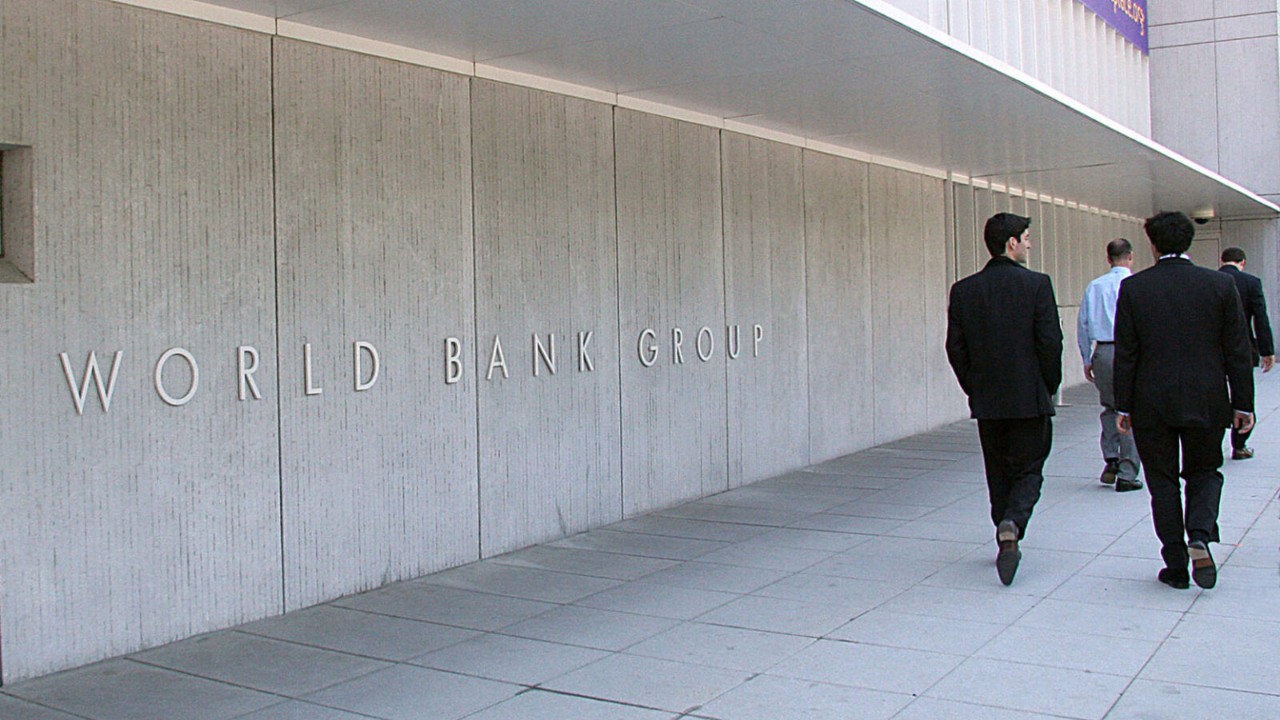
When the World Bank opened its internship programme to ACCA members across Africa in 2024, it offered participants not just the opportunity to develop technical skills and experience but also a chance to see the world from a different perspective. For the 10 finance professionals selected, the journey to the World Bank’s HQ in Washington DC has brought considerable change, both personally and professionally.
Following the announcement that the internships will be extended from one year to two, three of the first internship cohort – Joseph Addo ACCA from Ghana, and ACCA affiliates Muhidin Gwiyama from Tanzania and Percis Mukyala from Uganda – reflect here on their experiences in the US capital and their hopes for the future.
The climate shock was just the beginning of an adjustment to a new life

Something special
For Joseph Addo, landing in Washington DC was an experience he will never forget. ‘The day I stepped out of the airport, it felt like I was standing in the fridge,’ he recalls with a smile. It was his first time away from Ghana, and the climate shock was just the beginning of his adjustment to a new life.
Addo’s route to the World Bank had begun at the University of Ghana Business School, where he read banking and finance. Initially, accountancy seemed unappealing. ‘I always thought accounting was too straightforward,’ he explains.
But a lecturer persuaded him that professional qualification could open doors, and with encouragement from his father, he embarked on the ACCA qualification while working full-time – first at Ecobank Ghana, then with Viking Offshore – in a balancing act that required real commitment. ‘It was that struggle of working, taking exams, falling sick, recovering,’ he says, ‘but ultimately it was a fulfilling journey.’
By December 2023, Addo had completed his ACCA studies. Offers from local organisations followed, but when a message from ACCA flagged an internship opportunity at the World Bank, he applied. ‘I was a bit sceptical, but the thing that caught my attention was the fact that it was ACCA. I knew if they were advertising this opportunity, it was something worthwhile for sure.’
Completing the cohort
The other seven participants in the World Bank’s inaugural internship programme in partnership with ACCA are: Mabel Etornam Afeke (Ghana), Vincent Tetteh Donor (Ghana), David Oluwatamilore Durowaiye (Nigeria), Hazel Asantewaa Kisi-Dankwa ACCA (Ghana), Primrose Mashushire (Zimbabwe), Stephen Nyakwaka (Kenya) and Sarah Mohamed Sharif (Zimbabwe).
At the World Bank, like his fellow interns, Addo works in the budget, performance review and strategic planning function, supporting internal clients such as treasury and accounting & finance. His role blends technical analysis with customer service.
‘It is more about being a cost accountant who knows how important customer service is,’ he says. Forecasting staffing costs, preparing reports and advising on financial planning are all part of his remit.
‘You learn to control your emotions and keep your head’
The work has been both demanding and rewarding. ‘There are days where I’m physically exhausted, but there’s a smile inside me – it’s been a good day.’
Beyond technical skills, Addo highlights the importance of emotional intelligence. ‘You learn to control your emotions, keep your head and focus on your work. You don’t let what the next person is saying or doing affect your output.’
Looking ahead, Addo is preparing to take on more client-facing responsibilities. ‘Now I’m going to be at the front end,’ he says.
Transferable skills
For Muhidin Gwiyama, the path to the World Bank was less direct. He began studies in mechanical engineering at the Beijing Institute of Technology in China’s capital but was forced back home by the Covid-19 pandemic. Back in Tanzania, he looked for a new direction. ‘With a degree that is as practical as engineering, you wouldn’t be able to do it online,’ he explains.
Both his parents were accountants, and ACCA offered a way forward. ‘I thought, okay, why don’t I give it a try?’ Starting from scratch, he completed all 13 ACCA papers and in 2022 joined EY Tanzania, moving rapidly up the ranks to audit senior.
An unexpected email then changed everything: he had been recommended for a World Bank internship. ‘It was beyond my wildest dream,’ he says. After a competitive process, he was accepted.
Moving to Washington required adjustment, he admits. ‘Life here is very different. For one thing, it’s much more convenient – the transportation, everything, is just on time.’
Having cousins nearby eased the transition, though the higher cost of living was a shock. ‘I call it a mental model shift,’ he says.
‘The skills that I’d say are transferable are mainly client skills’
At the World Bank, Gwiyama also works in budget, performance and strategy, advising regional teams. ‘We are their trusted financial advisers,’ he says. ‘I use the example of staff costs because it’s the largest cost we manage. We sit with the client, discuss their plans and advise them on what they can afford.’
His role requires both technical ability – he uses tools such as SAP and Power BI – and credibility with clients. ‘The skills that I’d say are transferable are mainly client skills: talking to a client, advising a client, having that credibility.’
In the future, Gwiyama hopes to move into a permanent role at the bank. ‘They are equipping us to go to those interviews and explain what we do,’ he says. For now, he is focused on making the most of his extension, which runs until November 2026.
Finance with purpose
Percis Mukyala sees her time at the World Bank as a chance to merge technical expertise with a broader purpose. Her ACCA qualification has helped her to build a career in numbers and analysis but for her, the internship is all about impact.
Working in budget planning, Mukyala helps internal clients – the bank’s executive and corporate functions, specifically the board and corporate secretariat – manage their financial budgets and prepare for future needs, she says. ‘It’s about helping teams plan, manage and understand their budgets so they can deliver on the bank’s mission.’
‘It’s about contributing to solutions that change lives’
She has welcomed the diversity of people she has experienced during her time at the bank. ‘The bank is so diverse. You meet people from everywhere. That has been such an enriching experience.’ While adjusting to life in Washington has required her to build networks, it is an opportunity she has embraced.
For Mukyala, who previously worked for Kampala-based GiveDirectly, an NGO which gives cash to families living in poverty, the internship is not just about learning new tools, but also about helping to drive global development. ‘This is not just about numbers; it’s about contributing to solutions that change lives,’ she says.
A shared journey
Though their paths differ, Addo, Gwiyama and Mukyala share a common thread: adaptability and a desire to use finance as a tool for positive change. From Accra, Kampala and Dar es Salaam, each has carried their skills into a global arena.
At the World Bank, they have discovered not only new technical expertise but also the importance of cultural understanding and professional credibility. And for all three, the World Bank internship is more than just a placement. It is an experience that equips them for international careers, whether that’s back home or somewhere else in the world.
Investment in diverse talent
‘One year into the World Bank’s partnership with ACCA, the internship programme has been a true win-win – an opportunity for the interns to learn, grow and share their expertise across diverse areas of the Bank’s work. We have seen firsthand how investing in agile, skilled and diverse talent strengthens the World Bank’s mission and future, and hope the career experience the interns have gained will stand them in good stead when they move on to new, different opportunities at the end of their internships. We are deeply grateful to them for their dedication and proud of the impact they are making.’
Samuel Munzele Maimbo FCCA, vice president for budget planning and strategy, World Bank


