
For someone with a penchant for puzzles, like Vivienne Lutwama FCCA, forensic accounting is the most natural of fits. ‘I like to problem-solve,’ explains the ethics and compliance lead at the Johannesburg regional HQ of engine-maker Cummins. ‘And a lot of what you’re doing with forensic accounting is working with various types of information, or limited information, and having to piece it together to tell a story.
‘In fact, one of the things that maybe is a tell-all is that I enjoy jigsaw puzzles. That’s what I do in my spare time.’
‘My mum was running a company and often had to deal with theft and fraud’
Swazi start
Lutwama hails from a small city in landlocked Eswatini (Swaziland), in southern Africa. The tiny country is known as a place of slow and traditional rural lifestyles rather than a financial crime hotspot. So how did she end up becoming a fraud fighter at a multinational Fortune 500 company?
‘My mother was a business owner who studied economics and statistics, my father was an architect and my grandfather a professor,’ she explains. ‘My parents always wanted us kids to get a broader education outside of Swaziland, so I did all my high school and university in South Africa.’
CV
2024
Ethics and compliance lead in Africa, the Middle East and Central Asia, Cummins, Johannesburg, South Africa
2018
Senior manager for AML and financial crimes, then director of AML and compliance audit oversight, Royal Bank of Canada, Toronto
2017
Financial crimes consultant, Wells Fargo Bank, Toronto
2015
Senior associate, forensic services, PwC, Toronto
It was in South Africa that she discovered forensic accounting – while speaking to her high-school basketball coach. ‘She asked me what subjects I was enjoying, and I said, “Accounting – but I don’t want to be a traditional accountant.”’
As luck would have it, her coach was dating a forensic accountant at the time. ‘She said he had a lot of money and got to travel a lot, so naturally I did my research. Because my mum was running a company at the time she often had to deal with things like theft or fraud. I saw how I could impact her company for the better.’
‘It was a male-dominated discipline, so I had a mentor and networked’
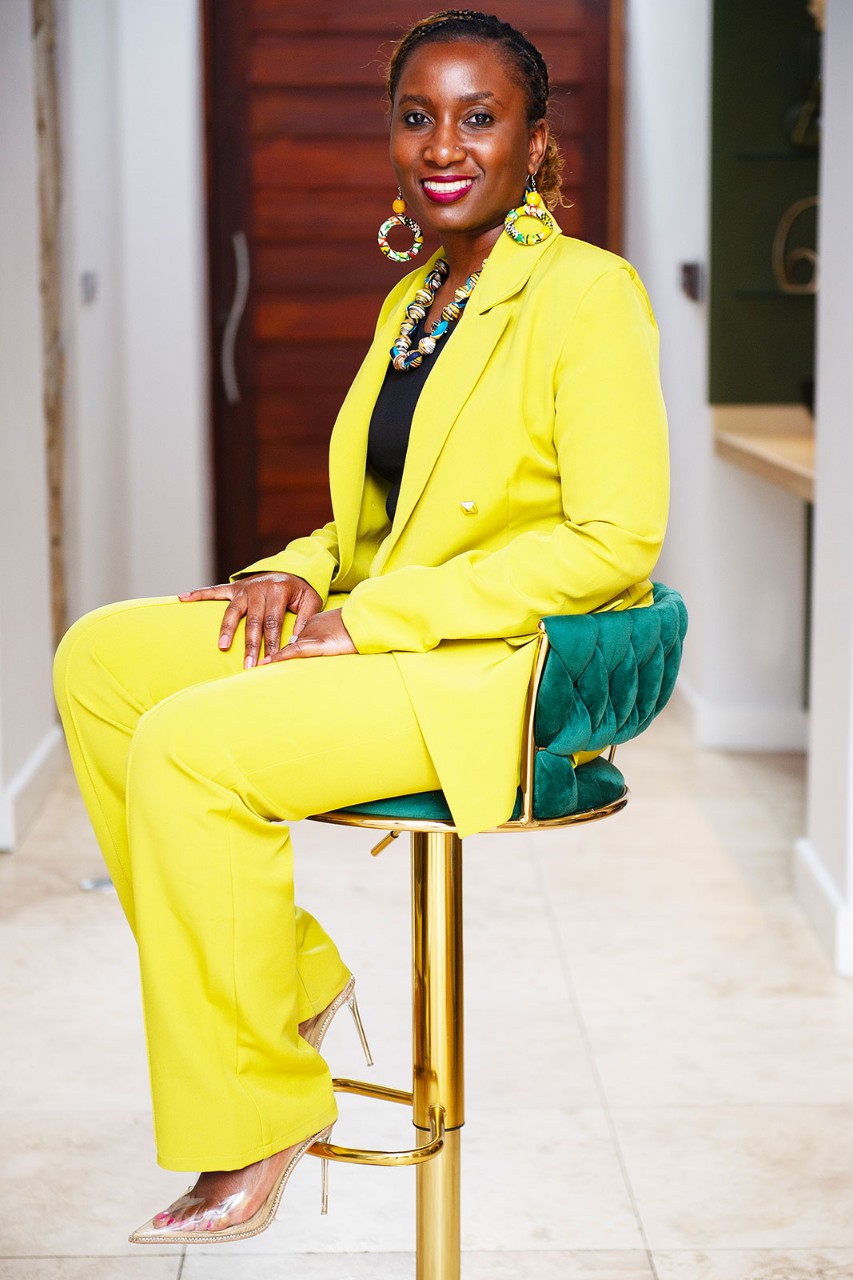
Armed with a degree in financial accounting from Cape Town University, Lutwama moved to Canada to study forensic accounting and complete her ACCA programme. ‘There weren’t any options in South Africa at the time to specialise in forensic accounting, so I decided to go to Canada,’ she explains. At the same time, she decided to study for an accounting certification that was globally recognised. ‘I chose ACCA because I wanted a designation that would be recognised wherever I decided to go.’
Gender challenge
After qualifying, Lutwama began her forensic career at PwC in Toronto in 2015. ‘It was a male-dominated discipline, so I found it important to work with a mentor and network within the field.’ After three years at the Big Four firm, during which time she added membership of the Association of Certified Fraud Examiners (ACFE) to her CV, she moved into the Canadian banking world. There, having gained her Association of Certified Anti Money Laundering (ACAMS) designation, she led high-performing teams of anti-money laundering (AML) experts providing assurance and oversight on financial crime risk.
For accountants aspiring to enter the field of forensics, she points out that an investigator mindset is not something that can be easily taught. ‘You need to have an eye for detail, be naturally inquisitive and able to identify where things look odd.’ She also points out that the role can have dramatic real-life impacts, whichever side you’re on, so you need to treat every engagement with honour, respect and empathy, as people’s lives can be changed irretrievably as a result.
Her current role is a far cry from her PwC days. ‘When I started, we would get bank statements from a mom-and-pop shop, for example, and they’d still be using old-school paper statements. We would have to insert everything manually into an Excel spreadsheet. Today, we use optical character recognition, AI, machine learning and deep analytics to detect anomalous transactions.’
‘I wanted to raise my little girl back home’
Back to Africa
Although Lutwama was on the fast track to the C-suite in the Canada’s banking sector, she decided to return to South Africa. ‘It’s all about family ties,’ she says. ‘I wanted to raise my little girl back home where we had lots of family support.’
Now, as ethics and compliance lead for a significant player in the diesel engine and power generation sector in southern Africa, Lutwama’s day is filled with developing policies and anti-bribery and corruption programmes, supporting financial crime investigations and evaluating major compliance risks. So how does her experience in Canada’s highly regulated commercial banking sector translate to the African and Middle Eastern operations of a powertrain manufacturer? ‘Both companies have to adhere to the highest governance standards, local and international, and both have to take into account different nuances across the globe,’ she says.
In a nutshell
Founded in 1919 in Columbus, Indiana, Cummins is a publicly listed company specialising in the design, manufacture and distribution of engines, engine components and power systems. Its best-known product is arguably the 5.9-litre diesel engine, the ‘12-valve’, used in Dodge/Ram pickup trucks since 1989.
The company is ranked 129th in the Fortune 500, operates in 190 countries, employs over 75,000 people globally, and reported record revenues of US$34.1bn for the 2024 financial year. The Johannesburg office is the regional HQ for operations in Africa and the Middle East.
‘There must be no perception of bribery or corruption’
However, she admits that Africa is a different animal altogether. ‘When it comes to compliance – and dealing with local government officials specifically – we have to make sure there’s absolutely no perception of bribery and corruption, so we have specific guidelines on how those kinds of transactions need to be handled. Building a robust compliance programme for the entire region means first understanding how local rules and regulations actually work.’
When Lutwama isn’t leading the development of anti-money laundering and compliance frameworks, she’s spending time with her husband and three-year-old daughter – or chasing adventure. Her holidays are packed with high-energy activities like bungee jumping, paragliding and jet-skiing. ‘I haven’t jumped out of a plane yet,’ she laughs, ‘but that’s not off the table either.’


