
Businesses not only need to be quicker on their feet these days – they increasingly have to believe the unbelievable when it comes to strategy.
This is happening in small things. Who at the fast-food chain Taco Bell would have predicted that with AI in place, a drive-in customer could manage to place an order for 18,000 water cups and find that, as a result, the entire system goes down?
Or who could have predicted that a corrugated packaging outfit might, almost overnight, decide to start borrowing money to buy crypto tokens relating to an entirely different line of business? Or that a simple change to a corporate logo might bring down the thunderous ire of the US president?
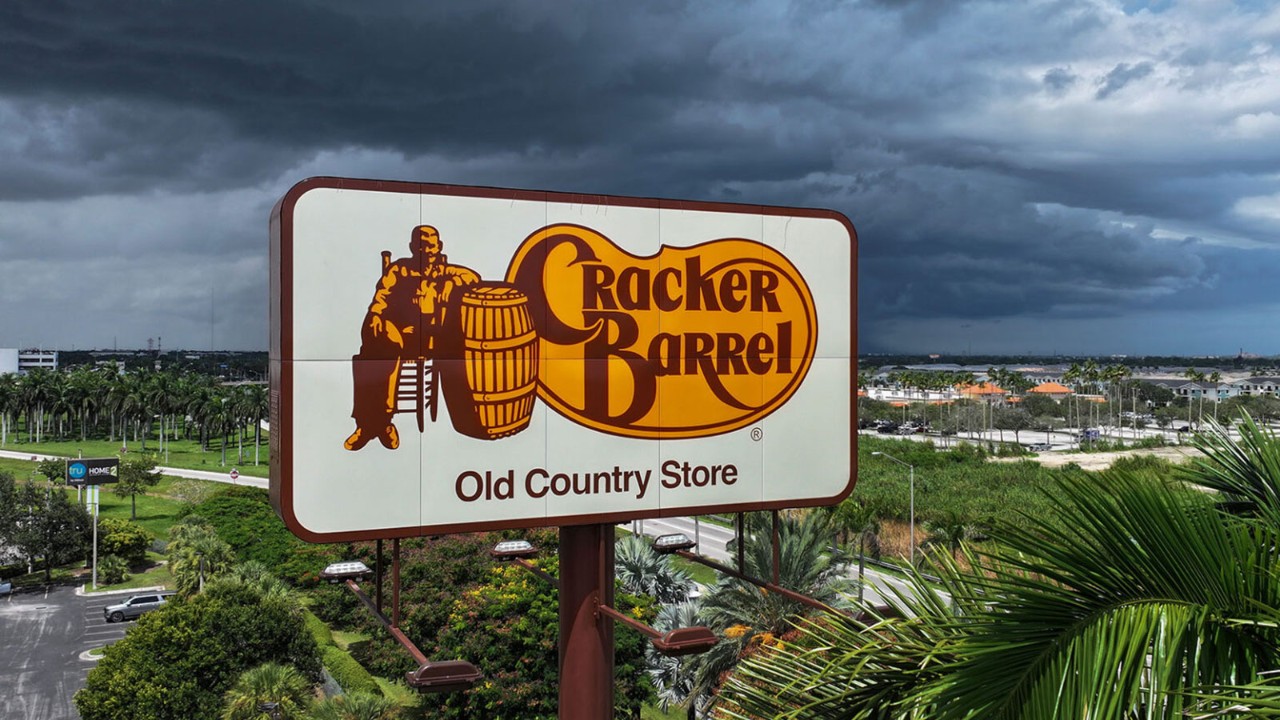
As some readers might know, there is a chain of restaurants, originally sited alongside petrol stations, mostly across the southern US states, called Cracker Barrel. It portrays itself as a deeply old-fashioned, salt-of-the-earth sort of a place. Next to its name on its signboard was a drawing of an old bloke in dungarees, known as Uncle Herschel (uncle of the founder Dan Evins), leaning on a barrel. The company decided it was time to sharpen up its logo and drop the old chap. Not a big deal you might think.
Getting rid of ‘the woke’ would not be enough – the company had to be ‘broken’
In fact, the company’s history doesn’t stretch that far back. It was founded in the same year that The Beatles released Sgt Pepper’s Lonely Hearts Club Band: 1967. But uproar ensued, not among the elderly customers who perhaps identified with Uncle Herschel, but among young activists looking for wokeness, even down in the cracker barrels.
One prominent enemy of what he described as ‘wokification’ insisted that getting rid of ‘the woke’ would not be enough to teach it a lesson – the company had to be ‘broken’.
The deck beneath the corporate feet is starting to tilt wildly in all directions
Donald Trump Jnr pitched in. ‘WTF is wrong with @Cracker Barrel??!’, he posted. And at that point the US president himself decided that he had time while trying to broker agreements between most of the warring countries on Earth to devote his energy to asking Cracker Barrel ‘to admit a mistake’.
No one at the company could presumably have imagined that tidying up its logo to better reflect the image they wanted to portray to customers would have created a firestorm involving the highest office in the land.
Green wokery
Corporate decisions and corporate strategy ought to be relatively straightforward. A quick application of vim and vigour tempered by common sense is really all that is required. The day-to-day running of a company is usually the hard part. But increasingly we live in times when the deck beneath the corporate feet starts tilting wildly in all directions.
When it comes to business, people in the US have generally never had a strong grasp of what the rest of the world is doing — and realistically, they haven’t needed to. They have a domestic economy of such gargantuan size that they can get by without looking beyond their own borders. Hence their antipathy towards International Financial Reporting Standards. They have never seen the point. And certainly don’t feel that they should join in with anything international.
Rules suggesting companies should show the effects of climate change were simply ‘political fads’
Back in April, the US president put his own man in as head of the Securities and Exchange Commission, the US markets regulator, and sure enough he announced this month that rules suggesting companies should show the effects of climate change and sustainability issues were simply ‘political fads’, and he threatened to remove any funding from the international outfit suggesting them.
Anyone running a company in the real world must be scratching their heads. Sense doesn’t come into any of this.