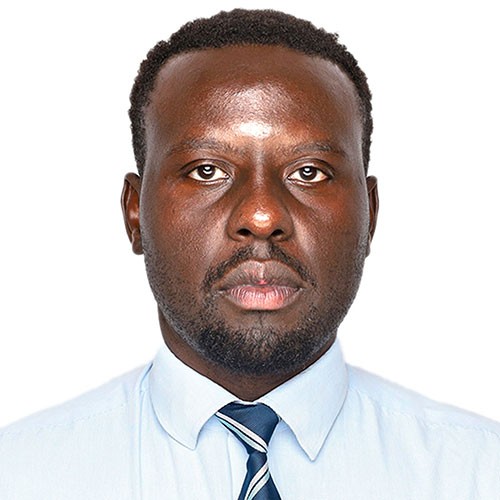
When I was growing up in Jinja on the shores of River Nile, I met the World Bank president, James Wolfensohn. His visit to our school was broadcast on national TV and it was then that I realised what a big deal the World Bank is, especially for a developing country like Uganda. It may have been the moment that set me on the path to accountancy.
Fast forward three decades, and I am a health economist and finance specialist with experience in both public and private sectors. Along the way, I have worked at KPMG as a public financial management specialist, and also with USAID, Uganda’s Ministry of Health, and print and media broadcast company New Vision in various financial roles from advisory services to project accountant.
In 2023, with fellow alumni from the London School of Economics and Political Science, I co-founded the not-for-profit Alliance for Policy and Health Economics (APHE). APHE provides technical assistance (budget execution and impact analysis, development of risk management frameworks, etc) to donor-aided health programmes, with a focus on resource-constrained institutions in Sub-Saharan Africa. Our clients include Uganda’s Joint Clinical Research Center, its AIDS Commission, Nakasero Hospital and Ministry of Health.
USAID funding cuts could trigger a wider collapse of aid globally
East Africa’s overburdened health systems are unable to effectively reach underserved populations. Recent trends also show a flatlining of resources for health as a proportion of national budgets, yet demand is increasing and access barriers persist. Public finance management in Uganda needs to integrate health financing principles, especially resource pooling. By decentralising formulation and allocation processes, we could draw up health budgets that are more responsive to localised priorities, especially with financing from donors operating at the national level.
The reduction of US government assistance, including USAID, has certainly impacted our region. Indeed, it could still trigger a wider collapse of the aid sector globally. Accomplished professionals are pivoting away from aid to new fields, leading to sector-wide losses of experience and knowledge. Governments and organisations are adapting budgets to close the gaps that have emerged.
Smaller firms have developed what used to be Big Four capabilities
AI is a game-changer. I expect it to improve the quality of services by reducing learning curves for finance staff. It should also lead to the development of more uniform knowledge platforms and make firms more responsive to client needs. However, surrendering certain services to automation and machine learning could bring risks, which must first be considered.
AI may also exert a downward pressure on professional fees. Smaller firms have developed capabilities that used to be the preserve of the Big Four because of the costs of acquiring the right people and knowledge. The result may be a fragmented industry, with the emergence of firms servicing highly specialised niches.
My degree in health economics gives me access to a niche where financial experience is scarce
Moving from corporate finance to health financing and fund management at Uganda’s Ministry of Health was a big step outside my comfort zone but it also proved a major learning opportunity. It was a multi-stakeholder environment, and the team achieved a great deal, setting Uganda’s immunisation system on a firm financial foundation.
Another challenge was undertaking a degree in health economics, policy and management during the Covid-19 era. The hard work was worth it, though, as it gave me access to a professional niche often occupied by health economists with little financial experience.
What I enjoy most about my job is seeing its direct impact. I like observing increased health coverage, especially in remote communities, as a direct result of more responsive budgets and better health financing.
‘This is it! Never tomorrow.’ This short saying is my favourite mantra, and reminds me to take advantages of opportunities when they arise.
When I am not at work, I like spending time with my family. I enjoy chess and sudoku, and I keep active through running, boxing, cycling and mountaineering. If I didn’t work in finance I would have liked to have been a pilot, or maybe an architect.