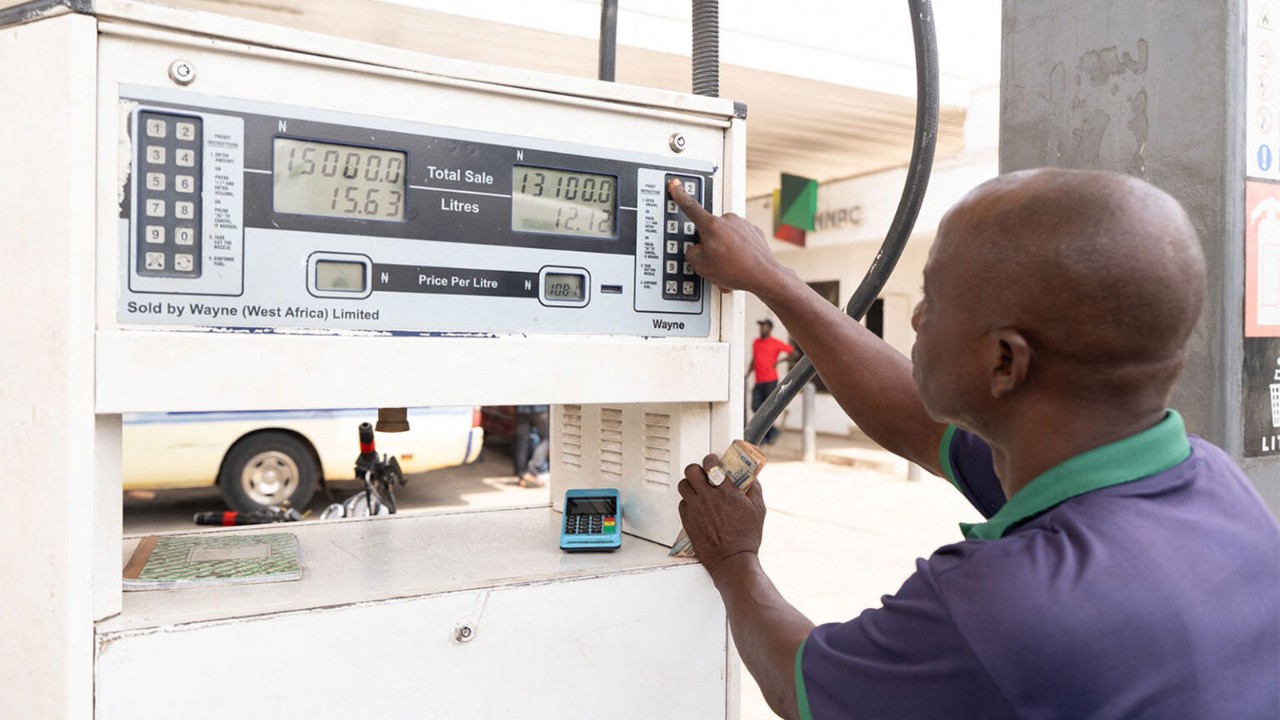

Waiting my turn to fill up at a petrol station in Abuja in mid-March, I observed a keke driver stare at the price board intently as he counted out a few naira notes that he had brought out of his pocket. I could see worry spread across his face as he realised the money in his hand could not buy as much petrol for his motorised rickshaw as it used to. As I write, fuel prices have risen over 30% in Nigeria, and while the driver may never have heard of the Strait of Hormuz or started a war, he was clearly paying for it.
Crude oil prices arising from the conflict in Iran have risen from around US$73 a barrel on the day the war started to as high as US$120 in mid-March. People are feeling the impact at fuel pumps, food markets and government buildings around the world.
More losers than winners
Higher crude prices drive government revenues in Africa’s oil-exporting countries – Algeria, Angola, Libya and Nigeria – but the people in those countries feel the pain from higher fuel costs at the pumps since some of them have eliminated fuel subsidies. For instance, Dangote’s oil refinery in the Lekki free zone in Lagos State imports crude from Nigeria and other countries and so has to sell at cost-reflective prices – there is no subsidy to cushion the direct effect of this.
The fallout of this conflict is a mirror to the face of Africa
For African importers the situation is more painful, as governments have to pay more. They need to consider the size of their petroleum reserves, the effect of higher import prices on their current accounts and FX reserves, and the pass-through of increases in energy prices to inflation.
Then there is the food angle. The fertiliser trade is another casualty of this war. As most African countries enter the planting season, fertiliser shortages will hit food production, which could trigger economic difficulties in the coming months. As the war drags on, African countries with few fiscal buffers may be in for a rough ride.
Closer to the war than others, the countries of North Africa are particularly feeling the heat. Egypt serves as an example of what faces the region. Its main FX revenue streams – tourism, remittances from Egyptians working in the Gulf, and the Suez Canal – are all hit by the conflict. As a result, portfolio investors have pulled billions of dollars out of Egyptian financial markets, and the country has lost some FX reserves.
Seize the day
There is some hope for the continent, though. During a morning run on a visit to Cape Town recently, it struck me how much opportunity the closure of the Strait of Hormuz could present to the Cape. Global shipping is already rerouting around East and South Africa, to the benefit of the ports there. The question is whether African port authorities, logistics operators and governments can move fast enough to capture the opportunity – or whether the continent will watch the benefit flow elsewhere.
The fallout of this conflict is a mirror to the face of Africa. The continent has been poor at planning for periods of instability, with many nations having neither the strategic petroleum reserves to see out the conflict nor the deep, liquid financial markets needed to absorb capital flight. What’s more, there seems to be no coordinated response to the crisis; it is every country for itself.
Passing the stress test
The war in the Middle East is also a stress test, and Africa’s economies are not scoring high on it. The simple reason is the widespread unpreparedness for crises across the continent. The African Energy Bank, which is supposed to help in times like this, is yet to launch. Getting around the continent remains difficult, as Africa’s nations continue to erect barriers where they ought to be tearing them down. Many years after its launch, the AfCFTA free trade area is still struggling, while the adoption of PAPSS as a continental payment system remains slow.
We need to build trade relationships to cushion the next war’s impact
Finance professionals in African businesses and governments will need to help their organisations through this crisis. They must now focus on risk management, hedging FX exposures, reviewing import costs and export revenue assumptions, and advising on supply chain risk. They will have to plan for scenarios that include a prolonged period of elevated oil prices and keep a close eye on sovereign bond spreads for early signs of sovereign distress.
Africa has an opportunity to choose a different path than it has in the past. The nations can choose to begin to build the buffers, institutions and intracontinental trade relationships that would cushion the impact of the next distant war. The keke driver at the pump may not know what the Strait of Hormuz is, but the central banks, finance ministries, state houses and corporate boardrooms across the continent certainly do – and they must act accordingly.

