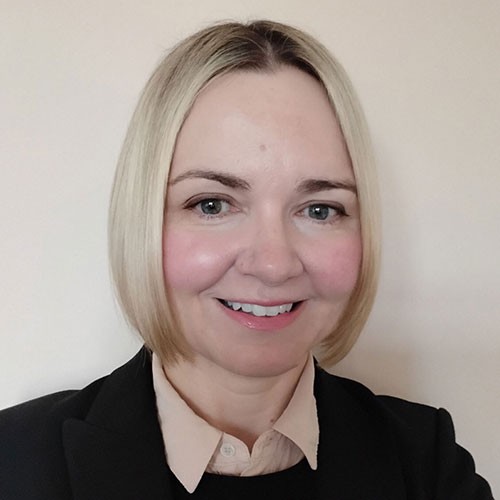
I spent much of my early career in logistics. While transport networks may seem far removed from finance, it gave me a strong foundation in analysis and problem solving, which proved very transferable.
After having my son in 2010, I wanted a career that would offer more flexibility and long-term development, while still being intellectually challenging. Several people suggested accountancy to me, and I had noticed that many women in finance roles worked flexibly, so I enrolled on an AAT course and achieved distinctions in every exam. I self-funded all my qualifications and was proud to be named a global prize winner for the ACCA Audit and Assurance exam.
I started at Warwickshire County Council in management accounting across a range of services. After qualifying, I moved into corporate finance, specialising in capital, where my work focused on technical accounting.
AI feels a little like having an enthusiastic junior colleague
What I enjoy most about my current role is problem-solving. Capital accounting often sits in grey areas, requiring careful judgment rather than straightforward application of rules. I like working through complex issues and then communicating the outcomes in a way that is clear and accessible to others, and especially helping non-financial managers build confidence with their responsibilities.
I see AI as a significant enabler for finance professionals in the public sector, but it also feels a little like having an enthusiastic junior colleague. You still need to apply professional judgment and review outputs carefully but it can accelerate what you are able to deliver. Used thoughtfully and with strong governance, AI should improve insight, efficiency and support better outcomes for our communities.
If I had law-making powers, I would prioritise policies that improve social mobility through education and professional training. Clear, affordable routes into qualifications can change lives and, as someone who self-funded her professional studies, I appreciate how transformative accessible education can be.
Clarity often comes after taking a step back rather than reacting immediately
If I had a guiding principle, it would be ‘pause before acting’. I’ve learned the value of allowing time to think through an issue properly; clarity often comes after taking a step back rather than reacting immediately. Pausing to reflect has proved invaluable in complex areas of my work.
I’m a firm believer in stepping outside your comfort zone. For me, that means climbing Wainwrights in the Lake District, and hiking alone in the Yorkshire Dales and Brecon Beacons. This is a real challenge for me, given my vertigo and notoriously poor sense of direction. However, growth rarely happens with ease, and confidence is built through experience rather than certainty. I also enjoy strength training, playing chess, visiting art galleries and attending concerts. All of these offer a different kind of focus and balance.


