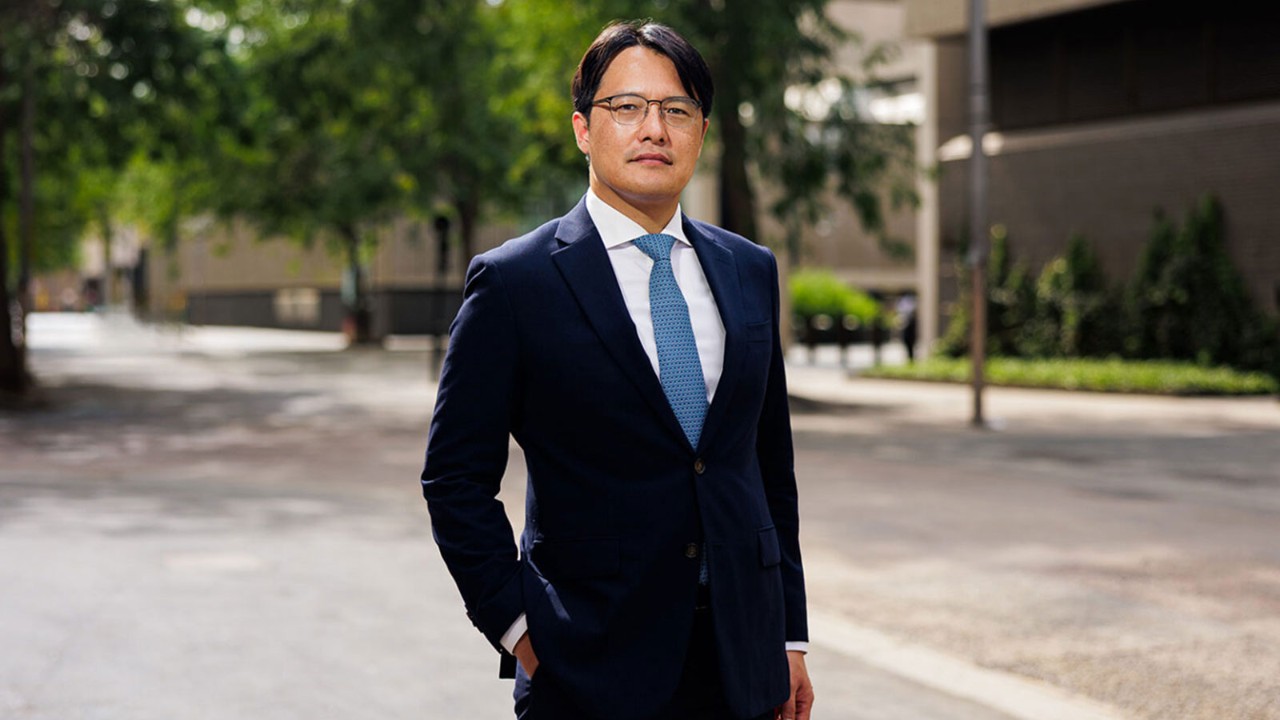
When Seokhoon Ko starts talking about infrastructure, he doesn’t trot out the usual topics of concrete, turbines and billion-dollar investments. Instead, he takes eggs as his theme.
In the Solomon Islands, he explains, many people dream of running small poultry farms. The ambition is simple enough; the problem is that reliable electricity and clean water are not.
‘People want to start businesses but can’t without electricity or clean water’
For decades, the Pacific island nation has relied largely on imported diesel to generate power, making its electricity among the most expensive in the world while average incomes remain among the lowest. Without affordable energy, opportunities for businesses are limited, food production is constrained and even basic services are more expensive.
Which is why the country’s Tina River hydropower project could prove transformative. As a project finance manager with South Korea’s K-water, a project partner, Ko has helped bring together governments, multilateral development banks and international investors to secure financing for what will become the Solomon Islands’ first utility-scale renewable power station. Once operational, it is expected to halve electricity costs, opening the door to new industries, improved infrastructure and greater economic independence.
‘I’ve met local people who want to start businesses,’ Ko says. ‘But they simply can’t without reliable electricity or clean water.’
For Ko, these are the moments that define infrastructure finance. The spreadsheets, financial models and negotiations are important, but ultimately they are a means to an end. ‘Every country needs infrastructure,’ he says. ‘Finance is what makes it possible.’
Beyond the boundaries
Today, Ko is exploring those ideas from another perspective. Based at the University of Bath, he is completing a PhD examining public-private partnerships (PPPs), using the Solomon Islands hydro project as a case study.
‘Many students think they have to work in an accounting firm, but they don’t’
He also teaches accounting and finance, encouraging students to think far beyond the traditional boundaries of the profession. ‘Many students think they have to work in an accounting firm,’ he says. ‘I always tell them every industry needs accounting and finance professionals.’
His own career is powerful evidence for that advice.
An unexpected route
Growing up in South Korea, Ko planned to become an English teacher. After he moved to the UK, those plans changed when a lecturer suggested he might be better suited to accounting. ‘I felt numbers were much easier than English,’ he says. ‘Numbers are genuinely an international language.’
‘We had to convince investors to commit hundreds of millions of dollars’
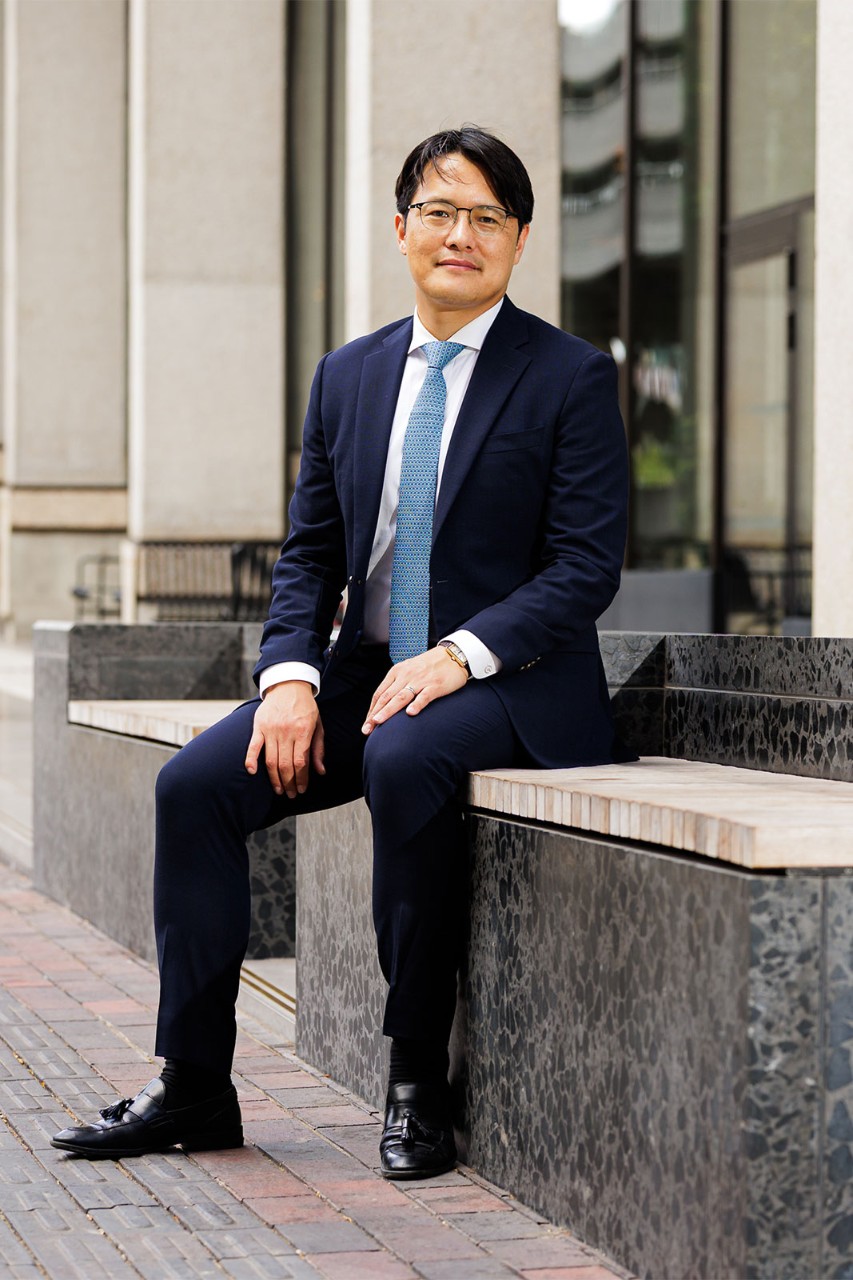
He chose ACCA, attracted by its affordability and flexibility. Studying at the London School of Business and Finance while working a succession of part-time jobs, he later completed an accountancy degree through Oxford Brookes University.
Returning to South Korea in 2012, he pivoted away from accountancy, passing the competitive entrance examination to join K-water, South Korea’s state-owned water utility. Initially recruited for his English skills, Ko helped establish the Asia Water Council, building relationships between governments and organisations across the region before finally moving into project finance.
That move would define the next decade of his career.
Big finance
A hydroelectric project in Georgia brought home to Ko the sheer complexity of delivering major infrastructure. For five years he worked on the Nenskra Hydro development. ‘We had to convince investors to commit hundreds of millions of dollars,’ he says. ‘Every organisation had its own decision-making process, and every risk had to be understood and managed.’
The Covid-19 pandemic and rising costs delayed completion, but Ko still regards reaching financial close as one of the defining achievements of his career. ‘It was a huge professional milestone,’ he says.
While in Georgia, the global recognition accorded to the ACCA qualification became apparent to him when he met an external auditor from KPMG who was an ACCA member. Shortly afterwards, he completed his practical experience requirement and became an ACCA member in 2020.
‘People trust what I’m saying because they recognise the qualification’
It was a decision that continues to pay dividends. Today, when he is advising governments on infrastructure projects, introducing himself as an ACCA member immediately establishes credibility. ‘People trust what I’m saying because they recognise the qualification,’ he says.
Major infrastructure projects also operate under highly specialised accounting rules, particularly IFRIC 12, which governs service concession arrangements such as PPPs. While many of his colleagues have engineering or project management backgrounds, Ko’s understanding of the accounting standards has allowed him to bridge the gap between the technical and financial aspects of complex infrastructure developments.
Broadening perspective
Returning to the UK has brought Ko’s career full circle. It was where he first discovered accounting, where he met his wife and where he now combines research, teaching and practice.
His doctoral research has broadened his perspective beyond energy and water projects to transport, hospitals, schools infrastructure, while his work with the World Bank on the 2025 infrastructure development outlook has reinforced the global importance of effective PPPs. He is also advising African infrastructure projects on PPP through his work as a part-time consultant for a South Africa-based engineering company.
‘If all the risk sits with the private sector, it’s no longer a partnership’
His experience has highlighted one of the biggest challenges facing many emerging economies: ensuring governments and private investors share risk appropriately. ‘PPP is about partnership,’ he says. ‘If all the risk sits with the private sector, then it’s no longer a partnership.’ Helping governments develop projects that international investors are willing to finance has become an increasingly important part of his work.
Building the future
Once he completes his PhD, he hopes to continue working at the intersection of infrastructure, finance and policy. Increasingly, his attention is turning towards the Middle East, where governments are investing heavily in the next generation of energy, transport and public infrastructure.
‘There is huge potential,’ he says. ‘The governments are stable, the investment is there and there are enormous opportunities to develop infrastructure.’
The common thread running through Ko’s career has not so much been accounting as the belief that good finance, applied well, can help power progress.
The CV
2013–present
Project finance manager for K-water in South Korea, which has included a spell as planning manager for the Asia Water Council, and a five-year stint as head of admin and finance for Nenska Hydro in Georgia


