Decarbonisation is now firmly embedded in boardroom agendas. Investors are scrutinising emissions trajectories, lenders are linking finance to sustainability performance, and customers are demanding lower-carbon supply chains.
For mining companies in Africa, this creates a complex balancing act for a sector that is vital for supplying minerals needed for the energy transition but is under pressure to decarbonise.
‘Electricity is the low-hanging fruit’
The major economies on the continent have adopted stringent standards on emissions targets. As a result, the costs of decarbonising are starting to escalate, says Safeera Loonat, head of energy and natural resources at KPMG.
‘There is more forward thinking when there is investment into new operations,’ she says. ‘Decarbonisation, environmental and social responsibilities are now being built into the business case.’
Transition challenges
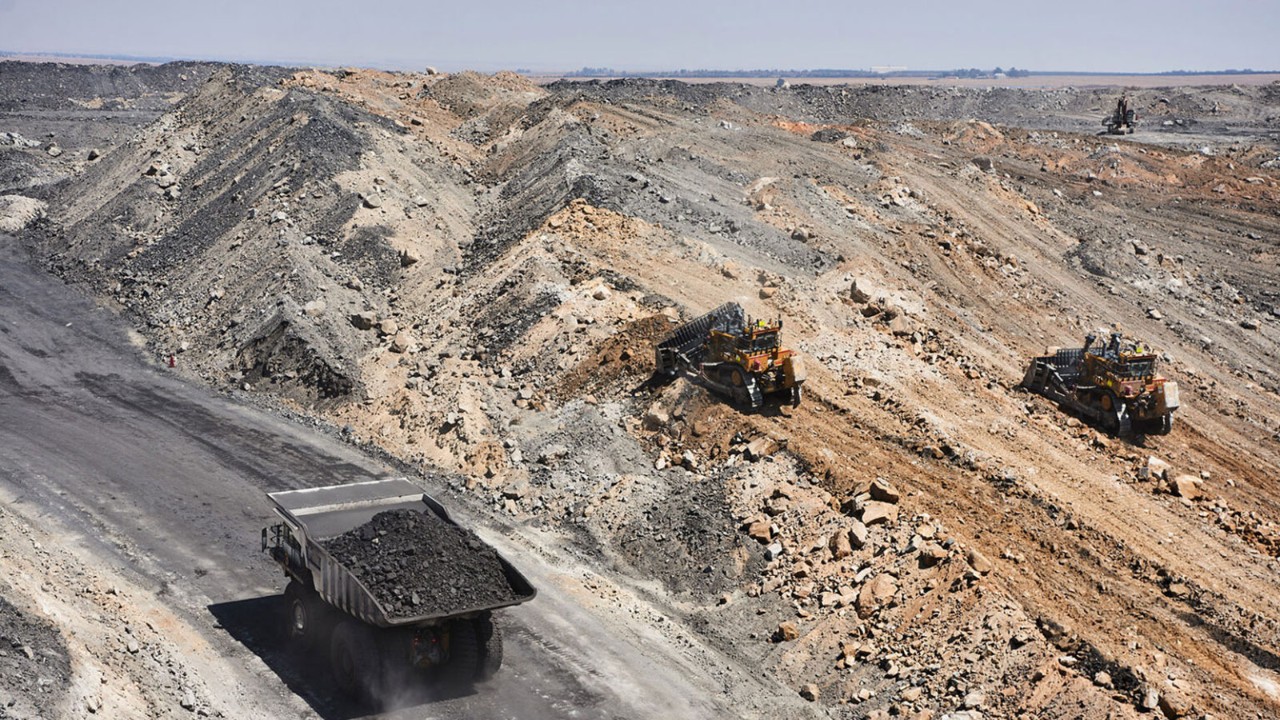
A 2024 global report by mining tech company ABB found that 53% of entities anticipate significant or complete transformation of their operations over the next five years. However, a third reported being behind on achieving their goals. In Africa, decarbonisation hinges on two major challenges: replacing diesel in heavy mining trucks and securing reliable, affordable zero-emissions electricity.
Given investment constraints and risk aversion challenges, electrification – either through better on-site generation or by buying from the market through independent power purchase agreements – serves as a strategic entry point for businesses, says Reinhardt Arp, a manager in the Carbon Trust Africa office. ‘From a technology readiness and affordability perspective it is the low-hanging fruit.’
Examples of different solutions being piloted range from the use of a hybrid hydrogen truck to ‘optimising haulage routes and using the latest equipment that is energy efficient and can crush material more efficiently’, Arp says.
Partnership approach
With many jurisdictions in Africa lacking sufficient renewable capacity and grid infrastructure, mining giant Anglo American has tailored its approach to capital allocation for its decarbonisation goals in the region to sourcing low-carbon electricity.
The company has partnered with EDF Renewables to establish Envusa Energy, which is creating three wind and solar projects in South Africa, known as the Koruson 2 (K2) cluster. Due to go into production this year, the K2 projects are designed to have a total capacity of 520 MW of wind and solar electricity generation.
‘We are already using electric equipment for certain applications’
The model strengthens energy security and supports electrification, ‘which is seen as a central part of efforts to decarbonise the operating mine’, explains Jonathan Dunn, head of climate at Anglo American. He notes that a key driver for electrification is the efficiency gains in switching from fossil-fuel based systems.
Toolbox of options
Dunn says Anglo American aims to have ‘a toolbox of solutions’ integrated into its mining systems. ‘The focus of this work is on electrification but includes battery and other forms of diesel fuel alternatives. We are also looking at options that lower our carbon emissions when transitioning to mining underground in various operating regions,’ he says.
Tackling diesel used in heavy mining equipment, especially haul trucks, is the first step ‘to improve the energy productivity of those machines, increasing the amount of material moved for every litre of diesel consumed’, Dunn adds.
In a further development, in February South African energy and chemicals company Sasol has partnered with Anglo American and De Beers to pilot the production of feedstock for renewable diesel. Since the country has no commercial-scale renewable diesel, this project could offer alternative fuel options for its diesel-dependent industry.
Over the longer term, Dunn says Anglo American is studying options to move away from diesel. ‘We are already using electric-powered equipment for certain applications, such as shovels,’ he says.
Scope 3 solutions
For most mining companies, Scope 3 emissions remain the most complex and least controllable part of the carbon equation. Tracking them requires coordination with suppliers, logistics providers and end users, often across multiple jurisdictions, to ensure data is consistent and credible.
‘Scope 3 is the last one that entities are focusing on because they are reliant upon information from service providers or their own customers to be able to collate the data,’ Loonat says.
As Dunn acknowledges, the use of Anglo American’s products by customers represents the largest share of its Scope 3 emissions inventory – particularly within the steel value chain. ‘There is, therefore, limited influence we can have and almost no control over those emissions,’ he says.
‘There are going to be some unavoidable emissions’
In response, Anglo American is working with customers and technology partners on low-carbon steelmaking solutions ‘with the aim of reducing emissions within the steel value chain’, Dunn says.
While Scope 3 presents a challenge, it also presents an opportunity. Demand for low-carbon materials is gathering pace, driven by manufacturers seeking to decarbonise their own products.
This shift is beginning to create commercial incentives. A ‘green premium’ for sustainable metals is slowly emerging, with buyers willing to pay more for materials produced below certain emissions thresholds.
Competitive advantage
For mining companies, this represents a strategic inflection point. Decarbonisation is no longer purely a compliance exercise; it may become a source of competitive advantage.
‘If you can provide those metals under certain emissions thresholds, that metal would qualify for a green premium, in which case it would be sold as a separate category of metal and you should get a higher return for that,’ Arp says.
Offsetting, meanwhile, remains one of the more debated tools in mining’s decarbonisation toolkit. As Arp notes, emissions reduction should follow a clear hierarchy: avoid and reduce first, then use offsets only for residual emissions that cannot yet be eliminated. ‘If you follow that hierarchy, you can avoid as much as possible, but at the end of the day there are going to be some unavoidable emissions,’ he says.
For mining companies, there is a strategic capital allocation question: is it more effective to spend on offsets today, or to invest in R&D and new technologies that could deliver deeper emissions reductions tomorrow?
‘There are win-win solutions. It is just about understanding where those are, and what the risks of using carbon offsets are in different contexts,’ Arp says. ‘I think they are an effective tool; it is just about using them responsibly.’
Data focus
Ultimately, credible decarbonisation depends on robust, reliable data. As Arp argues, following the mitigation hierarchy starts with ‘having a good footprint in place and understanding where all your emissions are coming from’.
As sustainability metrics become more closely linked to financial reporting, climate performance is no longer a standalone environmental, social and governance (ESG) exercise; it is material to enterprise value.


