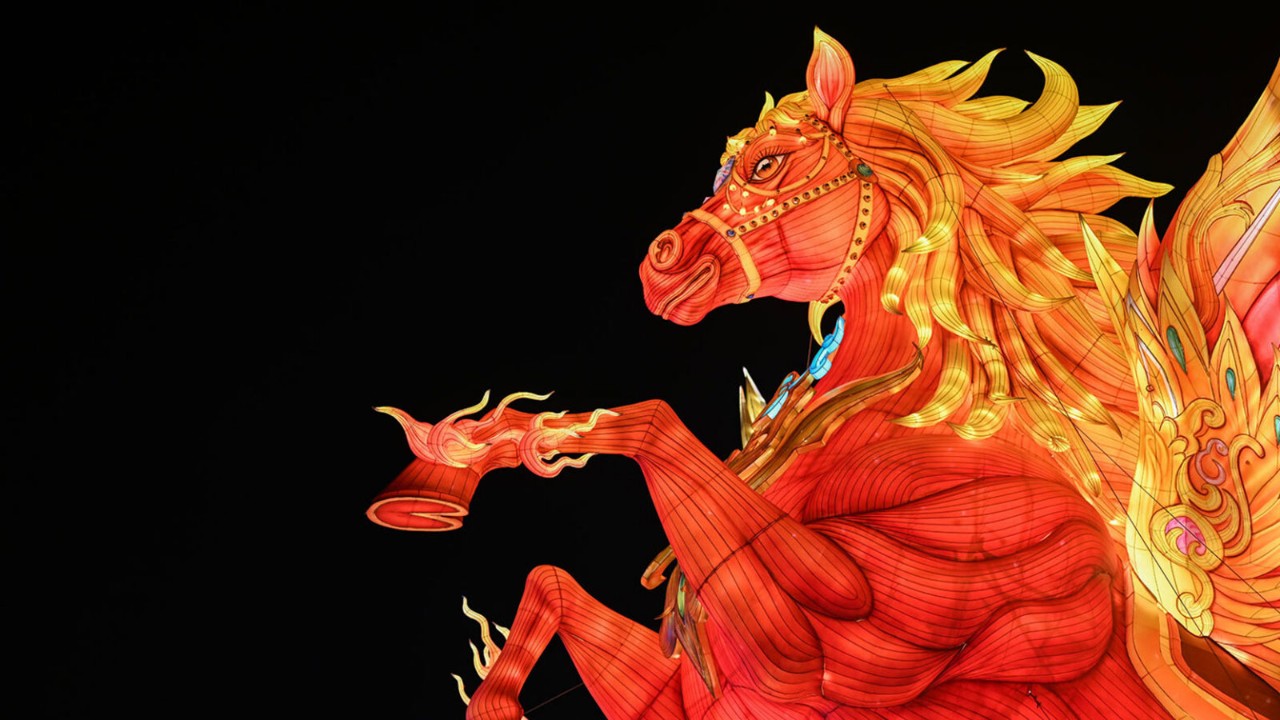

From an equine-themed pyrotechnic extravaganza against the backdrop of an iconic skyline to the thunder of hooves at the Sha Tin racecourse, as Hong Kong saddles up for the Year of the Horse, the Special Administrative Region is also adapting to a new chapter of economic realities shaped by a changing global trade landscape, rapid acceleration of digitalisation and the rise of AI.
Chinese New Year, also known as Lunar New Year, which began on 17 February, marks the beginning of the Fire Horse year, which occurs once every 60 years. Characterised by volatility, unpredictability and change, in Chinese folklore the horse is also a symbol of transformation and fast-moving breakthroughs.
The horse is the seventh animal in the Chinese lunar calendar, which operates on a 12-year cycle and corresponds with one of five elements: wood, fire, earth, metal and water. In Chinese astrology, the interplay between the elements business sectors and their leaders are associated with can have either a positive or negative influence.
Hong Kong looks set to continue to benefit from a line-up of more than 300 initial public offering candidates
As a fire-element year, specialists in ancient Chinese divination predict the Year of the Horse will favour ‘metal element’ industry sectors that generate energy and speed. These include AI, digital technology, telecommunications and the creative industries. Accompanied by high volatility, the financial, construction and legal sectors are also predicted to experience robust activity during the Year of the Horse.
Meanwhile, industry sectors associated with earth and water elements, such as real estate, tourism and transportation, are advised to combine forward-looking vision with disciplined strategy and steady planning. In the age of AI and algorithms, according to Chinese open-source AI model DeepSeek, the Year of the Horse could steer public discussion towards the symbolism of AI being an ‘untameable Fire Horse’ that humanity needs to rein in and harness.
Renewed energy
With macroeconomic factors indicating that Hong Kong’s economy has turned a corner, based on early 2026 data and forecasts, the market looks set to continue to benefit from a line-up of more than 300 initial public offering candidates that saw it claim the 2025 global top spot in terms of capital raised.
According to the Hong Kong General Chamber of Commerce (HKGCC), Hong Kong is ‘galloping’ into the Year of the Horse with renewed confidence and energy. Reflecting a significant increase in optimism among business leaders, a recent HKGCC survey indicated that 48.3% of companies have a positive outlook for the first quarter of 2026, up from about 18% a year earlier. While the overall local business environment is tipped to improve, the HKGCC survey also noted that slow-moving global growth, heightened geopolitical risks and the growing influence of AI will continue to reshape markets.
Similar sentiments were expressed at the Asian Financial Forum held in Hong Kong at the end of January, when the findings of a joint survey released by EY and the Hong Kong Trade Development Council revealed that more than 90% of respondents expect high levels of uncertainty to persist throughout 2026. The majority of respondents identified technology disruption, geopolitical tensions and slowing economic growth as the top risks. On a more positive note, more than half (54%) of respondents indicated that they plan to increase their business activities, with the Asia-Pacific region as the anchor for expansion plans. Notably, 78% of respondents consider Hong Kong a critical hub or important node that enables their Asia growth strategies.
In CLSA’s annual tongue-in-cheek Hang Seng Index Feng Shui guide, the brokerage and investment firm predicts that Hong Kong’s bourse will be driven by ‘stable’ upward movement, with the stock market peaking between November and early December. Continuing with the equine theme, CLSA expects the second half of 2026 to resemble a horseriding dressage performance, marked by ‘two steps forward, one step back’.


