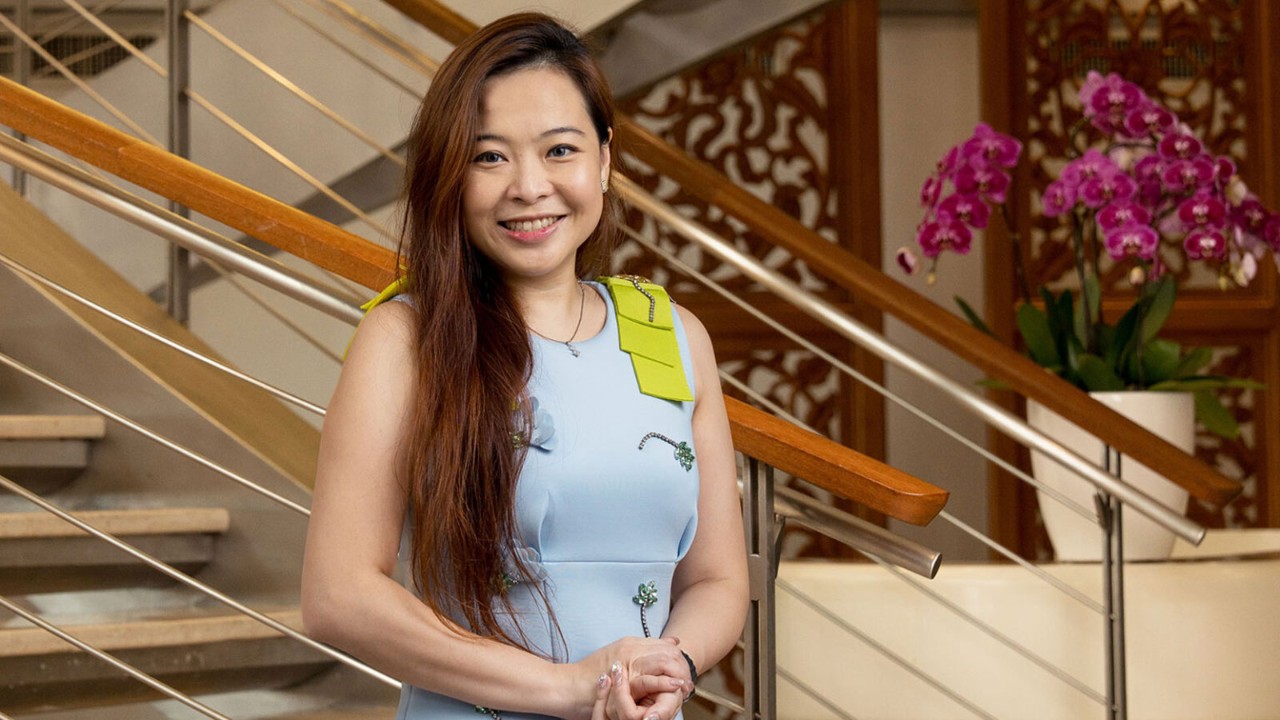
As climate change and sustainability services co-leader for EY Asean, Arina Kok focuses on supporting organisations to drive sustainability, finance and technology dynamics. With increased regulation, taxonomy and integration of stakeholders’ needs, organisations are placing greater focus on identifying and implementing practical solutions.
Kok has led ESG (environmental, social and governance) strategies for corporates and held discussions with government agencies, Bursa Malaysia, Bank Negara Malaysia and the Securities Commission Malaysia on ESG, technology and sustainable finance. She has also been involved in discussions on green and social policies, taxonomies and standards for Malaysia, including the development of the Sarawak 2030 Sustainability Blueprint with ministries and public sectors.
Fortunately, a sense of urgency has always been one of Kok’s strengths. She believes that sustainable businesses consider the changing needs of stakeholders, embrace innovation and focus on value creation beyond profitability for broader society. Her career started 20 years ago, when, after three years of study and while still awaiting her final ACCA results, EY made her an offer. ‘This was my opportunity to immediately plug into what’s happening across all jurisdictions through one global network,’ she says, adding that she grasped the opportunity to make her mark at Ernst & Young Consulting (EY Malaysia).
‘There’s increasing momentum in renewable energy initiatives across parts of ASEAN’
It’s no surprise that she views sustainable solutions that are bankable and scalable to be strategic key drivers of sectoral growth and a source of competitive advantage. ‘There’s increasing momentum in renewable energy initiatives across parts of ASEAN,’ she says. ‘Wind and solar power in Vietnam, for example, while Malaysia is ramping up on hydroelectric and seeking potential in bioenergy and hydrogen.’
What’s more, she adds, most countries are rolling out sustainability policies, which enables public-private partnerships and corporates to provide feedback. ‘This can help the region take a more targeted approach to potential solutions, even having a progressive approach on carbon taxonomy and enabling pragmatic transition towards green economy.’
Driving innovation
In Malaysia, the climate change response has a particular urgency.
In January 2025, the country became the first ASEAN jurisdiction to adopt IFRS Sustainability Disclosure Standards with transition reliefs, requiring listed and large non-listed companies to report sustainability-related financial information. It has also introduced a carbon tax (from January 2026, initially focused on the iron, steel and energy sectors).
‘CFOs can use knowledge and intel to drive a new business model’
Meanwhile the rollout of the Carbon Border Adjustment Mechanism (CBAM) has put a price on the carbon emissions of goods exported to the European Union. Kok says: ‘With approximately 75% of Malaysia’s exports to the EU expected to be affected by CBAM, this is no longer just an environmental issue, it’s a critical profit and loss or survivability consideration.’
She notes that these changes, particularly the IFRS S1 and S2 standards, are prompting some organisations to explore new approaches in managing risks and opportunities. ‘Executive teams are beginning to look beyond risk management to enhance or sharpen their focus on bankable sustainable solutions.’
For CFOs, evaluating opportunities in this ‘window of growth’ requires a cost-benefit analysis and value-based budgeting approach – as would be the case for validating any investment decision – that takes into account both business and societal needs. ‘Having done the cost optimisation mechanism, CFOs can use that knowledge and intel to drive a new business growth model,’ she says.
Foundation of success
Financial acumen is a familiar and critical competency for Kok. Her own financial astuteness was evident at a young age, inherited from her banker father, who was the family’s sole breadwinner. ‘I was blessed to have received a good education from my parents’ efforts, and helped support my siblings to complete their education,’ she says.
Kok’s forward thinking was apparent in her choice of profession. ‘ACCA was the fastest route to a professional career, and the calibre of the qualification also appealed,’ she says. ‘I saw an established record of consistent job security among ACCA graduates entering international firms, and a lot of successful CFOs also come from ACCA.’
Her interest in advancing sustainability strategies and finance sets a clear direction in helping policymakers and Malaysian companies navigate the requirements of both CBAM and the local carbon tax. ‘Quite a number have already developed their reporting mechanism,’ she explains. ‘Some companies, such as those operating out of Sarawak using hydroelectric power as their source, are better positioned than exporters who are reliant on coal power. So while CBAM may bode well for some companies in terms of savings, we do see it posing a number of challenges for others.’
‘We’ve helped companies to develop their net-zero transition strategy’
Day to day
Kok’s role at EY involves helping clients to identify strategic opportunities to transition to a low-carbon economy, address emerging ESG risks and build resilience in the face of systemic shocks such as climate events. ‘We’ve done quite a number of advisories helping companies to develop their net-zero transition strategy, including financing,’ she says. ‘Optimising solutions through digitisation is a big part of this. For example, we helped a large utility company to develop an executive dashboard focused on ESG performance, monitoring over 150 ESG indicators backed by 1,000 data points.
‘We also supported our clients to understand how external ESG ratings and performance, such as MSCI, may be used by investors to evaluate a company’s greenness and performance.’
So what is the role of finance leaders in achieving sustainability-related ambitions and targets? ‘The key function is to assess ESG performance through a connected lens with economic value – for example, by examining various climate scenarios and the cost implications, and stress-testing the financials against incoming tax regimes or climate disasters,’ Kok explains. ‘If finance professionals are able to develop these evaluation capabilities, a lot of C-suites can be better advised on decision-making, especially on cost optimisation, valuation of deals, risk mitigation and adaptation, sustainable finance solutions and the development of new products or services.’
‘The firm allows me to shape my career when I see a need to develop strategic competencies’
Over the years, Kok’s roles with EY have ranged from multinational energy to utilities, shipping, real estate and financial institutions, giving her exposure to Europe, the US, Middle East, China and ASEAN. ‘The firm supports me to deepen my sector knowledge as my interests evolve, allowing me to shape my career as and when I see the need to develop strategic competencies,’ she says.
With her defining traits of determination, an understanding of financial value, integrating digital solutions and the inspiration that comes from driving a positive impact in her work, Kok emerges as a go-to changemaker for getting things done. ‘I’ve always sensed there is a role that I was meant to play, to scale knowledge on corporate sustainability (from strategy to effective implementation), and this opportunity doesn’t come often. Leading a purpose-driven team with diverse talents (finance, law, engineers, etc) is most fulfilling when we successfully support corporate transformations and deliver measurable progress. Aside from corporates, we aim to support policymakers across ASEAN to advance environment, social and governance policies,’ she says.
CV
2024–present
Climate change and sustainability services co-leader, EY Asean
2022–present
Climate change advisory leader, EY Asia-Pacific
2021–present
Partner and climate change and sustainability services leader, EY Malaysia
2006
Associate to director, EY Malaysia


