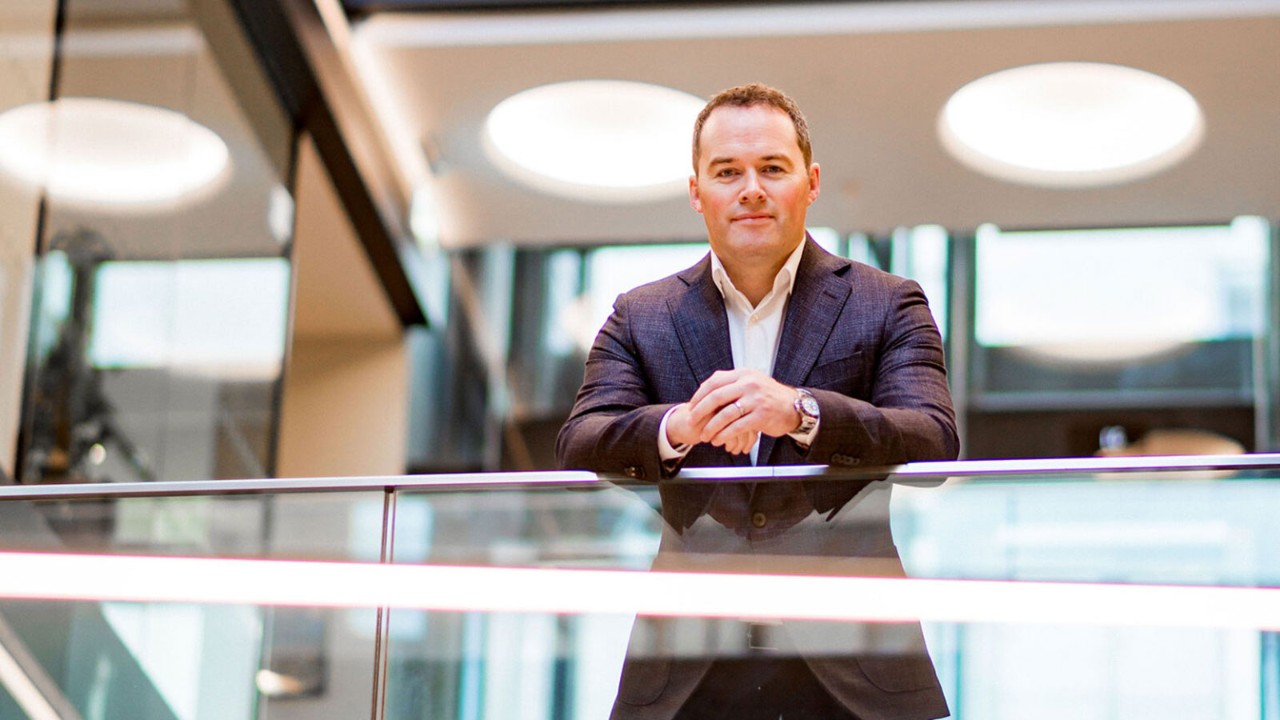
At a time when consolidation is reshaping financial and advisory services in Ireland, Stratavera is a refreshing cut against the grain. ‘A hands-on strategic partner,’ is how founder Steven McKenna FCCA describes his one-man offering, one built on deep personal and professional insights and firmly focused on the founder-managers of Ireland’s small and medium-sized businesses.
Set up last summer, Stratavera frames its offer around three pillars – clarity, momentum and results – which McKenna says are about ‘helping business owners to develop their strategic planning and direction, drive growth and create value, and successfully exit the business when the time is right.’
‘There is initial success but a failure to plan for generational transition’
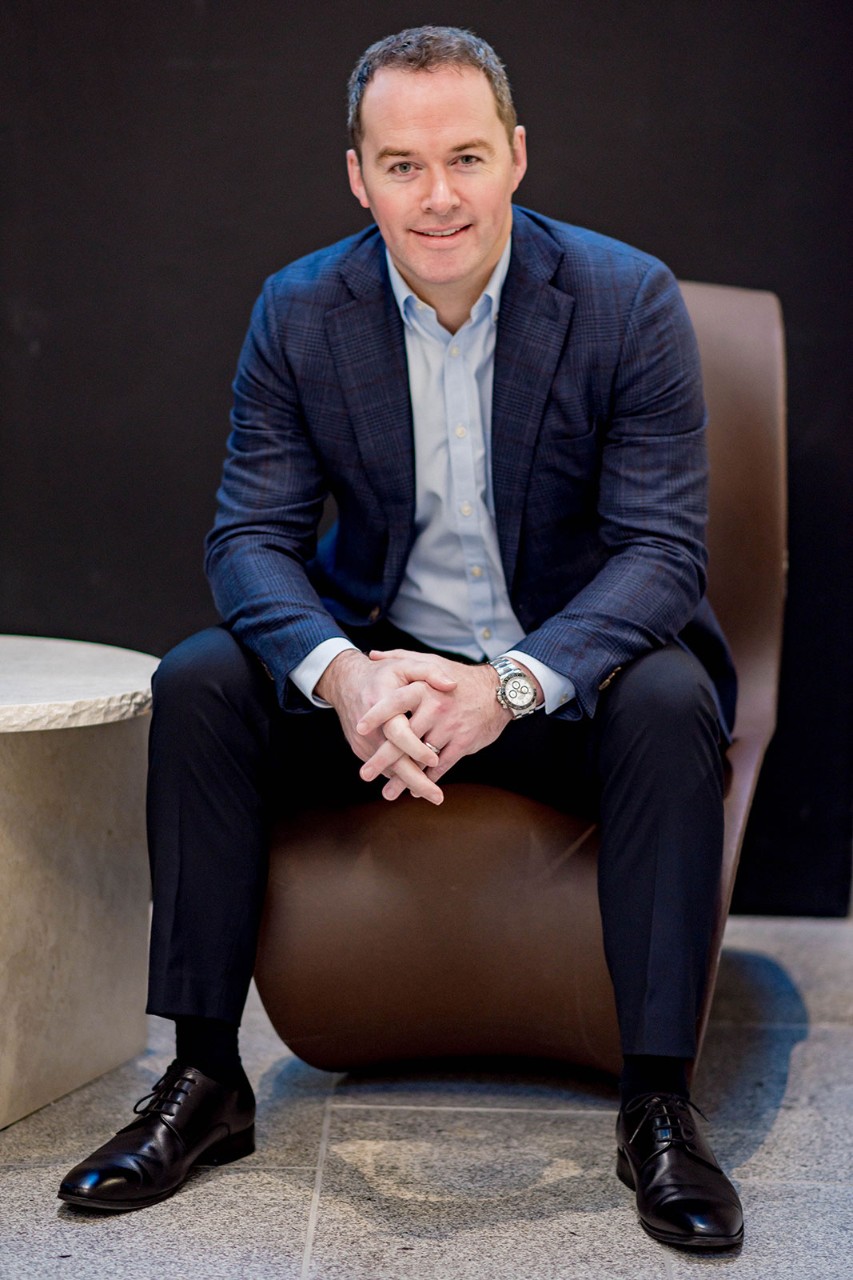
If all that sounds straightforward enough, then you probably don’t know the landscape as well as McKenna, who can point to at least one timeworn and risky pattern of behaviour that Stratavera has been set up to correct. ‘What you find very often with Irish SMEs is a lot of initial success and then a failure to plan for transition to the next generation and a strategic exit,’ he explains.
Successful navigation
The Galway man has certainly walked the walk. Prior to setting up Stratavera, McKenna was best known as the transformational CEO who navigated Sherry FitzGerald Group through the choppy waters of the post-financial crisis years.
McKenna’s connection with Ireland’s largest estate agent began in 2008, when an ad in a newspaper persuaded him to forgo his plans to return to Sydney, Australia where he had been an executive accountant on a property fund with Macquarie Bank.
Given the timing, and with Celtic Tiger certainties soon collapsing around him, he might have been forgiven for heading back to Australia after all. However, he figured there was something worth sticking around for. ‘It was a very difficult time, but I felt that I was up for the challenge,’ he recalls.
The gamble paid off. ‘I went from being financial controller of the residential business in 2008 to group financial controller in 2010, CFO in 2012 and CEO in 2017.’ As traditional revenues flatlined, he pushed a heavy diversification and transformation strategy, which positioned the firm strongly in property advisory and financial services in Ireland and the UK, and saw it take a definitive lead in digital sales and marketing. All would yield rich dividends as the economy stabilised and the brand moved from recovery and resilience to expansion and growth.
Along the way, McKenna identified a threat to the business that had nothing to do with economic headwinds. ‘When I became CEO of Sherry FitzGerald, it had been some 40 years in operation. It was privately owned with Mark FitzGerald and Philip Sherry as the primary shareholders. Both were reaching retirement age and there was a real question mark over how to make sure the business would last another 40 years.’
McKenna identified two elements at play: ‘a generational change in terms of bringing in a new leadership team, but also a longer-term question of how to bring in new ownership’. As CEO, he set out to resolve both through a five-year growth and development plan, culminating in the sale of the business to CastleGate Investments in 2022, in a deal valued at €50m.
‘I was looking to create something that was new, fresh and for myself’
How to pivot
The lessons from those years laid the foundations for McKenna’s new venture Stratavera. ‘After eight years as CEO, I felt the time was right to step down and pause before my next chapter. With my mum terminally ill at the time, it also allowed me to take time out to be with her,’ he recalls.
What happened next was the product of careful reflection: ‘I was approached about new CEO opportunities, some of which I considered, but I also knew that I wanted to do something different. For 20 years, I’d been working for other shareholders. I was looking for an opportunity to create something that was new, fresh and for myself.’
Among the conversations he noted a distinct stream of ‘business owners who would ring me up and ask for advice. I could see I had a range of skills that could help them and liked the idea of offering that as a service.’
‘Business is quite similar to sport in that you’re in a team environment’
A pivot Stratavera may be, but it is not the first in McKenna’s career. A talented rugby player in his youth, he signed with Connacht Rugby in his early 20s. A sporting career appeared in the offing until a dislocated knee at the end of his first season put paid to the dream. ‘You can be upset about it for a period of time, but you also have to dust yourself down and get on with it,’ he reflects.
‘The question quickly became: how do I move forward from here? What do I focus on now?’ His choice of accountancy would bring ACCA into the picture and he took up a position with EY.
In the strategic lean of his current role, he sees ‘a huge advantage in being ACCA, being able to read numbers and understand when I look at P&Ls, cashflows and balance sheets where the value creation comes from’.
The value of those sporting years has also proved more than anecdotal. ‘Business is quite similar to sport in the sense that, no matter what area you’re in, generally speaking, you’re in a team environment. You work with a group of people with different skillsets that you’re drawing on, and where being able to adapt to a changing situation is critical.’
A potent mix
Having successfully led one organisation through a crisis of existential proportions, McKenna has little patience for the ‘hold and wait’ mentality that appears to strike some when economic uncertainty takes hold. ‘Even in the worst of the recession, we innovated and looked for growth. The lesson I learned was that the world doesn’t stop, and those who continue to move forward will generally outperform their competition.’
‘Potential investors want to see the next generation being invested in’
A recently completed AI programme with Harvard Business School reflects his determination to stay ahead of the tech curve, even as he cautions employers to think twice about ‘cost cutting that removes human talent. When an investor is looking at a business, they want to see the next generation of talent are being invested in.’
His advice to that emerging generation is also to avoid shortsighted choices, particularly around hybrid working. ‘I’m a strong proponent of hybrid working but looking back in my career, one of the reasons for the success I had was the quality of the people I worked alongside. Those relationships are a lot harder to sustain if you’re working at home on your own most of the time.’
Not that dwelling on the past is a McKenna trait. A career with a potent mix of flexibility and determination would seem far from the final whistle.
CV
2025
Sets up Stratavera
2022
Leads sale of Sherry FitzGerald to CastleGate Investments for €50m
2018
Leads sale of Cushman & Wakefield Ireland to Cushman & Wakefield Global for undisclosed sum. Launches innovative digital platforms mySherryFitz and mySherryFitzMortgage
2017
CEO of Sherry FitzGerald Group
2012
CFO of Sherry FitzGerald Group
2011
Plays key role in the sale of Marsh & Parsons London to LSL PLC for €62m
2008
Joins Sherry FitzGerald Group as financial controller


