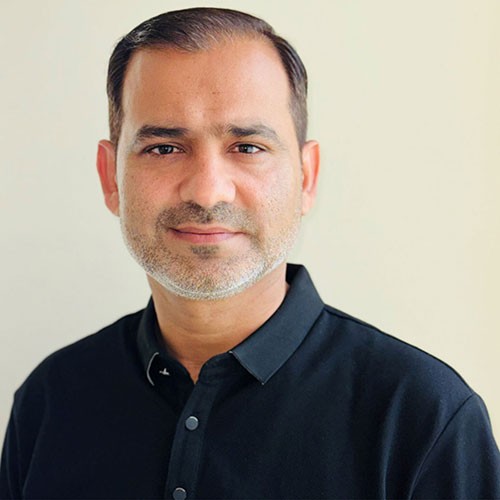
I was inspired to join the profession by my brother. His example shaped my career. The global recognition and ethical foundation of the ACCA qualification has been central to shaping my professional mindset and leadership approach.
My career has spanned the public and private sectors. I have worked in audit, risk management, advisory roles and the public sector across Pakistan and the Middle East. It’s been challenging and rewarding, building progressive responsibility over more than 14 years of experience. Working for a provincial tax authority, the Sindh Revenue Board, gave me a strong understanding of the intersection between regulation and business. I later made good use of this experience in advisory roles, helping organisations navigate complex tax and regulatory environments.
Success hinges on blending AI’s efficiency with irreplaceable human judgment
I believe that meaningful professional growth comes from stepping beyond familiarity and embracing new challenges with confidence. A defining moment in my career was transitioning from the public sector to private-sector VAT advisory in the Middle East. Moving from a regulatory and policy-driven environment to a client-facing advisory role required adapting quickly to commercial realities, managing diverse stakeholders, and delivering practical solutions under dynamic market conditions. This shift significantly strengthened my strategic thinking, commercial awareness, and resilience.
AI can be a game-changer for auditing, automating tasks, analysing vast data, and spotting anomalies to free auditors for higher-value insights. But smart investment is key. We must develop secure, in-house AI tools to protect client confidentiality and thoroughly train our teams to use them proficiently and critically. Over-reliance without human oversight risks data privacy, cybersecurity, and compliance, so an ethical and transparent AI framework that addresses bias and has accountability is essential. This also applies to tax audits, where AI can streamline detection and planning. Ultimately, success hinges on blending AI’s efficiency with irreplaceable human judgment, ethics, and strategic thinking.
The Middle East is a region of both challenges and significant opportunity. Organisations must continuously adapt as we navigate economic diversification, driven by ambitious national agendas like Saudi Arabia’s Vision 2030, evolving regulatory and tax frameworks exemplified by the widespread adoption of e-invoicing across the region, geopolitical uncertainty, and a rapid wave of digital transformation. These shifts also bring substantial opportunities. Ambitious national digitalisation initiatives and investment in infrastructure and innovation are fundamentally reshaping the regional economy, fostering a dynamic landscape and robust growth, particularly in financial services and tax advisory, which in turn creates strong demand for skilled professionals.
Tax policy should encourage compliance and economic participation. If I had the power, I would advocate for lower and more rational tax rates, alongside simplified legislation and stronger digital tax administration. In many jurisdictions, high and complex tax rates discourage voluntary compliance and push businesses into the informal economy. A balanced approach that combines lower rates with broader tax bases and effective enforcement would improve compliance and strengthen trust between taxpayers and authorities, while supporting sustainable economic growth.
Resilience allows us to turn obstacles into opportunities
I enjoy working on VAT and regulatory issues that require technical expertise and strategic thinking. I find it rewarding to translate complex legislation into practical solutions that help my clients to manage risk and make informed decisions.
I believe strongly that resilience, combined with continuous learning, has a lasting impact. In finance and tax, where the environment constantly evolves, staying curious and adaptable is essential. This means continuously acquiring new skills, deepening our technical tax knowledge, and mastering prevailing technologies. Resilience allows us to turn obstacles into opportunities, while this ongoing learning ensures we deliver meaningful outcomes for clients.
If I were not an accountant, I would have been a doctor. Both professions require technical expertise, problem-solving and a commitment to making a meaningful impact. I approach every engagement with the same focus, responsibility and purpose that medicine embodies, delivering value and making a difference where it matters most.
Outside of work, I like to challenge both mind and body. I have a passion for collecting coins and currencies from different countries, and I play badminton, which helps me stay active, focused and disciplined.


