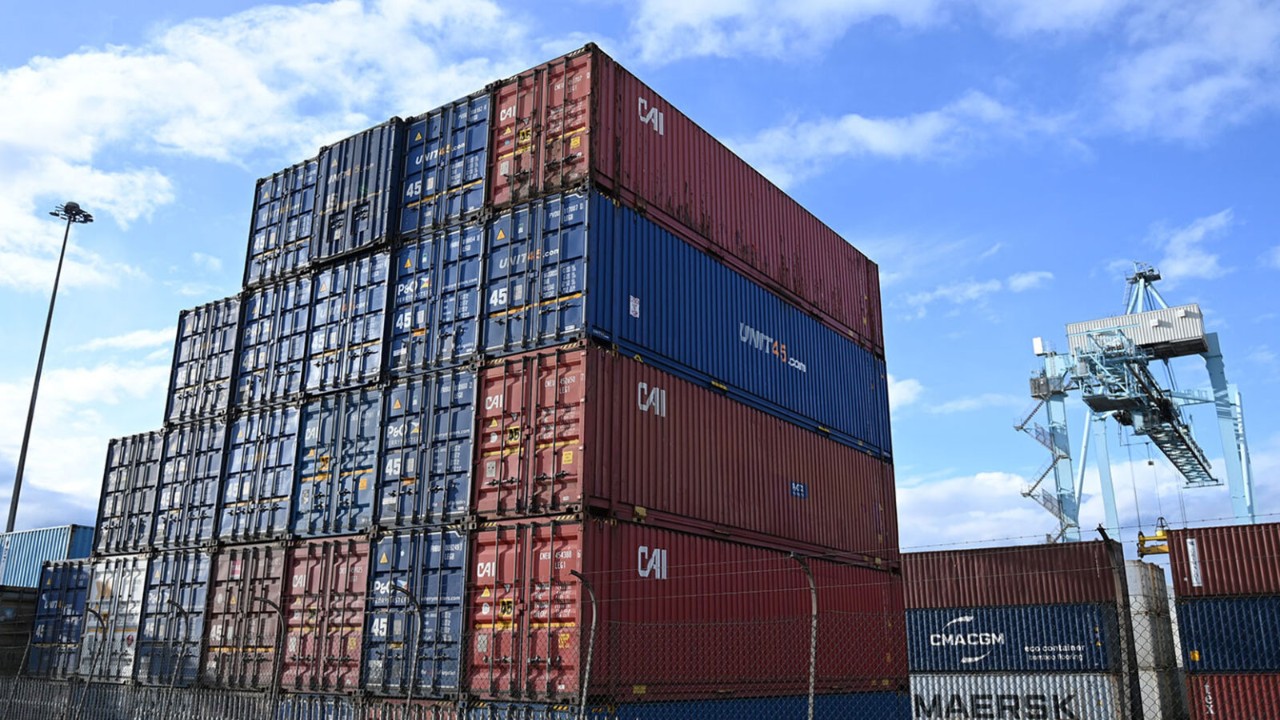
Against a background of increased economic uncertainty and global instability, the Irish government has launched a new Action Plan on Market Diversification, offering additional help for exporters who rely on overseas markets, notably in the US.
Its aim is ‘to support Ireland’s continued growth, increase exports sustainably, deepen and extend our trade and investment relationships, grow quality employment and bolster Ireland’s economy.’
The move has been prompted by the 15% Trump administration tariff
New resources
Delivered by the Department of Enterprise, Tourism and Employment with the Department of Foreign Affairs and Trade, the action plan promises to ‘ensure companies, especially SMEs, have the tools and insights’ to tap new markets. The plan points to ‘significant new resources’ to expand the presence of Ireland’s diplomatic and state agencies – such as Enterprise Ireland and Bord Bia (the Irish Food Board) – in Asia, Latin America and Africa as well as the Gulf.
The move has been prompted by the 15% tariff placed by the Trump administration on imports from Ireland and the rest of the EU. In response, the Irish government is helping exporters find new markets while also continuing to ship to the US, the top single-nation destination. (The EU bloc overall buys more.)
Data from the Central Statistics Office shows Ireland’s goods exports totalled €224bn in 2024, up 14% year-on-year. Shipments to the EU at €88.5bn were up 9%, while exports to the US rose €18.6bn to €72.6bn. In contrast, Ireland’s trade with Great Britain dropped 10% in 2024 to €15.7bn. Enterprise Ireland anticipates that just under half of its 950 clients will be affected by the 15% US tariff.
‘I don’t think there’s enough awareness of the plan’
Raise awareness
The plan’s scope is wide, listing more than 100 actions, and the support it offers is described as ‘good’ by Peter Vale, tax partner at Grant Thornton. However he, along with other firms and networks, draws attention to the need for more detailed information to pass on to clients: ‘I don’t think there’s enough awareness of the plan,’ he says.
‘This is not something I have heard of but it is something I am interested in,’ says Thomas Duffy, director of Mayo Farm Systems, which manufactures products including cow mattresses. ‘If this plan was to add a new consistent market for our products, then it would be extremely worthwhile.’
‘The rules around tariff calculations are not straightforward’
While the plan is designed to offer help to businesses of any size, some options are especially useful for small businesses, such as a number of grants provided by Enterprise Ireland. The Market Research Grant, worth up to €35,000, covers 50% of spend on consultants and external advice to, for example, ‘evaluate supply chain vulnerabilities’ and assess the impact of tariffs on competitors. The New Markets Validation Grant, meanwhile, is worth up to €150,000. It covers the costs of consultants and reports, and can also be used to defray costs of attending trade fairs, developing market-entry strategies for new territories and products.
Understand the tariffs
Looking ahead, Vale believes that the government may need to focus support on helping exporters to navigate the key US market rather than just emphasising the search for new ones. ‘Different components of the price are not all necessarily tariffable. Are exporters charging for the intellectual property rights or the end product? How do you reduce the tariffable part? These are things that we can advise on,’ he says.
‘Likewise, the rules around tariff calculations are not straightforward and this is where we come in. We can help clients look at the supply chain and pricing strategy.’
Neil McDonnell, CEO of the Irish SME Association, points out that traditionally his members import more than they export, while those exporting have been as worried by the slide in the US dollar as with tariffs: ’The dollar is down 16% in value in the past year, which is the same cost to Irish exporters as the increase in American tariffs,’ he notes.
‘We believe our original call for a US tariff relief fund may yet be needed’
Meanwhile, the Irish Exporters Association – which has recently been running workshops on market diversification – is calling for direct government aid for firms shipping to the US. ’We note the recent publication of the Action Plan for Market Diversification, but with Ireland and the EU in the eye of increased international trade nationalism, we believe our original call for a US tariff relief fund may yet be needed, should international trading conditions deteriorate further,’ says CEO Simon McKeever.
That said, according to a spokesperson for Enterprise Ireland, there is ‘a good pipeline of companies applying for the new financial supports’. The two new grants, the agency’s trade tariff response team and 42 international offices ‘are key supports in assisting Irish exporters take concrete operational and diversification measures to safeguard profitability and protect jobs’.
Despite the challenges, of Irish exporters surveyed by Enterprise Ireland in October last year, 97% plan to expand into new international markets in the next 12 months. And, on the question of US tariffs, companies are evenly split: 49% expect a negative impact while 51% do not.
Duffy, who has clients in North America, Europe and Asia, is keen on market diversification. ‘We are always on the lookout for new markets, given the current trading environment,’ he says, adding that it’s important ‘not to rely too heavily on either of our existing markets or specific products.
‘We have seen the potential dangers in this over the past number of years between Brexit, the Covid-19 virus, foreign government grants excluding our products and now face tariffs to foreign markets.’
More information
ACCA’s annual virtual conference, Accounting for the Future, includes a session on ‘Trade disruption and other headwinds – 2026 outlook’. Listen on demand, and earn free CPD units.


