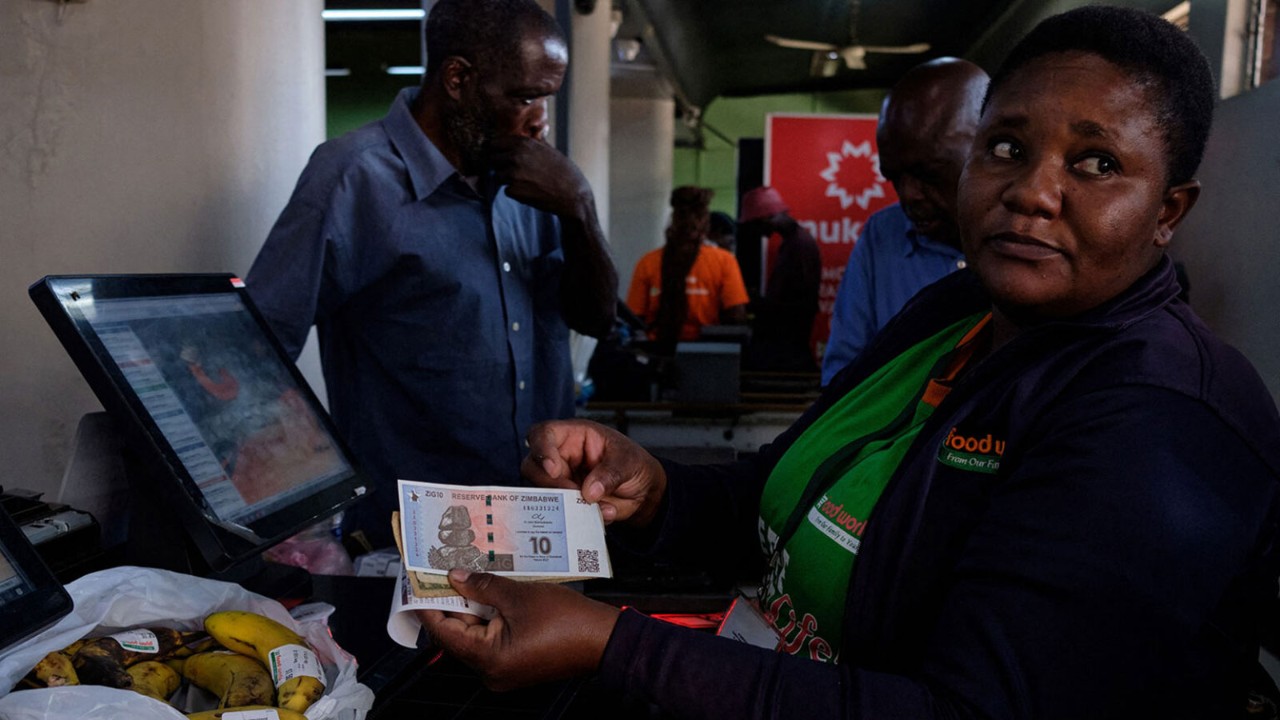
With inflation rates rising and economic conditions deteriorating around the world, finance chiefs in several emerging markets are having to confront the spectre of hyperinflation.
Based on the International Monetary Fund’s October 2025 World Economic Outlook, BDO reported that 12 countries including Argentina, Turkey and Zimbabwe were expected to be classified as hyperinflationary as of 31 December last year, with several others flagged as being on the brink.
Inflation is not a uniform risk but a spectrum
Zimbabwe experienced chronic hyperinflation under its previous currency, the Zimbabwean dollar. But Zimbabwe gold, a new currency backed by gold and foreign reserves introduced in April 2024, has stabilised the rate somewhat, to the point that in January inflation fell to single digits for the first time in over two decades. However, it is by no means clear how long term this improvement will prove to be. Argentina endures a prolonged high-inflation regime, while Turkey confronts persistent but lower inflation.
These markets show that inflation is not a uniform risk but a spectrum. Nevertheless, CFOs operating in each face the challenge of maintaining business viability amid unstable currencies, rapidly outdated forecasts and uncertain long-term planning.
Collapsing cycles
One of the most immediate impacts is the collapse of traditional planning cycles. Annual budgets and long-range forecasts lose relevance when prices and exchange rates can shift materially within weeks. In consumer-facing sectors, businesses may need to adjust prices weekly or even daily to keep pace with rising costs.
Henry Nemaire FCCA, finance director at Tanganda Tea Company in Zimbabwe, recalls that during Zimbabwe’s hyperinflation crisis of 2008, Tanganda Tea applied for regular price adjustments from the country’s National Incomes and Pricing Commission.
‘Having liabilities in hard currency and assets in local currency can lead to a significant mismatch’
‘We got called the most resilient company in Zimbabwe because we made sure that we applied for the legal approval to adjust prices. Sometimes we did it twice in a day,’ he says, adding that, in the supermarkets, ‘You could only find Tanganda Tea and condoms.’
Value erosion
With hyperinflation, cash becomes a wasting asset. When goods or services are provided and payment is yet to be received, the seller is exposed to continual value erosion.
To counter this, Nemaire says, cash should be converted to a stable currency – US dollars, the rand, euros or the pound – while the local currency is offloaded. ‘Usually, the best use of that money is expenditures that recognise the official exchange rate,’ he says.
Indeed, Lawrence Nyajeka, head of audit and assurance at Axcentium in Zimbabwe, says that if businesses are not careful in matching their monetary assets and liabilities in the various currencies, it can ‘very easily lead to a significant liquidity risk’.
‘Rather than reacting to inflation, we proactively stress-test liquidity and cashflows’
‘If you have liabilities in hard currency and assets in a local currency it can lead to a significant mismatch because assets will lose value as the local currency devalues and your hard currency liabilities remain unchanged in real value,’ he says.
High inflation further reinforces the importance of disciplined working capital management. Harun Ülgen FCCA, CFO at Turkish pharmaceutical company Nobel İlaç, says this means maintaining a stable cash-conversion cycle even in inflationary periods.
Having receivable and payable structures that are ‘predictable, contract-based, and supported by long-standing relationships with customers and suppliers’ allows Nobel to protect liquidity without resorting to aggressive or disruptive measures, Ülgen says.
‘From a finance perspective, inflation risk is addressed through multi-scenario modelling’
‘Rather than reacting to inflation, we proactively stress-test liquidity and cashflows, ensuring balance-sheet strength and financial flexibility at all times,’ he says.
Ülgen adds that while periods of cost inflation may temporarily compress margins, they do not undermine Nobel’s strategic or financial sustainability. ‘We manage these cycles through tight cost discipline, operational efficiency and portfolio optimisation rather than short-term tactical reactions,’ he says.
‘From a finance perspective, inflation risk is addressed through multi-scenario modelling covering costs, exchange rates, volumes and cashflow sensitivity. The key is resilience, not price control – and that resilience is embedded in our business model.’
Performance distortion
Hyperinflation also distorts how performance is reported and interpreted, and brings with it a significant increase in reporting requirements. Typically, this includes producing reports based on historical costs alongside IFRS hyperinflation-adjusted accounts in line with IAS 29, Financial Reporting in Hyperinflationary Economies.
Companies may also need to prepare financial statements in a stable foreign currency to facilitate comparability for international investors, creditors or group reporting purposes.
‘To lock in as much revenue as possible in hard currency becomes very important’
IAS 29 requires entities in hyperinflationary economies – characterised by cumulative inflation over three years of around 100% or more – to restate their financial statements to reflect current purchasing power.
Braian Emmanuel Paoli, a director at PwC Argentina, says that IAS 29 can present significant challenges as it is a ‘relatively succinct standard’ without detailed guidance. ‘The first time you report under IAS 29 you need to gather a lot of historical information, which is difficult for some financial statement line items,’ Paoli says, adding that ‘the process becomes more manageable if the company implements some automated system to record inflation adjustment on an ongoing basis.’
While technically rigorous, IAS 29 can produce results that appear counterintuitive to boards and investors: profits that swing sharply, balance sheets that grow in nominal terms and historical comparisons that lose meaning.
Ülgen says the challenge is not complexity but narrative clarity. ‘Inflation-adjusted figures only create value when stakeholders understand the operational reality behind them,’ he says, adding that his focus is always on translating financial outcomes into a clear business story: ‘When the numbers are transparent and the logic is consistent, even highly inflationary environments can be explained with confidence and credibility.’
Human impact
Inflation’s human impact is often the most sensitive. As real wages erode, employees push for more frequent pay reviews, foreign-currency allowances or benefits linked to inflation or exchange rates.
Businesses in Zimbabwe have experimented with hybrid solutions, such as partial foreign-currency payments, allowances tied to transport or food costs, or more frequent but smaller adjustments. ‘To lock in as much revenue as possible in hard currency becomes very important because that is the value you are able to pass on to your employees,’ says Nyajeka.
Frequency of payroll payments is also important, he says: ‘The more frequently you pay your staff the better you manage that inflation risk.’
For CFOs, the challenge is as much cultural as financial. ‘The way you engage your employees changes throughout the hyperinflationary environment because you need to increase communication and employee interactions with leadership to ensure employees understand the risks and opportunities facing the business and that they remain engaged and motivated,’ Nyajeka says. ‘That is a good positive.’


