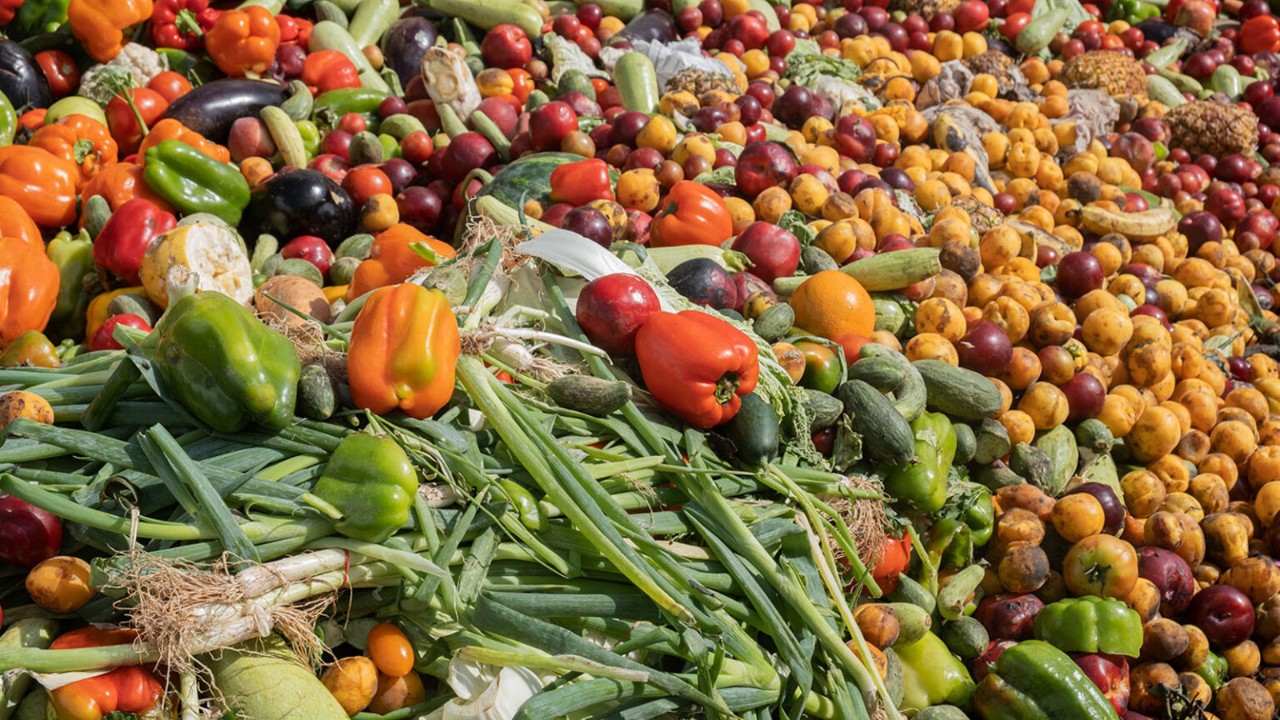
Food waste is a huge problem globally. According to United Nations figures, around 13.2% of food produced is lost post-harvest and before it makes its way to the retail sector. An estimated 19% of global food production, meanwhile, is wasted within households, or in the food service and retail sectors.
The contribution that food waste makes to greenhouse gases is salutary, too. The UN estimates the contribution at 8%-10% of global greenhouse gas emissions – nearly five times that of the aviation sector.
Food loss and waste is particularly stark in the Middle East, where a number of factors contribute to high levels of waste and low levels of coordination on cutting down food waste. In the UAE, some 3.27 million tonnes of food go to landfill annually, at a cost to the economy of US$3.5bn a year, according to the Ministry of Climate Change and Environment (MOCCAE).
‘Supply often consistently outpaces demand, particularly in the hospitality and retail sectors’
Within the UAE, In Abu Dhabi food makes up 39% of all waste, MOCCAE estimates, while in Dubai, the figure is 38% – a figure that rises sharply during Ramadan.
Generosity breeds excess
While the issues are clearly global, there are cultural reasons for the high figures reported for UAE in particular. In a place where abundance, generosity and hospitality are highly prized qualities, excess is often the result, says Halima Jumani FCCA, CEO of UAE fresh produce business Kibsons.
There are a number of other factors that drive food waste, she says. ‘Supply often consistently outpaces demand, particularly in the hospitality and retail sectors, where large volumes are prepared or stocked to meet fluctuating consumer needs. Perishable items are especially vulnerable to environmental conditions and storage limitations, which can shorten their usable life.’
How the UAE is tackling food waste
- Etihad Airways, the UAE’s national carrier, has introduced smart technology to collect data on food waste in in-flight meals.
- Dubai Municipality runs a range of initiatives to raise awareness of food waste, including educational workshops for students and community campaigns.
- In Sharjah, the Emirates Waste to Energy Company is set to divert food waste into renewable energy production at commercial scale.
Agriculture also plays a role. ‘Nature is not perfect and produce that doesn’t meet visual or size standards is often rejected long before it reaches the table,’ Jumani says. ‘On the consumer side, stockpiling and over-purchasing further contribute to waste, especially for fresh fruits and vegetables with inherently shorter shelf lives.’
‘We’ve seen first-hand that when people become aware, they make smarter choices’
Perhaps until now, that is. In September 2025, the UAE launched its first National Food Loss and Waste Baseline study. The study, led by ne’ma, the National Food Loss and Waste Initiative, together with the Federal Competitiveness and Statistics Centre, began by measuring food waste at household, business and organisational levels to create a baseline; field teams measured household waste, while businesses across the food value chain (including companies such as Kibsons) submitted their own data. This data will help inform the Emirates’ efforts to halve food waste by 2030, in line with the UN’s Sustainable Development Goal 12.3. (MOCCAE is the national custodian of SDG 12: ensuring sustainable consumption and production patterns.)
Proactivity is key
The study’s focus on data analysis, and suggestion of a perspective that looks at the whole supply chain, are likely to be a fruitful way forward.
Jumani applauds the analytical approach and says it will feed into guideline-setting and policy input, exactly what’s needed to start shifting human behaviour. ‘We’ve seen first-hand that when people become aware, they make smarter choices about the quality and quantity of food they purchase and they waste less,’ she says.
Proactivity is key, she adds, pointing out that Kibsons’ first artificial intelligence initiative was designed to reduce food waste using data-driven forecasting. ‘Today, that system allows us to predict customer demand with remarkable precision, keeping wastage at around 1%–2%, compared to industry averages that are significantly higher,’ she says.
‘Ultimately, moving the needle depends on awareness – both corporate and personal’
The company was also the first in the region to introduce imperfect or ‘ugly but tasty’ produce, offering it at a discount and turning what was once rejected into a category customers actively seek out. In addition, Kibsons makes daily donations of unsold produce and composts organic waste, creating an example of a circular system where nothing edible or reusable goes to waste.
Clear expectations
With ne’ma’s National Food Loss and Waste Initiative, the UAE has created a strong top-down framework – from the COP28 commitments to the UN’s SDG 12.3, Jumani believes. Furthermore, ne’ma programmes and awareness campaigns targeting both industry and consumers will increasingly set clear expectations for every sector.
‘What we’re seeing is an alignment between government leadership and private-sector action,’ she says. ‘More businesses are pledging, affiliating with sustainability compacts, and driving internal ESG goals. It’s creating a culture where sustainability is no longer optional – it’s necessary.
‘From an industry perspective, the biggest shift is toward precision and accountability,’ Jumani says. ‘Companies are using AI for forecasting, optimising storage and logistics, and collaborating on data sharing because both investors and customers care more about these two issues. These are the building blocks of effective action, and I believe the UAE is positioning itself as a leader in this space.’
This is an area where technology paired with awareness has the potential to change minds, habits and behaviours, Jumani adds, pointing out that reducing food waste will take time – and eliminating it completely may not be possible. ‘The key is data and mindset. When we measure, monitor and act on what the data tells us, that’s when meaningful progress happens,’ she says.
‘Ultimately, moving the needle depends on awareness – both corporate and personal. When every company thinks that food is as valuable as profit, and every consumer believes that reducing food waste as a shared responsibility, we’ll have made real and irreversible change.’

