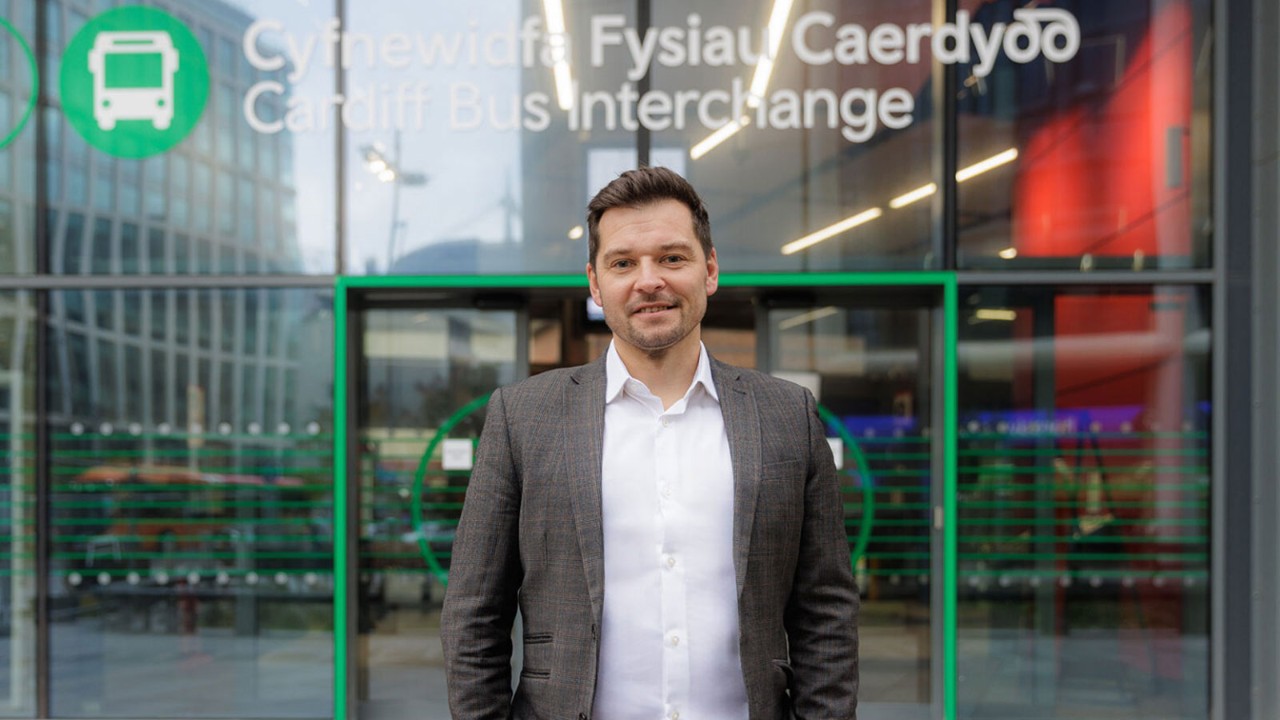
When the devolved Welsh government set up Transport for Wales (TfW) in 2016, the plan was ‘to change the way Wales travels’ – and create a high-quality, safe, integrated, affordable and accessible transport network in which the people of Wales can take pride.
The not-for-profit, arms-length body, fully owned by the Welsh government, would provide support and expertise to Welsh transport projects. However, a string of circumstances meant that TfW has ended up more enmeshed in the transport business than it intended.
‘We were innovative, and over time our remit from the Welsh government has widened’
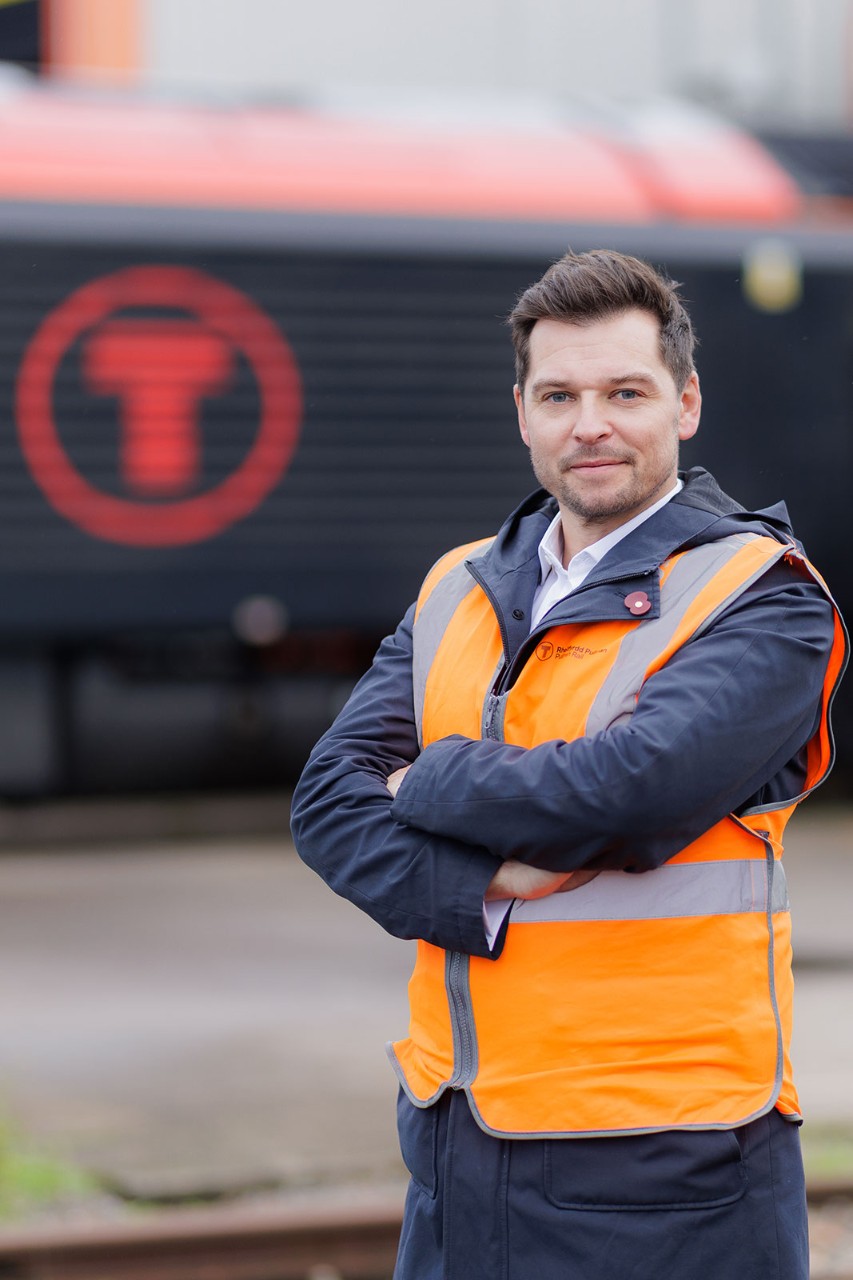
Between 2016 and 2018, TfW oversaw the retendering of the important Wales & Borders railway franchise – covering the majority of Welsh train services – which had been run by Arriva Trains since 2003. In 2019, the franchise was awarded to KeolisAmey Wales.
‘My job interview was on the first day of the new franchise,’ says Owen Davies, head of finance at TfW. ‘I was something like employee number 20.’ The early days, he recalls, felt very much like a startup. ‘Someone would say, “Do we have a policy on this?” and the answer was usually “no”, so I wrote one. That felt refreshing. We were innovative and, because of that and the trust we earned, over time our remit from the Welsh government has widened.’
Davies, who had spent the best part of a decade dealing with challenging projects for clients at KPMG and at BAE Systems, where he managed a transition to shared services, was in his element: ‘I like to get to the bottom of problems – I’m quite good at helping people see through complex issues and find a solution. Accountants these days need to be good storytellers.’
All change
But then Covid hit just over a year into the new franchise arrangement. The huge fall in passenger numbers post-lockdown made the franchise financially unviable and, in 2021, the decision was made to nationalise rail services, under TfW.
‘My job was to help terminate the agreement with the operator, which ultimately meant that 2,500 people joined TfW,’ says Davies. ‘I also had to bring together the finance teams, one of which was used to a start-up environment and the other came from a more established railway culture. I don’t think I’ve ever worked so hard in my life, but it’s been really interesting.’
It is a stated aim of TfW to nudge the population towards sustainable travel options whenever it can. Transport remains a contentious topic politically in Wales, but TfW points to the rise in train journeys over the past year – up 20% on the previous year – and a 17.8% increase in rail revenue as evidence that its strategy is paying off.
Reform of bus services is an important part of the strategy. Three-quarters of journeys made on public transport in Wales are made by bus; or around 190,000 journeys a day. Proposals to completely reform the services, creating an integrated, single-ticket transport system under public control, were published by the Welsh government in 2022. TfW is due to become the franchising authority from 2027. ‘That’s given us the opportunity to imagine what new bus services could look like in the context of an integrated multi-modal transport network,’ says Davies.
‘There’s nothing to say that you should only deliver your remit and can’t think outside the box’
New innovations are already up and running. ‘Fflecsi’, for example, is an on-demand bus service run in partnership with local councils, designed for rural areas where fixed timetables and stops are not always the best option for the population. Using an app or telephone booking line, passengers can book their travel and the service dynamically routes buses (within a designated service area) according to demand.
‘The government wants the bus network to be as big as possible and as accessible as possible, fares to be as low as possible, driver pay to be fair, and it wants the buses to contribute to the net zero target of 2035,’ says Davies. ‘You can have all those things, but they cost money and my job is to work out where the balance and trade-offs are.’
TfW in numbers
31.7 million
Number of journeys made, up by a fifth since 2023/24
£174.8m
Rail revenue in 2025, up by 17.4% since 2023/24
77.1%
Percentage of journeys made on new trains as of May 2025
11.4%
Increase in TrawsCymru bus journeys since 2023/24
£47m
Active Travel funding distributed
£1.1bn
Total operating expenditure in 2024/25
Davies is adamant that the public sector can and should be brave and commercial. ‘I’m a crusader for that, really. There’s nothing to say that you should only deliver your remit and can’t think outside the box. It’s just a bit harder to convert an opportunity in the public sector because of the rigour we go through to ensure we are making best value from the public purse.’
Beyond buses
This theory was put into practice last year when Davies and the TfW team came up with the idea of using the railway’s newly upgraded signal cabling network to deliver high-speed broadband to homes and businesses in the valleys, where the service was often patchy.
‘We used high-quality fibre cables to protect us for the future, but were only using 9% of its capacity,’ he says. ‘So we came up with the idea of monetising that capacity by setting up a wholesale fibre company.’ This meant asking the Welsh government for a further investment.
‘We have the mentality at TfW that we’ll have a go and try and do things differently’
‘The initial response was a “no” due to the availability of funding, and because our expertise wasn’t exactly in telecoms,’ Davies says. ‘But I was determined to find a way’.
And he did, finding an alternative route to raise the investment, and TfW Ffeibr Ltd was launched, offering a high-speed network ready for internet and telecoms companies to plug into it. ‘We have a new branded company. It’s really cool that we can do something like that in the public sector.
‘Because we’ve been like a start-up, we have the mentality at TfW that we’ll have a go and try and do things differently,’ he says. ‘We hunt out value and we want to be commercial, but we’re trying to do it to improve the value proposition for the people of Wales. We want to see our communities prosper and we want to make our families proud.’
CV
2021
Head of finance, Transport for Wales
2019
Finance business partner, Transport for Wales
2015
Senior manager, finance transformation, KPMG UK
2009
Project accountant, management accountant, then finance transition manager, BAE Systems
2005
Financial and management accountant, Sunjuice Ltd


