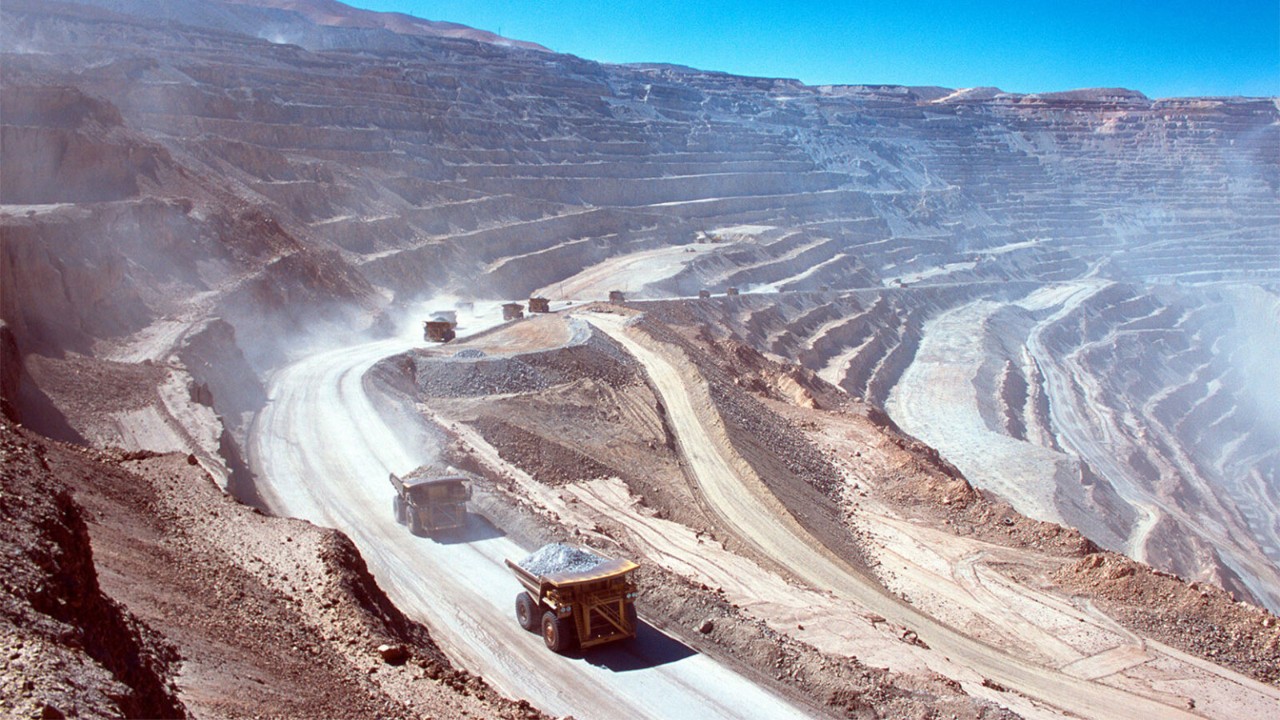
Latin America sits at the heart of the global sustainability agenda. From lithium and copper mines to soybean farms, the region supplies critical minerals for the energy transition, produces key agricultural commodities and hosts some of the world’s most important ecosystems.
Sectors such as mining, agribusiness and forestry are strategically important and highly exposed to physical climate and nature-related risks. ‘Sustainability is no longer a peripheral issue,’ says Ruth Guevara, global climate change and sustainability services markets leader at EY. ‘It is directly affecting operational resilience, market access and long-term competitiveness. Businesses increasingly need to manage sustainability as a core business issue, not simply a reporting topic.’
‘Significant effort is required to refine data and narratives’
Exposure amplified
Latin America’s emissions profile is ‘heavily linked’ to land-use change and agricultural activities, says Mauricio Colombari, partner and ESG practice leader at PwC Brazil. This is placing increasing scrutiny on the agribusiness and forestry industries.
‘The introduction of concepts such as supply chain transparency and double materiality further amplifies this exposure,’ he says. ‘Companies are now expected not only to assess financial risks but also to measure and disclose their environmental and social impacts along the entire value chain.’
However, there remains a gap between ambition and implementation. Many organisations continue to rely on manual processes and fragmented systems for ESG data collection, which creates difficulties around consistency, traceability and auditability.
‘As a result, significant effort is required to refine data and narratives before they are ready to be subject to independent assurance and formal disclosure to investors and other stakeholders,’ says Reinaldo Oliari, partner for accounting and ESG reporting advisory at Deloitte Brazil.
ESG progress
Many industrial, manufacturing and transportation businesses in the region are now integrating sustainability, or an environmental, social and governance (ESG) framework, into their overall corporate strategy. A recent report, Integrated Corporate Sustainability Strategies in Latin America, produced by the Association of American Chambers of Commerce in Latin America, found that many companies have made significant progress in embedding sustainability into governance and strategy.
70% of companies discuss sustainability at board level
Most companies in the study have sustainability policies and dedicated budgets, and 70% discuss sustainability at the board level. However, 23% still lack formal governance structures, and board-level attention remains below that given to financial issues.
There are also uneven transparency and reporting practices. While 73% publish sustainability reports, only half seek external verification, and reporting focuses on visible metrics and often omits negative impacts or mitigation plans.
‘In practice, companies often struggle with KPI generation and monitoring, limited internal expertise, fragmented ownership across functions and a lack of alignment between sustainability ambitions and business strategy,’ Guevara says.
Standards and compliance
The sustainability reporting landscape is also changing rapidly. The region is increasingly aligning itself with global standards such as the Global Reporting Initiative and Sustainability Accounting Standards Board, with 78% and 64% of companies following these standards respectively, according to KPMG.
International standards such as the IFRS Sustainability Disclosure Standards are pushing Latin American companies towards more rigorous and consistent reporting, with Brazil the first country to adopt the International Sustainability Standards Board (ISSB) framework.
IFRS Sustainability Disclosure Standards, in particular, ‘are driving convergence in Brazil, especially regarding climate-related risks, financial materiality and integration with financial reporting’, Oliari says.
‘The main gaps relate to data processes and finance integration’
Regulations such as the EU Corporate Sustainability Reporting Directive are also having an indirect impact on multinational groups through global supply chains where this type of disclosure is more extensive than ISSB standards.
‘In terms of preparedness, large listed companies are generally at an intermediate to advanced stage, while mid-sized companies are still in earlier stages,’ Oliari says. ‘The main gaps relate to data processes, internal controls designed to support reasonable assurance and integration between sustainability and finance.’
Obscure chains
Many of the sustainability pressures facing Latin American businesses stem from supply chains, which Colombari describes as ‘one of the most complex frontiers for ESG implementation’ in the region. ‘Companies often operate in ecosystems that include small suppliers, informal operators and geographically dispersed activities. This makes traceability, monitoring and verification extremely challenging.’
Agribusinesses face growing demands for deforestation-free sourcing, while mining groups are under pressure to demonstrate responsible water management, biodiversity protection and lower emissions. At the same time, multinational buyers increasingly want evidence that sustainability claims can be verified. The challenge is particularly acute when data must be collected from complex and fragmented supply networks.
‘Supply chains are complex, multitiered and multijurisdictional’
‘The first challenge is visibility,’ says Guevara. ‘Global and regional supply chains are complex, multitiered and often spread across multiple jurisdictions, which makes it difficult to verify origin, environmental/social impacts and compliance consistently.’
Scope 3 emissions – those generated throughout a company’s value chain – are emerging as one of the most difficult reporting challenges because they require data from suppliers, customers and other external parties. ‘Companies often depend on supplier self-declarations, with limited ability to independently verify the information,’ says Luiz Paulo Assis, partner for sustainability strategy at Deloitte Brazil. ‘Many suppliers, especially smaller ones, lack the systems and capabilities to produce structured ESG data.’
Nature risk rises
Climate reporting may have dominated sustainability discussions in recent years, but biodiversity and nature-related risks are rapidly moving up the corporate agenda. This is particularly relevant in Latin America, which contains globally significant natural assets.
These challenges are particularly significant in industries linked to natural resources. Deforestation and land-use change remain major concerns for agriculture and forestry, while water management has become increasingly important for mining and agribusiness.
‘These industries are among the most exposed globally,’ says Assis. ‘They are directly affected not only by financial risks but also by their environmental and social impacts, which are becoming increasingly relevant from a financial materiality perspective.’
‘Stakeholders want to know where risks and dependencies sit’
There is a clear shift from narrative-based disclosures toward more robust, quantitative and verifiable information, driven by market expectations and regulatory trends. ‘Stakeholders want more than high-level corporate commitments,’ Guevara says. ‘They want clearer understanding of where risks, dependencies and impacts sit across specific assets, sourcing areas and value chains.’
Historically, sustainability reporting was often led by specialist ESG teams. Today, however, finance teams are increasingly responsible for integrating ESG data into reporting processes and translating sustainability risks into financial impacts.
‘Finance teams are becoming central to the sustainability agenda,’ says Colombari. ‘As sustainability disclosures become more aligned with financial reporting standards, finance professionals are increasingly responsible for ensuring data integrity, controls and audit-readiness.’


