
Almost exactly 70 years ago, my mother, sister and I were despatched to stay with my grandmother in Northumberland, where I was to discover how shiveringly cold it was to bathe in the North Sea at Bamburgh. My father, meanwhile, was heading further south from our Glasgow home to Oxford. He was to join some 300 others from around the UK and the Commonwealth to be part of the Duke of Edinburgh’s study conference on ‘The Human Problems of Industrial Communities within the Commonwealth and Empire’.
It was an important description. Just over a decade since the end of the Second World War, community and collaboration were seen as the regenerating forces behind industrial growth. Although the trade unions were much more powerful in those post-war days, my father’s experience of the war – fighting behind enemy lines in Burma alongside the Indian army, Gurkhas, Nigerians and the Burmese – had taught him the power of bringing communities together with a central purpose.
They found themselves down coal mines, at Hull’s fish market, in a Cardiff pub
A minority of conference members, around 90, were from the UK, the rest from around the world – there was even a representative from the Falkland Islands. This was no weekend conference. It was serious stuff. They travelled by special train from Paddington Station in London up to Oxford on Sunday 8 July and then back again on Saturday 28 July. Three weeks of intensive talks, visits, discussions, thinking and travel.
Broadening understanding
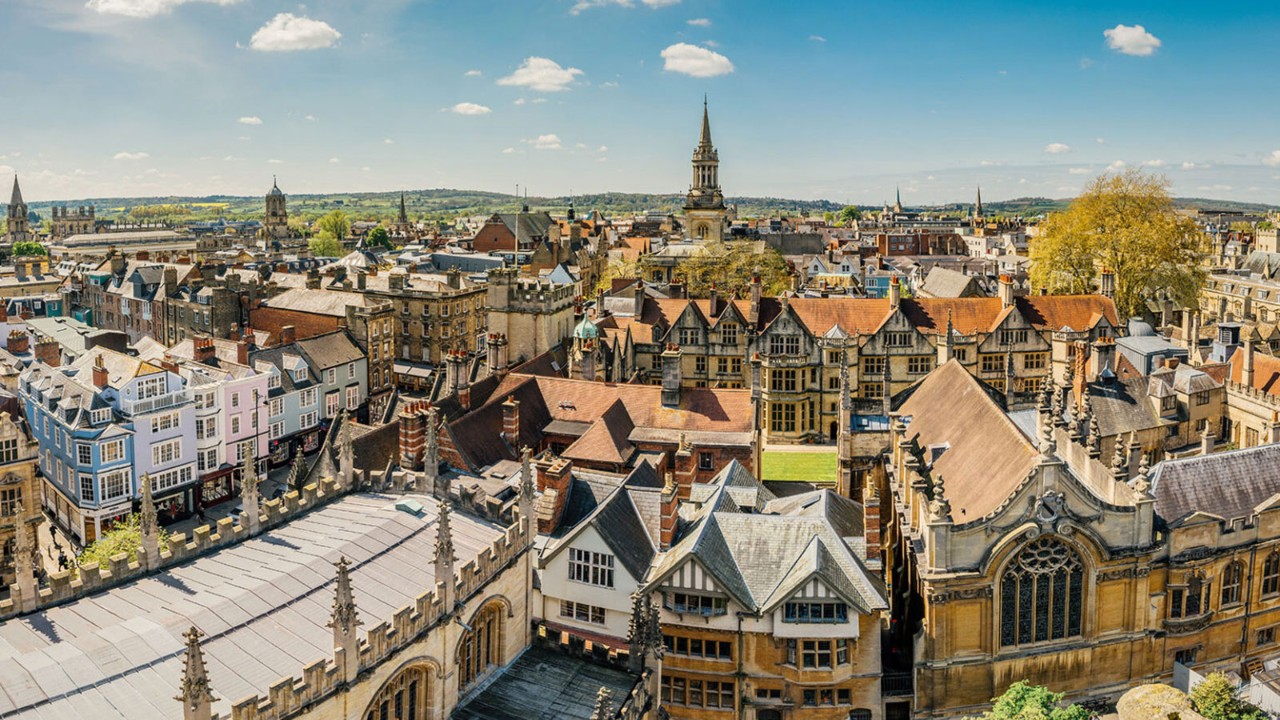
Their central work was in Oxford amongst the dreaming spires. But they were split into small groups so that they could base themselves across 20 industrial cities for 10 days, from Swansea to Hull, from Birmingham to Dundee.
My father was based in Derby and learned much about aero-engines and Rolls-Royce. As the conference report says: ‘Groups found themselves down coal mines; in day nurseries; on a cargo ship; in the Oxford Circus Underground at the rush-hour; having a meal with 20 Yorkshire mill girls; entertained by the City Livery Companies; in the London sewers; in the fish-market at Hull; in a Border tweed mill; a huge engineering works; the goods depot of a main-line station; a youth club; a university common room; a Cardiff pub.’
Age of optimism
It was an astonishing undertaking. And optimism was in the air, attempting to shake off the long effects of the post-war period. ‘Articulate tolerance and understanding’ was their motto.
They were working in a world in which their decisions could improve the lot of thousands
In the conference aftermath, the Duke of Edinburgh said: ‘Perhaps most important of all, it gave members the feeling that they were not floundering about helplessly but were working in a world in which attitudes and decisions, their attitudes and decisions, could improve the lot of thousands of other individuals not just for the time being but for generations.’
Some of the problems they were trying to grapple with then are still issues now. My father’s study group concluded: ‘We feel that to maintain and further develop a free society in which all may enjoy a full life, it is necessary that an energetic and deliberate plan must be followed to raise the productivity of industry.’
They followed that up with: ‘Not the least important part of such a programme will be the training of technologists, who are the ones to devise techniques and machines to ensure that all productive resources are efficiently utilized.’
And reflecting the times: ‘It is essential for such a plan to have the support of the trades union movement as the effective use of labour is not a matter which is the sole concern of management’.
It is hard at this distance to measure how effective such a comprehensive event could be in sparking the cultural shifts that reverberated around the world-changing attitudes, large and small. But my father never lost his optimism.


