Mauritius’s textiles sector is the engine behind the country’s economic success. The island nation boasts the second-highest GDP per capita in Africa, an achievement that has its origins in the 1970s, when the Export Processing Zones Act attracted garment manufacturers from Malaysia, Hong Kong SAR of China and Taiwan Region.
But the country’s economic success, along with its geographical isolation, is a double-edged sword. Intense competition from manufacturers in South Asia, where labour costs are much lower, has taken its toll, and some Mauritian manufacturers have closed or moved their operations abroad, primarily to Madagascar. In 2020, textile yarns and garments accounted for around 54% of Mauritius’s exports but that share has declined steadily since 2022 to 44% in 2025.
‘The finance function has become deeply strategic – we can’t operate in isolation’
In this challenging environment, RT Knits, one of Mauritius’s leading garment manufacturers, is holding its head high. The company, which supplies quality jersey clothing to clients across Africa, Australia, Europe and the US, has evolved from a small industrial glove maker to become one of the most advanced and sustainable textile manufacturers in Mauritius – the result of visionary strategy and intensive investment in automation.
Strategy is key
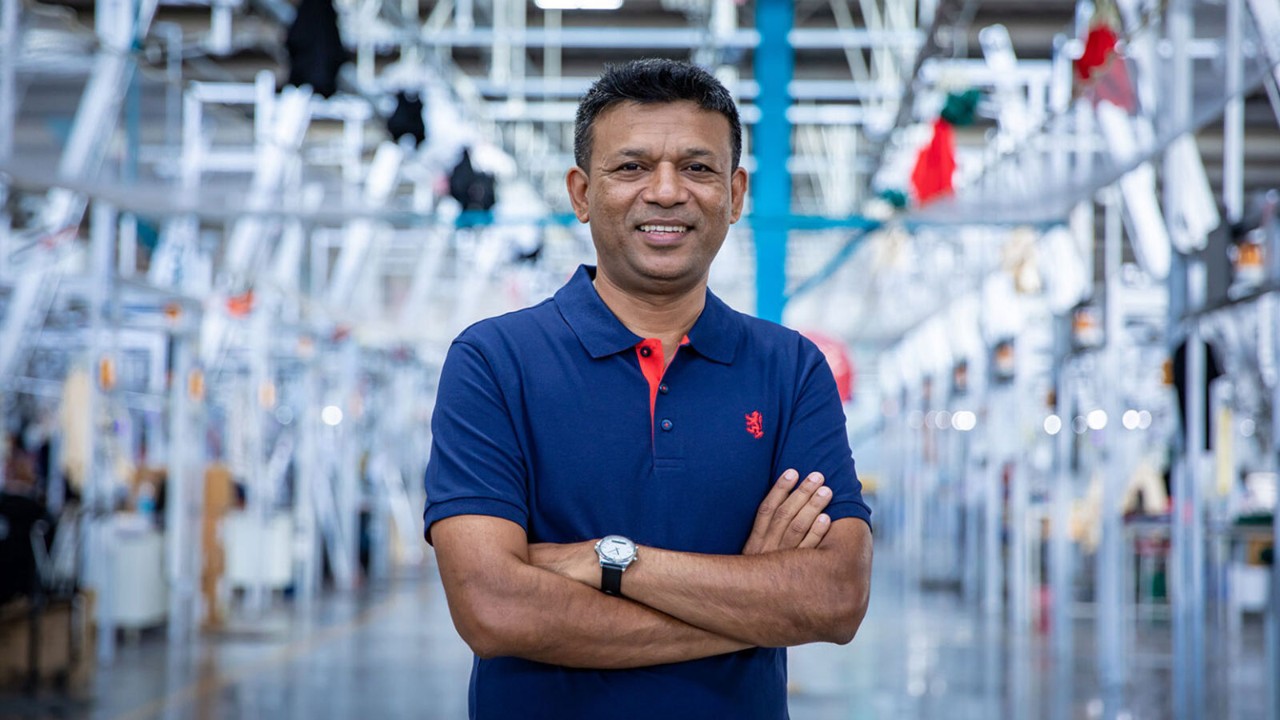
The company’s CFO, Sameer Chitbahal FCCA, highlights the vital role that finance plays in a sector where manufacturers worldwide are struggling with changing customer expectations, sustainability challenges, economic uncertainty and digital disruption. ‘The finance function has become deeply strategic,’ he says. ‘We can’t operate in isolation; we work very closely with production, operations, and our sustainability and technology teams.’
In total, 86% of the company’s production is exported, mostly by sea. This, along with higher labour costs, means that RT Knits has to work especially hard to remain competitive – but, as Sameer points out, this is true of most Mauritian companies.
CV
2023
CFO, RT Knits
2022
CFO, Real Garments
2014
Accounts manager, VTL
2010
Financial accountant, La Prudence Leasing Finance Co
2009
Senior analyst, BDO Mauritius
2003
EY Mauritius
‘For companies here, technology is essential for survival,’ he says. RT Knits has invested aggressively in automation and robotics over the past 15 years, reducing its workforce in the process from around 2,000 to 1,650 while increasing production output in its state-of-the-art factory.
Every possible element of the business – from inventory management to production and logistics – has been automated, but there is still more to do, Sameer says. ‘We can definitely automate more and we are looking into working with robotics. We also intend to invest in an AI-driven system that will deliver goods just in time for all departments. We are always innovating, and that’s not going to stop.’
‘Sustainability isn’t optional – it’s part of business survival’
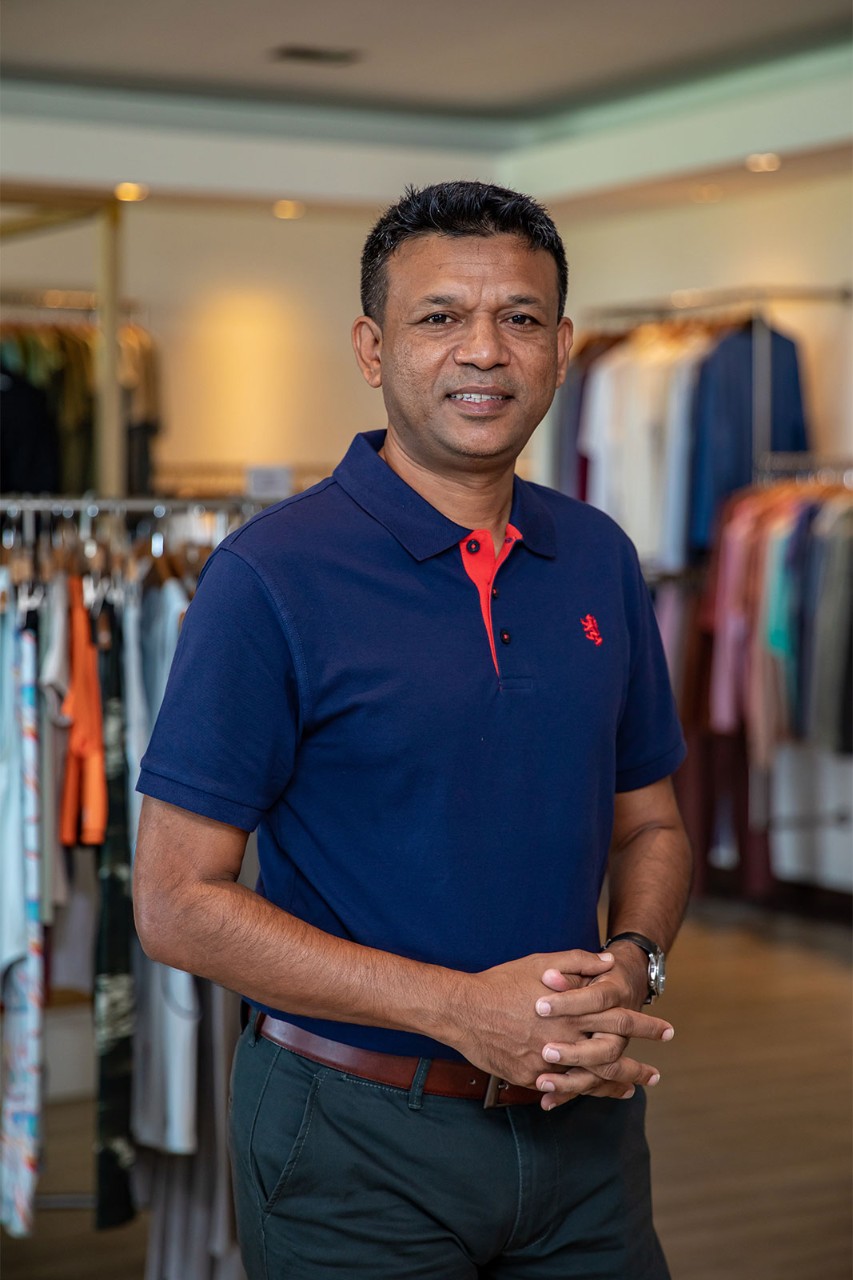
Digital transformation of finance processes has been a priority for Sameer since he joined the company in 2023. ‘We are constantly investing in automation, ERP systems and AI tools,’ he says. ‘We don’t want the finance department to lag behind.’ The 22-strong team he inherited now numbers a slimmed-down 16, and he is confident that they will be able to manage RT Knits as it continues to grow.
Preparing for change
Efficiency through technology, though, is not the only weapon in the company’s armoury; sustainability is a defining strategic pillar. ‘Sustainability isn’t optional – it’s part of business survival. While price competition remains difficult, we differentiate ourselves through superior quality, innovation and sustainability.
‘Customers are much more aware of environmental and social responsibility, and regulations are becoming increasingly demanding,’ Sameer adds. In particular, the European Union’s new digital product passport requirements mean that, from 2027, garments sold in Europe will need traceability information, including production details, environmental impact scores and sustainability data, that can be accessed through a QR code – a practice that RT Knits has already put in place.
Sameer credits the company’s visionary CEO, Kendall Tang, for its sustainability strategy. ‘Our management team was discussing sustainability back in 2007, long before it became a global trend in the textile industry,’ he says.
‘Our CEO has always believed in investing for the future rather than focusing on short-term gains. Sustainability at RT Knits is not simply a policy – it is part of the company culture because our leadership genuinely believes in it.’
Carbon commitment
RT Knits has committed to reaching carbon neutrality by 2040. It operates under a net metering scheme, whereby the Central Electricity Board measures the electricity generated by RT Knits’ solar infrastructure and nets it off against the company’s consumption. With a recent extension to its photovoltaic installation bringing capacity up to 7.5MW, RT Knits is projected to generate sufficient electricity to fully offset its consumption, resulting in a nil net electricity balance.
‘That’s become a major competitive advantage for us,’ says Sameer. ‘International clients increasingly value manufacturers that can demonstrate genuine sustainability commitments.’
RT Knits in numbers
US$55m
Turnover
1m
Garments produced monthly
500
Tonnes of fabric produced monthly
1,650
Employees
A new biomass project is also under construction, which will allow RT Knits to reduce its fuel oil consumption to zero. ‘Considering the volatility of global fuel prices, this is extremely important economically as well as environmentally. And it contributes positively to Mauritius’s wider energy sustainability goals,’ Sameer says.
‘The businesses that survive will be those that continuously adapt and think long term’
The company’s sustainability strategy is comprehensive, covering carbon emissions, liquid emissions, air emissions, waste management, energy optimisation and environmental compliance. Sameer and his finance team have been closely involved at every stage.
‘We approached it systematically, mapped our inputs, processes and outputs, and then tackled first the areas that had the biggest environmental impact,’ he says. ‘Finance plays a central role in ensuring these projects remain sustainable economically. Every investment is carefully evaluated, monitored and aligned with the company’s long-term objectives.’
Future ready
The company’s investments and strategy, says Sameer, stand RT Knits in good stead for the future. ‘Global competition will only intensify,’ he says. ‘The businesses that survive and grow will be those that continuously adapt and think long term.’
But that will not include, he adds, leaving its home. RT Knits products will always proudly be made in Mauritius. ‘We have been here for 56 years and our long-term plan is to work only from Mauritius,’ he says. ‘We are a pioneer and we don’t intend to go anywhere else.’

