Hostilities between the US and Iran have caused major upheaval in the world’s energy supplies as oil and gas shipments are blocked from moving from the Persian Gulf through the Strait of Hormuz, cutting off the global supply route. In late May, Reuters reported that around 2,000 vessels and 20,000 sailors remained trapped in the Gulf.
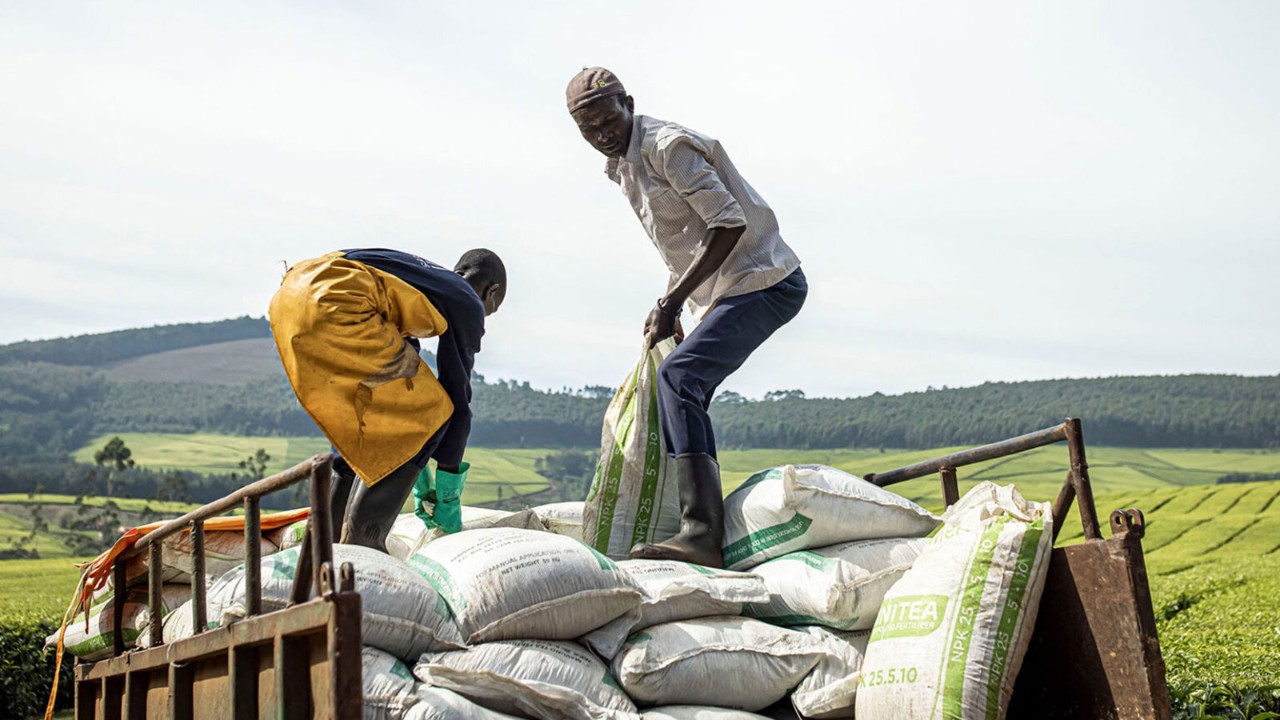
But it’s not just energy supplies that are disrupted by the closure. The Gulf is a major source of mineral fertilisers for many parts of the world and, in particular, for agricultural economies across East and Southern Africa. According to up to the UN’s Food and Agriculture Organisation (FAO), up to 30% of global fertiliser products – around 16 million tonnes – transit through the Strait of Hormuz each year. As a result, concern is rising among farmers and agribusinesses in Africa about prices and availability.
‘Given the unpredictability of the conflict, concern is fairly high’
Bringing the supply of this crucial input to a halt has major implications for farmers and food producers, not least because, as the FAO notes, there is no internationally coordinated strategic reserve of fertiliser to turn to in times of crisis. And while in many countries the growing season cycle means farmers and food producers are yet to feel the impact, if the war continues, and fertiliser supply remains uncertain, the future could look very different.
Prices are already rising significantly. According to the FAO, they are likely to be on average 15%-20% higher in the first half of 2026 compared with the same period last year.
Writing for the Institute for Security Studies, an independent research organisation, Julia Baum and Marvellous Ngundu point out that agriculture employs between 60% and 70% of Africa’s workforce and is dominated by smallholder farmers with ‘limited capacity to absorb rising input costs or supply disruptions’.
Shock adjustment
For Apollo Agriculture, which offers a range of products and services – from seeds and fertiliser to credit facilities and training – to around 27,000 small farmers in Kenya and Zambia, the implications of the situation are worrying.
‘Given the unpredictability of the conflict, I would say concern is fairly high,’ says Andrej Polak FCCA, Apollo’s head of finance. While the current growing and harvest season are unaffected by the crisis, there are acute concerns for the 2027-28 season. Typically, a farmer would use around 200 kgs of fertiliser for each acre of land under cultivation, Polak says. ‘If supply is cut and prices rise, farmers will likely reduce the area of land they farm. They will only farm what they can afford.’
Fertiliser supply has been considered as part of the company’s scenario planning, and stress testing has included challenging credit models with higher fertiliser prices. Apollo works closely with local fertiliser suppliers and does not use long-term contracts. As a result, Polak says, ‘The purchasing department is monitoring the market all the time.’
At Seed Co Group, which buys seed from commercial growers to trade onwards, Andrew Ndombo FCCA, head of internal audit and risk in Zambia, is also concerned. In a typical season, 37,000 acres of land would be required to serve the business’s needs. Front of mind for him and his team is the potential impact of the continuing closure of the strait on next year’s season.
‘If things don’t change, we will really feel the impact’
‘We have been looking at the implications of reduced supply of fertiliser, late supply and increased prices,’ Ndombo says, and like others, the company has also had to factor into its risk equations the impact of increased fuel prices.
‘That’s the kind of analysis we do,’ he says. ‘Then we advise management that in the light of this we need a response so that we can address these threats. If things don’t change, we will really feel the impact.’
Looking ahead
Meanwhile, Motjaba Siahkoohian FCCA, CFO at Olam Food Ingredients (ofi), is concerned about the impact on coffee production in Zambia and cocoa trading in Ghana. Siahkoohian was alert to the risks early on.
In response, ofi has bought in extra fertiliser for the coffee business, though this has come at a slightly raised cost and mainly from North Africa and Spain. ‘We don’t have as much concern for our coffee business,’ says Siahkoohian.
By contrast, in Ghana ofi operates a different business model, buying cocoa from small producers who operate under government-fixed prices. There is concern that the farmers will meet the same price and supply issues that worry finance chiefs, even if they are looking to next year.
‘I always try to signal to our business leaders to make them ready’
For Siahkoohian, the current crisis is illustrative of how finance chiefs must keep a close watch on geopolitical events and feed them into scenario planning, stress testing and information going to management and other departments, such as procurement.
‘I always try to signal to our business leaders to make them ready,’ he says.
Finance leaders across the agricultural sector are yet to feel the full impact of fertiliser supply constraints as current growing and harvest seasons are already funded. But they are looking ahead to next year and working through the numbers. It is essential work if their organisations are to be ready should the supply constraints endure.


