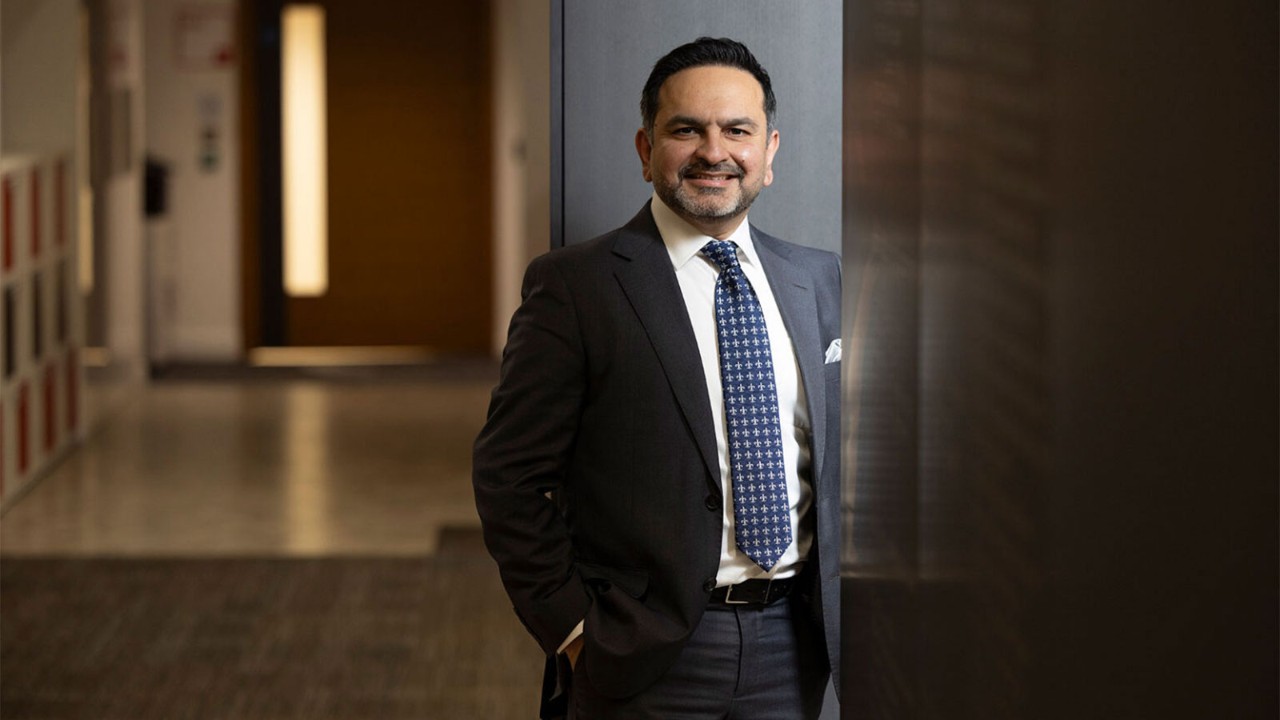
As CFO of Dubai-headquartered Bayt.com Inc for over 17 years, Nauman Asif Mian FCCA has overseen major growth in the recruitment platform’s scale and impact. It is an achievement that has seen him named as one of UAE’s most influential CFOs of 2025 and one of the top 30 CFOs in the GCC for 2026.
Back when he joined Bayt.com in 2009, the company had 200 employees, a technology hub in Jordan and 10 million registered job seekers. Today, it has 600 staff, additional technology hub in Pakistan and more than 50 million registered users. Mian manages the finances of this juggernaut with a finance team of nine.
‘The venture capitalists of the world wanted a piece of us’
Its success, says Mian, is thanks in part to the advanced filters and AI algorithms it uses to match people to jobs. ‘We have always used AI even when it wasn’t a buzzword.’
Virtual growth
Mian’s remit also includes vFairs, a virtual events management platform founded in 2016, which has also seen substantial growth.
The platform has expanded into the US and Canada, as well as extending its reach within the Middle East. Revenue has mushroomed from a standing start, with much of the momentum building through the pandemic.
In a transformation reminiscent of Zoom Communications, vFairs, which allows users to plan, manage and host virtual events, increased its revenues tenfold between 2019 and 2020, attracting an impressive roster of clients including the United Nations and World Bank. ‘It is a global product, so that gives us a good understanding of what’s happening, not just in the Middle East but across the world,’ Mian says.
‘With AI, we need to be even more human than before’
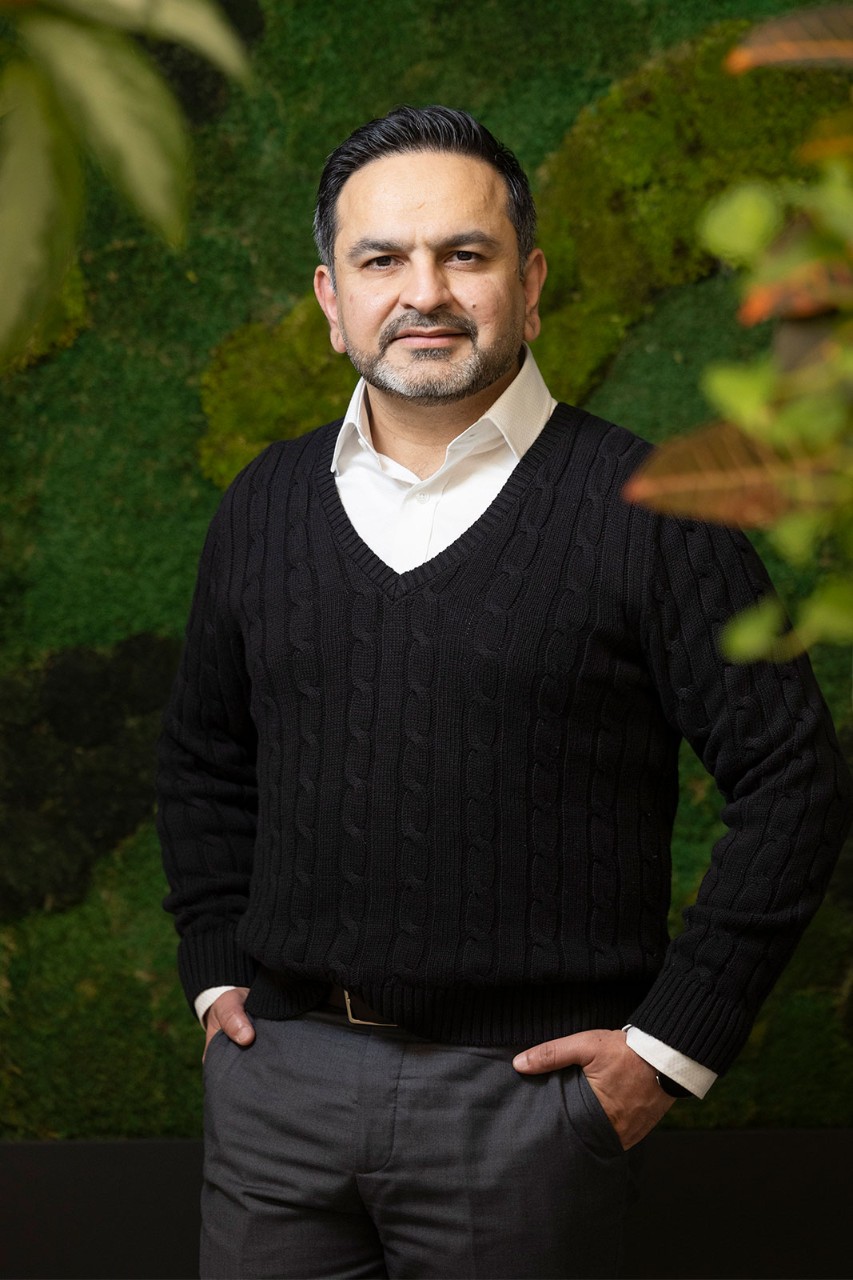
That growth has brought its own intensity – and scrutiny. For a period of around six months in 2020, with the product flying off the shelves, the company attracted a great deal of attention. Venture capitalists and other investors were interested, and Mian was taking calls with advisers carrying out due diligence checks, sometimes through the night. ‘A lot of people were wondering what to do in Covid,’ he says. ‘I was trying to figure out when to sleep.
‘The venture capitalists of the world wanted a piece of us. People were looking at our numbers and reviewing them, and we had to be across the whole thing, not just moving with the business, but opening up, letting people look under the hood.’
The intense interest was not just about the product but also very much about finance. ‘That’s the core, that’s the foundation,’ he says. ‘Nobody wants to invest in a company where the foundation is weak. That was critical.’
Looking forward
While vFairs’ growth may be out of the ordinary, when Mian looks ahead at the business world in general and the role that accountants play, he sees only potential for the profession.
His perspective is informed not just by his experiences in the Middle East and at Bayt.com, but also from his ACCA vantage point – he sits on the ACCA Council Board, is a member of the Global Business Forum and Global Tax Forum, and a former member of the UAE advisory board. Agile and well-informed professionals, he believes, will continue to serve a business world capable of making sense of myriad challenges and opportunities.
‘Being part of ACCA, which in itself is so forward-thinking, is really helpful,’ he says. ‘Sitting in the Middle East, the advantage is you are interacting with a lot of people from different parts of the world. You see a clear difference between where ACCA is and where other accounting bodies are in terms of their mindset.’
In particular, he sees a profession that is highly AI-literate, not just in terms of the efficiencies it brings but also of its widest potential. ‘AI literacy doesn’t mean you have to write codes or know large language models,’ he points out. ‘It’s really about how you communicate with AI tools, the prompts that you’re giving it, the sort of questions you ask of it.’
‘It’s not about efficiency any more. It’s about the value-add’
We are, he says, living in an era where it is incumbent on accountants and business leaders to be extremely active in their thinking around how they use this new tool, so that what it generates comes from an organisation’s collective intelligence and its governance code.
‘We need to be even more human than before,’ he says. ‘You really have to think it through and apply the morals, the goals, the institutional knowledge, the professional scepticism, the law. You are trying to educate AI – to educate it about your company culture, which hopefully has been shaped by your professional ethics and standards.’
Adding value
It is, he says with admirable understatement, an interesting time. ‘People are having to iterate and communicate with AI about things they might’ve been a bit woolly about or taken for granted. You have to articulate it really fully, because otherwise the thing is going to run away with a half-truth.’
There will, he concedes, always be people who see accountants as scorekeepers. But the future is much more nuanced than that, he believes. ‘It’s not about efficiency any more. It’s about the value-add. That’s where the future of the profession lies – knowing how you take advantage of the tools that have evolved.’
CV
2026
Non executive board member, Baker Tilly UAE
2025
Advisory board member, School of Business, American University of Dubai
2024
Member, ACCA Council Board
2009
CFO, Bayt.com Inc, Dubai
2006
Auditor, PwC, Dubai
2004
Financial analyst/management accountant, LA Fitness plc, UK


