Specialist sustainability reporting can help companies and governments make wise commercial and policy decisions, but for a pelagic state such as the Maldives, the acquisition of reliable eco-data is a crucial mission.
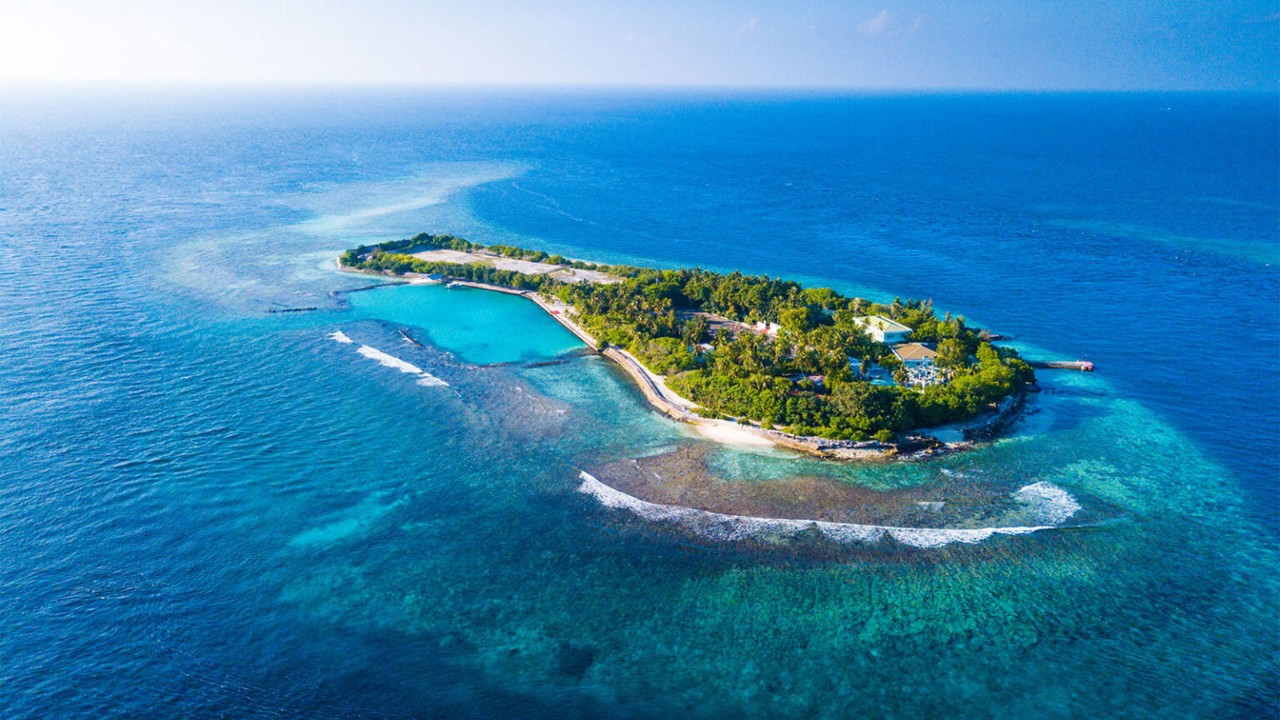
On every front, the Indian Ocean nation makes a compelling case for ocean accounting. It is one of the world’s most geographically dispersed countries, with more than 1,000 coral islands, and the national territory consists overwhelmingly of ocean – only around 0.3% of the state is actual land.
According to a 2025 government implementation roadmap for ocean accounts, marine and coastal ecosystems are key to the success of the tourism and fisheries sectors that drive the economy. The loss of coastal protection from natural assets such as coral reefs, for example, would require substantial public investment in alternative infrastructure, diverting resources from other economic development priorities. With the country aiming for ‘developed nation’ status in 2040, ocean accounting may also help the government and its commercial partners undertake evidence-based strategic planning.
One of the biggest barriers is that ocean accounting is such a very new area
The government is therefore building a national system of natural capital accounting to take stock of its marine ecosystem and assign monetary values based on its benefits to the population (of just over 500,000) and the national economy. The pioneering project will integrate the data generated into national decision-making by 2030, with full scaling up taking place by 2035, when natural capital accounting will be implemented nationwide and the data used in political decision-making.
Despite the challenges in realising the project, Thoriq Ibrahim, the country’s minister of tourism and environment until he stepped down in April, is upbeat, saying the government is ‘well on track’ to achieve its goals.
Pioneers
One of the biggest barriers is that ocean accounting is such a very new area. For a small developing nation such as the Maldives, pioneering the sector represents a major challenge. Ibrahim, too, acknowledges that ‘building capacity and technical expertise’ is a major hurdle.
However, after a successful pilot study of ocean accounts in Laamu Atoll in 2024 quantified the extent and condition of key habitats (coral reefs, seagrass, mangroves) alongside the economic flows they support – from tourism and fisheries to coastal protection – the Maldives is now scaling up the process nationwide.
The Laamu Atoll pilot involved applying the UN’s globally approved statistical framework of SEEA Ecosystem Accounting (SEEA EA). Ibrahim says the Maldives has trained locals and given them hands-on experience to conduct the work. ‘In fact, one of our staff is currently undertaking postgraduate studies in ecological economics through the UN’s Enhancing National Development through Environmentally Resilient Islands project. This investment in people and local expertise is something we will continue to build on.’
‘The Maldives’ ocean accounts are internationally credible’
Lisama Sabry, senior conservation officer of the Ministry of Tourism and Environment, worked closely with the Laamu Atoll project. She lists the challenges to overcome in ocean accounting as fragmented and inconsistent environmental data, limited monitoring capacity, high survey costs due to geographic dispersion, and the lack of centralised databases. She says the project has helped the Maldives to develop a national accounting framework aligned with SEEA EA, use remote sensing to fill data gaps, generate operational manuals and guidance, and strengthen the capacity of the Maldives Bureau of Statistics and the Ministry of Tourism to manage ecosystem accounts.
Jordan Gacutan, senior research fellow at the sustainable development reform hub of the University of New South Wales, in Sydney, Australia, agrees that the development of ‘robust ocean accounts is technically demanding for any country’. The university is also the secretariat for the Global Ocean Accounts Partnership (GOAP), which has been working closely with the Maldives to prepare the Laamu Atoll ocean accounts. Gacutan says the Maldives’ ocean accounts are ‘internationally credible and directly comparable with accounts produced by other countries’.
Scaling up
Sabry says ‘the Maldives is now replicating what was done in Laamu Atoll across the country, with an ongoing ocean accounting project in the Fuvahmulah Atoll’ and plans are under way to assess another two atolls – Thiladhunmathi and Lhaviyani.
‘Momentum for ocean accounts continue to grow,’ Gacutan says. He points out that 19 countries, including Sri Lanka, Australia, Indonesia and Panama, have pledged to advance ocean accounts by 2030.
‘We are integrating ocean accounting into our national development plan’
In January, the Maldives adopted IFRS Sustainability Disclosure Standards for broader-based sustainability reporting, phasing in declaration requirements for listed companies, financial institutions and large state-owned enterprises. A Maldives-based accountant working for EY says the IFRS S1 and S2 standards require the ‘disclosure of climate-related physical risks such as sea level rise, coral bleaching and storm surge impacts on business model and value chain, so directly support ocean accounting’. He adds that the IFRS practice statement for nature-related disclosures currently being developed by the International Sustainability Standards Board will make ocean accounting even more crucial for individual accountancy firms as well as for the Maldives nationally.
At a national level, ocean accounting data is already being embedded into decision-making in the Maldives. Ibrahim says: ‘We are working now to integrate ocean accounting into our national development plan. It is a big step forward in making sure ocean health and resource data actually feeds into how we make decisions at the national level.’ He adds that the Maldives is also currently finalising an updated national biodiversity strategy and action plan that will contain specific targets on ocean accounting.


