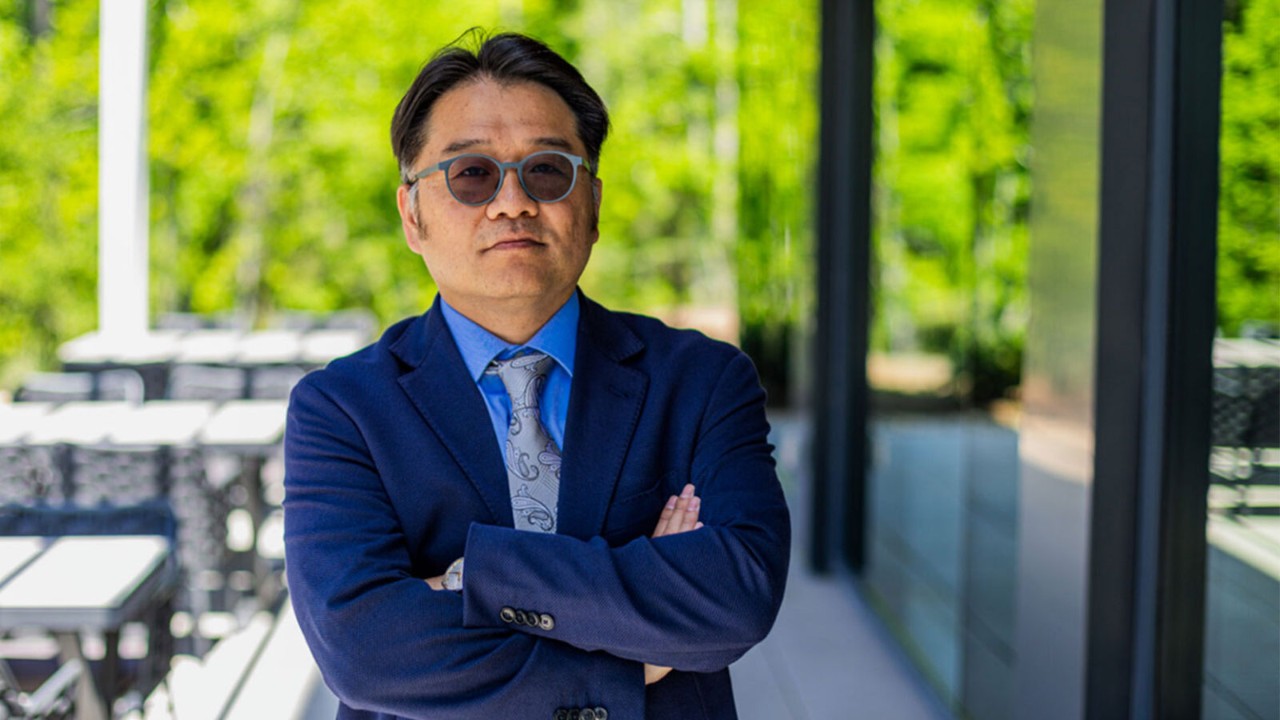
In a career that has has so far spanned three continents and multiple industries, Alan Yilun Wu FCCA has learned two crucial lessons: the importance of understanding the business beyond the numbers and being culturally adaptable.
To be effective, senior finance leaders need a full view of operations, systems and processes: ‘Understanding the flow of the business is as important as understanding the financials,’ Wu says. ‘If you want credibility, go to the factories, sit with the engineers, understand the products.’
This goes hand in hand with cultural adaptability. ‘You can’t lead internationally if you only know one way of working,’ he says. ‘Put yourself in different environments, listen more than you speak, and learn how people operate in each market. That flexibility will carry you a long way.’
‘You don’t often get the chance to be part of something at the heart of an industry boom’
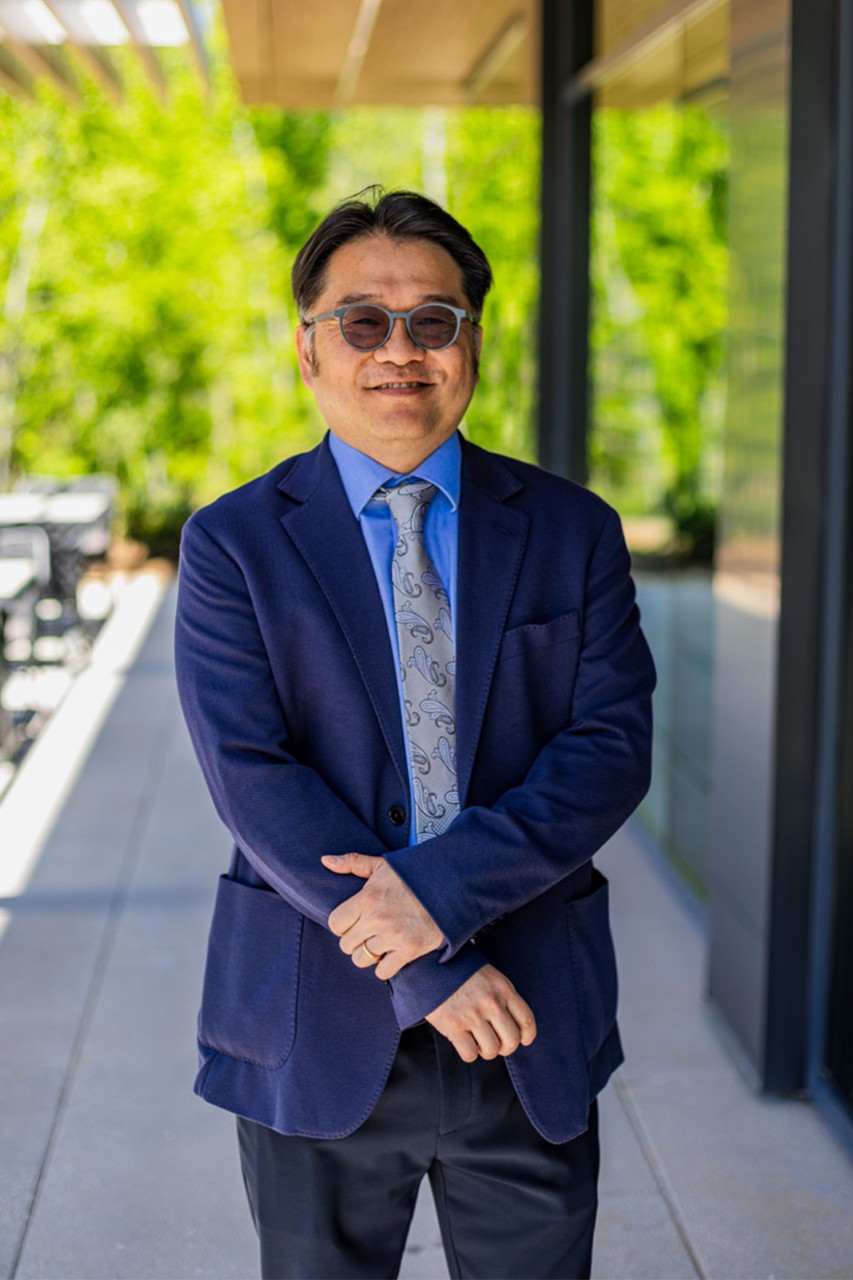
Those twin philosophies have guided Wu to his current role as CFO of US-based Airsys, which designs and manufactures precision cooling systems for data centres, where he is helping steer a company positioned squarely in the centre of the global data‑centre and AI‑infrastructure boom.
Learning commitment
With AI workloads driving unprecedented heat loads, demand for advanced cooling has surged, and Airsys is expanding rapidly across North America, Europe and Asia to meet it. The company is also building a large new headquarters and manufacturing hub in South Carolina to support its growth and strengthen its North American footprint.
Wu’s mandate spans financial strategy, capital‑market readiness, global expansion and the operational discipline required to support this scale. It is the latest point on a career built across three continents and shaped by a personal commitment to continuous learning.
Wu joined Airsys after being approached by contacts who knew the company’s owners. With family in London and Shanghai, he initially hesitated to add a third base in the US. But the opportunity aligned with his desire to keep expanding his experience and capabilities. ‘You don’t often get the chance to be part of something at the heart of an industry boom,’ he says.
Today, he splits his time between London and South Carolina, applying decades of global experience to a company preparing for its next phase of growth.
Independent outlook
Wu’s international trajectory began long before his professional life. Born in Shanghai, he spent his early years in a China that was still economically underdeveloped. His father’s diplomatic work took the family to the UK – a career change for his father meant that 13‑year‑old Alan would be sent to London to live with family friends. ‘I was pretty much on my own,’ he recalls.
‘I could interpret numbers into stories’
Wu attended a local school, learned English and Mandarin, and developed the independence and cultural adaptability that would later define his leadership style. These early experiences made him comfortable navigating unfamiliar environments, a skill that would become essential in his global finance career.
After completing secondary school, Wu studied accounting and finance at the University of Greenwich. Accounting appealed to him for practical reasons. ‘Companies always need accountants,’ he says, ‘and I could interpret numbers into stories.’
The ACCA qualification strengthened that instinct and became his ‘international passport’, allowing him to move between markets with credibility. The final papers for the certification, with their emphasis on business analysis, risk and judgment, taught him how to turn financial data into a narrative leaders could act on, he explains.
Crossborder exposure
Wu began his career at KPMG in Shanghai in 2000 during the city’s early 2000s boom. The move gave him exposure to fast‑growing markets and crossborder work early in his career. When he returned to the UK in 2002 to pursue his ACCA qualification, he joined the Audit Commission. The work was steady but repetitive; ‘I’m not the sort of person who likes to do the same job over and over again,’ he says.
IBM Global Business Services offered the broader exposure he was looking for. Joining the company after IBM acquired PwC Consulting, Wu gained experience in end‑to‑end business processes: procure‑to‑pay, order‑to‑cash and in major ERP systems like SAP and Oracle. ‘You see how things work in reality – not just the financials, but the whole flow,’ he says.
‘Audit is not about numbers; it’s about trust’
In 2008, Wu returned to Shanghai to join Honeywell as corporate audit director for the Asia-Pacific region – a role that took him across Japan, Korea, India, Australia and South-East Asia. His London upbringing and multilingual background made him comfortable in diverse environments; ‘I always felt at ease,’ he says.
CV
2025
Global CFO, Airsys, South Carolina, US
2024
CFO, Yutong Bus and Coach, Zhengzhou, China
2015
Regional CFO, Johnson Controls, Shanghai
2008
Regional CFO/corporate audit director, Honeywell, Shanghai
2006
APAC internal auditor, Invensys (now Schneider Electric), London, UK
2003
Finance and strategy consultant, IBM Global Business Services, London
2002
Senior auditor, Audit Commission, London
2000
Senior associate, KPMG, Shanghai
Internal audit, for Wu, was a business partnership rather than a policing function. He spent time with leaders, learning products, markets and operations. ‘Audit is not about numbers; it’s about trust,’ he says. This hands-on collaboration made him visible and promotable.
Johnson Controls recruited Wu from Honeywell in 2015 to help build its new global HQ in Shanghai and serve as CFO for APAC operations. The role expanded his scope significantly, he explains, including responsibilities for multi‑factory P&Ls, cross‑regional operations and turnaround assignments.
From Johnson Controls, Wu spent a year at Yutong, a major Chinese bus manufacturer – an experience that was markedly different from his multinational background. ‘The mentality was very different,’ he says. Meetings were conducted from printed Word documents, and SAP was viewed primarily as an accounting tool. Yet he built systems, hired strong teams and gained insight into overseas expansion from the perspective of a domestic Chinese giant.
Now at Airsys, Wu is helping position the business for its next phase, including raising capital for growth while building the financial and operational infrastructure needed for scale. What ties this current endeavour to his past, besides extensive financial management experience, is a consistent willingness to learn about new systems, new markets, new industries and new cultures.
‘You always learn something with every opportunity,’ he says. ‘That’s what keeps you moving.’


