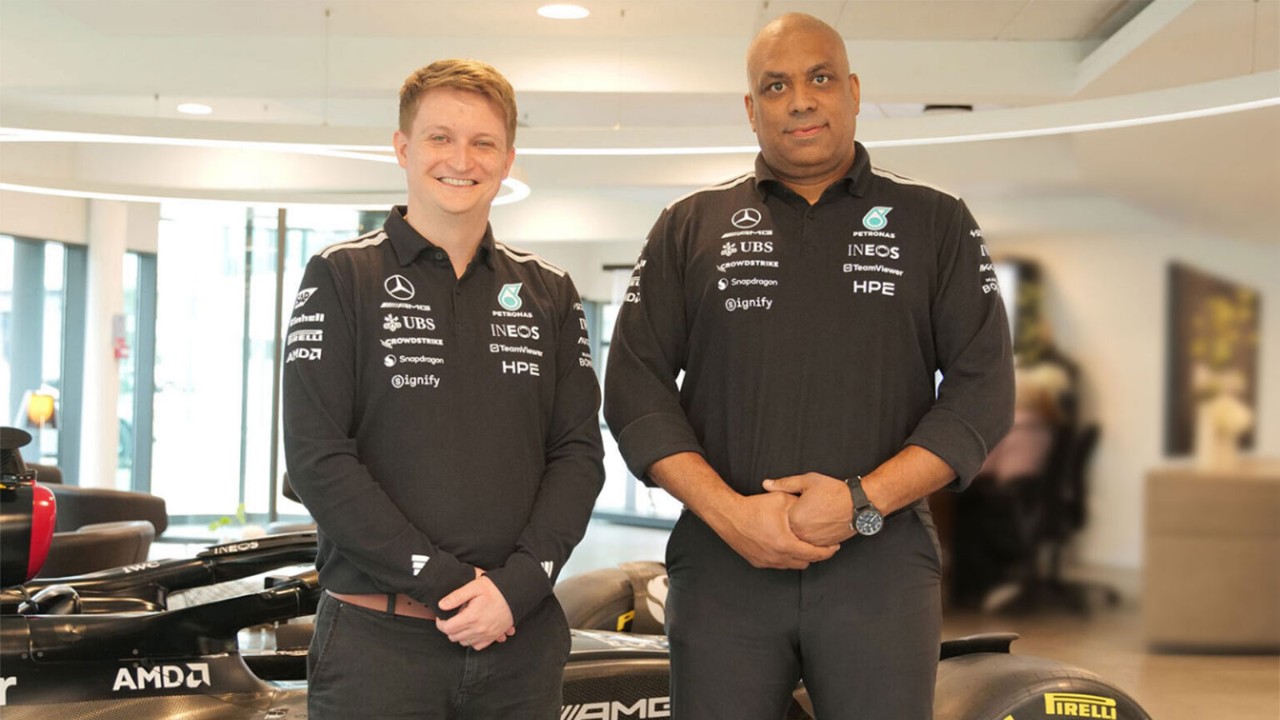
There is an interesting symmetry to be found in the Mercedes-AMG PETRONAS Formula One team in 2026. On track, British driver George Russell is paired with Italian prodigy Kimi Antonelli; off it, CFO Russell Braithwaite FCCA and his finance leadership team work with newly appointed deputy finance director Tom Capocci FCCA.
Capocci, who joined the team in November 2025 from the Haas F1 team, describes his move as transformative: ‘It’s a completely different environment to be in, and I’m absolutely loving it.’ His remit spans business partnering, budgeting and forecasting and cost-cap optimisation, while Braithwaite oversees ‘everything financial – governance, profitability, financial strategy and risk management’.
Dramatic changes have come into force in the cars this season. But the most profound shift in Formula 1 in recent years has not only been on track, but also in how teams operate behind the scenes. The introduction of the cost cap, which has been in effect since 2021, has transformed finance from a support function into a competitive function and performance differentiator.
‘We now work with the engineers to think more carefully about what assets we buy’
‘Before, when it was an arms race; it was just a case of keeping the money flowing so the team could make the fastest car,’ Braithwaite explains. ‘Obviously, that completely changes when there’s a limited amount of resources. So, we are right at the table.’
Capocci echoes this, adding that finance is now ‘a really crucial part of a Formula 1 team’, and deeply embedded in decision-making across engineering and operations. And this shift has elevated financial literacy across the organisation, with non-finance staff increasingly attuned to cost cap constraints.
Smarter spending
The latest regulatory cycle has intensified this dynamic. Changes to how capital expenditure and depreciation are treated have forced closer collaboration between engineers and finance teams.
‘The rules have changed, and now capital expenditure and depreciation are being treated differently,’ Braithwaite says. ‘We now have to work with the engineers to think more carefully about what assets we buy and the depreciation impact.’
Sprint race
The finance professionals respond to our quick-fire round:
- Drive to Survive or F1: The Movie?
Tom Capocci: Drive to survive
Russell Braithwaite: F1: The Movie
- First car?
TC: Citroën Saxo: Gavin and Stacey vibes
RB: Audi 80 Sport
- Mario Kart or Fifa?
TC: Mario Kart
RB: Fifa, but if it’s about beating my 10-year-old, it’ll be Mario Kart
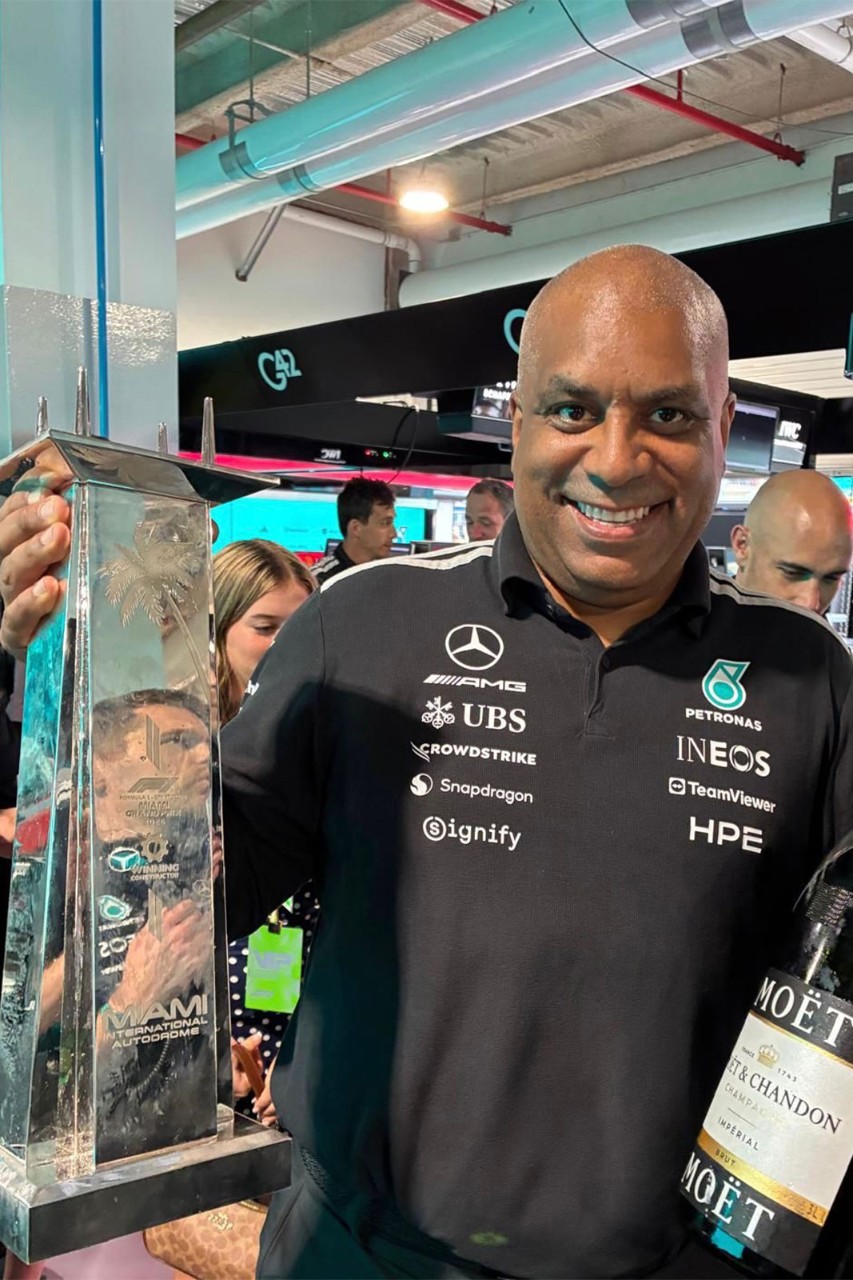
Meanwhile, R&D costs – critical in a year of major car redesign – sit largely within the cost cap. As Capocci says: ‘It’s probably safe to say it is an expensive year as not much from previous seasons could be reused.’
Rather than overinvesting in the outgoing 2025 car, the team shifted resources early: ‘We took a decision to start incurring costs for the 2026 car very early and very heavily,’ Braithwaite says. And early results on the track suggest that the gamble is paying off.
Global sport, global events
Formula 1’s global footprint inevitably exposes teams to geopolitical and logistical disruption, and recent events have underlined the importance of risk management, a key skill for today’s finance professional.
Braithwaite recounts how conflict in the Middle East forced the rapid rerouting of personnel: ‘At very, very short notice we had to reroute flight paths for all those attending the Australian Grand Prix, and to reroute some staff that were due to undertake a test in Bahrain to Saudi Arabia, and then from Saudi to Egypt and finally back to the UK.’
Such disruptions extend beyond logistics. Two Grand Prix cancellations (Bahrain and Saudi Arabia) have financial implications, although Braithwaite believes that the net effect will be mitigated to some extent by cost savings: ‘We will lose our share of the promoter fees, but we will also save some costs, so it shouldn’t be too dramatic.’
Even currency fluctuations matter. ‘A lot of our income comes in in US dollars. If the dollar moves, that has an impact,’ he adds.
American dream
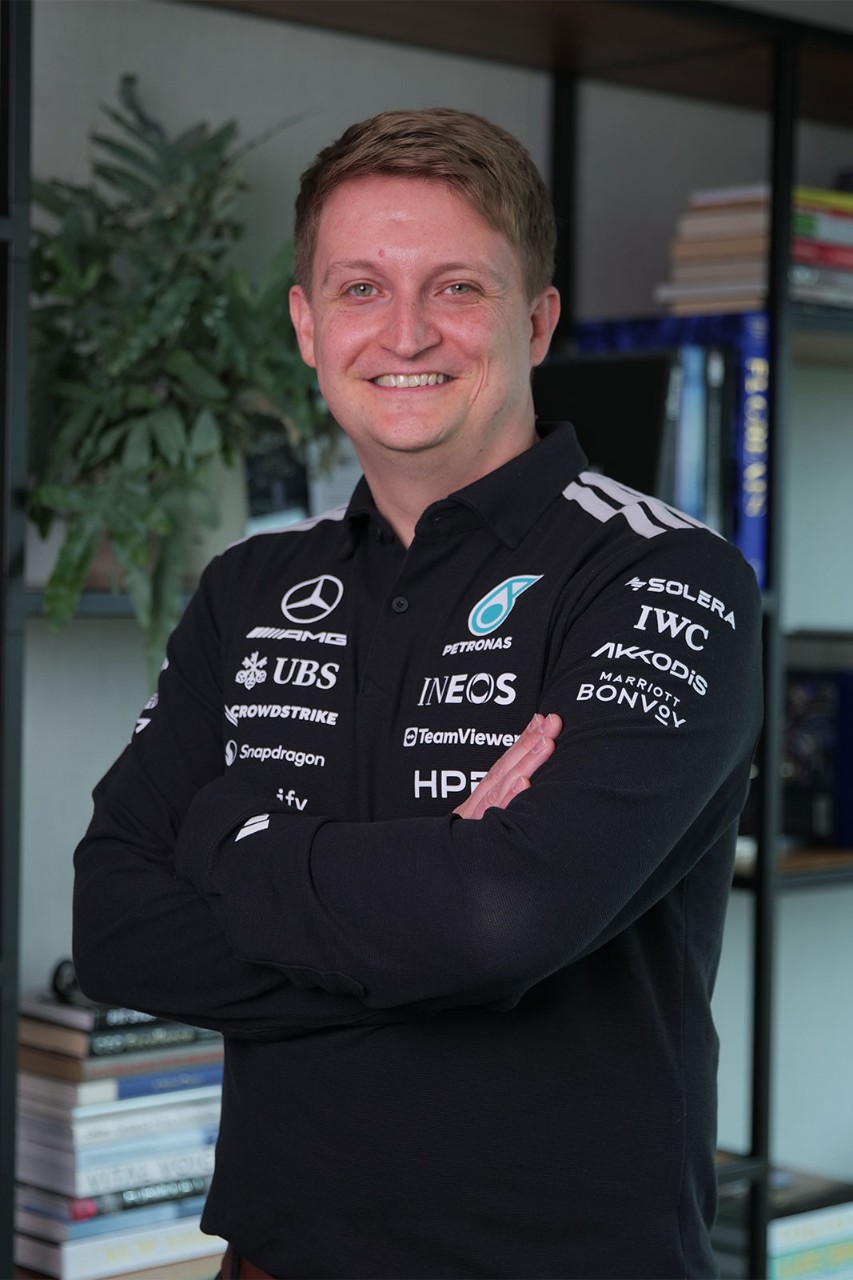
Few forces have reshaped Formula 1’s commercial landscape in recent times more than Netflix’s Drive to Survive. Mercedes-AMG F1 initially opted out of the first season, a decision that was quickly reversed. And now team boss Toto Wolff (to whom Braithwaite reports directly), plus George Russell and Kimi Antonelli, feature heavily, turning them into screen stars as well as racing heroes.
‘We were not sure at the beginning but quickly recognised that it was important to be involved, and it has been a raging success,’ Braithwaite explains.
The series has been particularly influential in the US, helping unlock a potentially very lucrative market. ‘Specifically in the American market, it has been massive and is helping to transform the sport,’ he says.
Timely investment
Behind the scenes, Mercedes-AMG F1 is embarking on a significant finance transformation project. ‘We are investing very heavily to leverage technology, and to make us less about the production of information and more about users of information,’ Braithwaite says.
Artificial intelligence is also emerging as a tool for efficiency and decision-making, helping teams interpret complex regulations and understand the impact of certain decisions faster. For Capocci, this reflects a broader trend: finance roles are, he says, ‘transitioning more to forward-looking, strategic roles’.
‘There’s no arrogance here at all. It is very humble’
That forward-looking mindset extends to driver strategy. Following former world champion Lewis Hamilton’s departure to Ferrari for 2025, Mercedes-AMG F1 has backed Antonelli (18 years old when Hamilton exited), a move that was widely seen as ‘bold’. There is a parallel: just as the team invested early in the 2026 car, it has also invested in future talent.
Asked what he was dreaming about at 18, Capocci laughs: ‘Becoming an accountant!’ Braithwaite says the same, although he was particularly eyeing up ‘global luxury brand businesses’. Antonelli’s dreams might be different, but the team’s willingness to back the youngster reflects a shared philosophy: calculated risk in pursuit of long-term success.
Quiet confidence
Despite strong early-season performance, there is little complacency. ‘We are very positive, but cautiously optimistic,’ Braithwaite says of the team’s mood. And Capocci has been struck by this culture: ‘There’s no arrogance here at all. It is very humble.’
In a sport defined by marginal gains, the integration of finance within the wider strategy of the team is not an option; it is now, almost, as important as having two of the best drivers in the cockpit.
As Braithwaite puts it, success ultimately comes down to alignment: ‘We need everyone on board to make a fast car, and laptime is our primary currency.’
See more insights in the video interview with Russell Braithwaite and Tom Capocci:


