
For years, listing a national champion was a statement of economic ambition across the Gulf. It brought international investors into domestic businesses, strengthened exchanges and demonstrated that the region’s diversification could be bought as well as discussed.
The UAE’s recent moves to take some of those businesses private reveal how that calculation is changing. What might look like a reversal reflects a different question: whether the ownership structure that helped open an economy still suits the next phase of building it.
The reasons for leaving an exchange differ. A sovereign shareholder may seek greater flexibility to fund long-term investment, while a parent company may simply complete an ownership structure it already controls. What connects these decisions is a reassessment of whether remaining listed still serves the company’s next stage of development.
National priorities
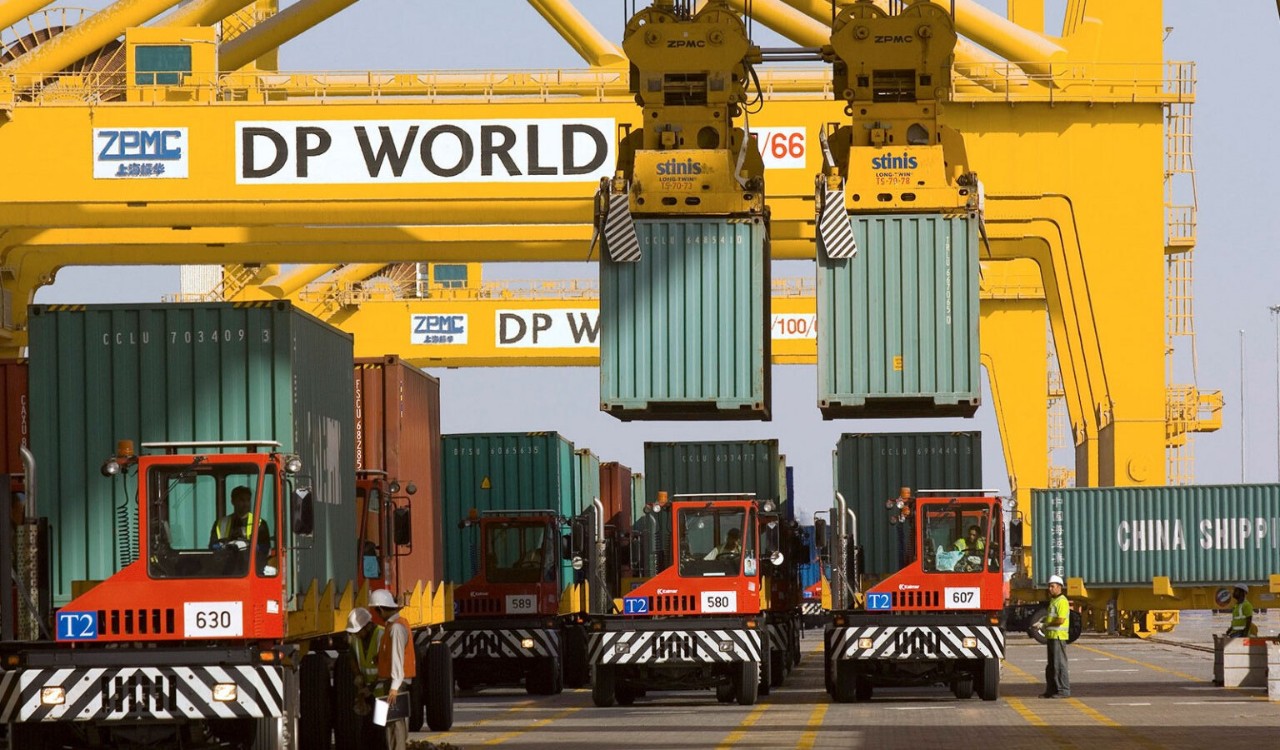
Several UAE companies have taken this route in recent years. TAQA and Emirates Islamic Bank have left their exchanges; AD Ports is moving towards full ownership by its controlling shareholder; and DP World provides an earlier example. Their circumstances differ, but each decision brings ownership together under a parent able to determine the business’s next steps.
Infrastructure businesses face a particular challenge as listed companies
AD Ports, the ports and logistics operator, has been listed on Abu Dhabi’s exchange since 2022. Its majority shareholder, ADQ, sits within L’IMAD Holding, an investment company owned by the Abu Dhabi government. L’IMAD has explained that acquiring the remaining shares would support expansion requiring substantial capital, potentially through additional borrowing or equity, while leaving less room for dividends. It has identified a possible mismatch between those needs and public shareholders’ expectations for nearer-term returns.
TAQA, the Abu Dhabi energy and water group, delisted in September after Abu Dhabi Power Corporation, also under L’IMAD, acquired its remaining shares. The immediate basis was the consolidation of ownership. Its wider significance lies in placing an operator of essential services entirely with a sovereign owner whose interests include the economic activity those services support.
Dubai’s DP World made the investment argument explicitly when it went private in 2020. Its transformation from a port operator into an integrated logistics provider required a long-term approach that it considered difficult to reconcile with public-market expectations.
Longer term ambitions
In general, infrastructure businesses face a particular challenge as listed companies. They report results every quarter, which can put pressure on boards and executives to deliver profit growth and shareholder returns in the short term.
Yet building a port, expanding an electricity network or developing a new trade route requires years of spending before the full benefits emerge. Abu Dhabi’s sovereign wealth, liquidity buffers and access to funding give it the ability to finance that gap. By taking full ownership, it can allow management to pursue a longer-term investment programme with less pressure to deliver immediate returns.
Changing ownership to accommodate transformation need not be permanent
Regional disruption makes that flexibility more valuable. AD Ports rerouted cargo around disruption in the Strait of Hormuz, while TAQA took measures to maintain electricity and water supplies. Preparing for such events can require investment in alternative routes, storage and backup capacity that may be underused in normal times.
For a commercial shareholder, the question is whether that capacity earns an adequate return. For Abu Dhabi, the calculation also includes keeping factories operating, goods reaching businesses and essential services available to households under any conditions. Full ownership makes it easier to fund those investments on the basis of their value to the wider economy, even when the benefits extend well beyond the company’s own balance sheet.
Global strategy
Changing ownership to accommodate transformation is well established internationally, and it need not be permanent. Dell went private in 2013, reshaped itself through its acquisition of EMC in 2016, and returned to public markets in 2018 as a far larger enterprise infrastructure group.
The debate over short-term pressure extends beyond these transactions. Warren Buffett and Jamie Dimon challenged quarterly earnings guidance because chasing forecasts can crowd out longer-term priorities, while supporting continued reporting of actual results.
The UAE’s exchanges have gained international recognition and broader investor access
US President Donald Trump went further, arguing for less frequent reporting itself: it would cut costs, free managers to focus on running their companies, and narrow the gap with what he described as China’s far longer planning horizon. In May, the US Securities and Exchange Commission proposed allowing companies to report semi-annually instead of quarterly.
The next phase
The UAE’s exchanges have gained international recognition and broader investor access, giving the country more room for selective ownership decisions. Continuing to bring attractive businesses to market can broaden investor opportunities while sovereign capital supports companies whose next phase requires sustained investment.
These ambitions can advance together. Public markets give investors a stake in the country’s growth, while full ownership can give selected strategic operators the funding and time to prepare for future demand. The UAE’s financial strength allows it to pursue both, matching each business with the ownership best suited to its development.

