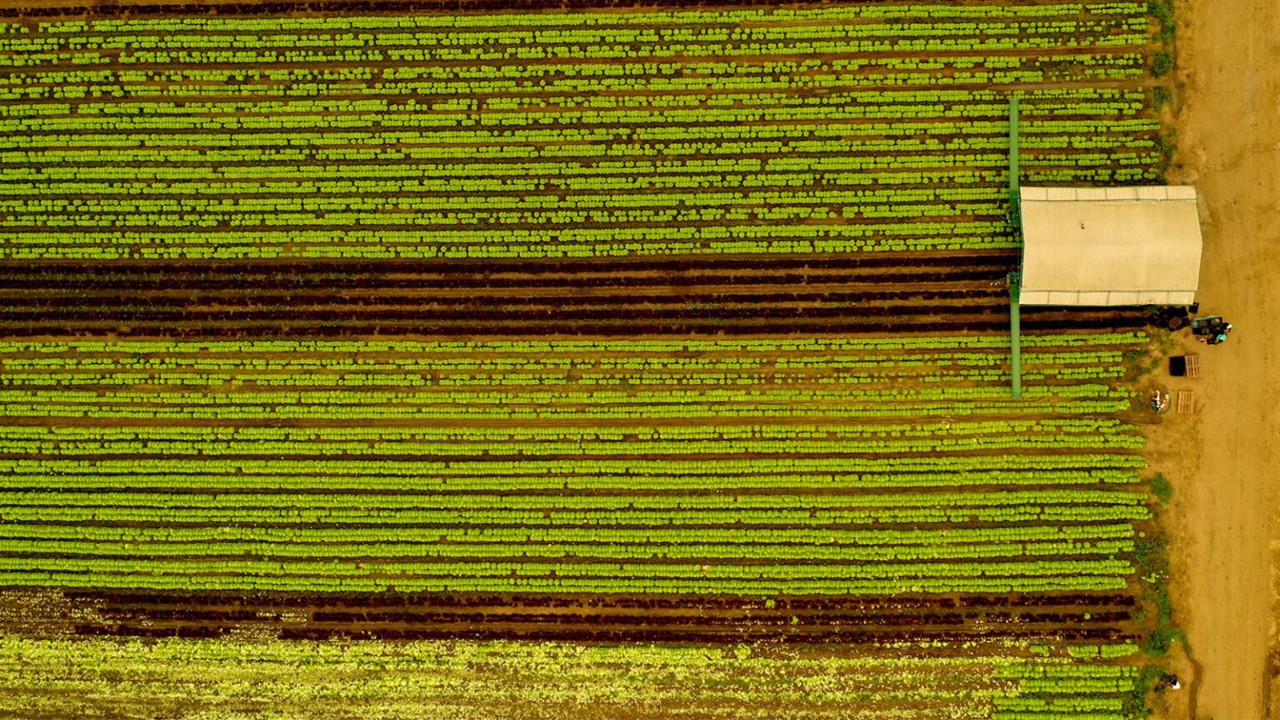
At the August 2026 session of the UN Convention to Combat Desertification, the African Development Bank called for greater financing for land restoration and urged Africa to turn its commitments into action.
The ambition is substantial. Through the African Forest Landscape Restoration Initiative (AFR100), 34 African countries have pledged to restore 129.5 million hectares of degraded land by 2030 — a land area slightly larger than South Africa. Delivering that daunting target will require finance on a comparable scale.
Converting funding into accessible financing has been a slow process
Completing the Great Green Wall (a land restoration and climate resilience project that stretches coast to coast across the Sahel) alone needs an estimated US$33bn by 2030. Although more than US$19bn has been committed to constructing the 8,000km-long greenbelt, converting that funding into accessible financing has been a slow process.
‘The binding constraint is not a shortage of capital, but rather absorptive capacity,’ says Dorothy Maseke, nature finance lead at development finance organisation FSD Africa. ‘The gap lies in the market’s structural ability to originate, package and absorb capital on both the developer and investor sides.’
Unclear revenue
Land restoration can generate significant economic benefits – from more productive agriculture and improved water security to jobs, climate resilience and biodiversity. But those benefits do not necessarily translate into predictable cashflows for an investor.
For Juliano Assunção, executive director of the non-profit analysis and advisory body Climate Policy Initiative (CPI) at PUC-Rio, this is one of the central financing challenges. ‘Forest restoration is difficult to finance with conventional commercial capital because its outputs, including carbon removals, only become revenue if someone is willing to pay for them, and that demand remains limited and uncertain,’ he explains.
‘A bankable project requires independently verifiable outcomes’
The economics can also be difficult. Costs are incurred upfront, while returns may take years or even decades. Land may need to be shifted away from existing agricultural or livestock uses, while the benefits – in particular, carbon removal – accrue gradually.
‘A bankable project therefore requires a credible buyer for its carbon, secure land tenure, an explicit approach to permanence risk, and outcomes that can be independently verified,’ Assunção says.
Scaling
He suggests that scaling restoration requires moving from isolated projects – which are small, exposed to risks such as fire and leakage from neighbouring areas, and costly to monitor – to jurisdictions. For smaller, locally led businesses, a jurisdictional programme can serve as a form of aggregation.
Rather than asking institutional investors to assess hundreds of small restoration businesses individually, portfolios can be assembled, with debt funds potentially building exposure and refinancing or issuing notes once a track record has been established.
‘It can contract companies, cooperatives and community organisations as restoration service providers, avoiding the need for each of them to bear the costs of independently certifying and selling carbon credits,’ Assunção says.
CPI has proposed a mechanism that would reward jurisdictions for net carbon removals – carbon captured through restoration minus emissions from deforestation. Assunção says such results-based carbon payments could provide an anchor for revenues, while blended finance and forest-friendly businesses and supply chains provide complementary sources of income.
‘Reliable data makes it possible to link payments to verified results’
For such a system to work, however, investors need confidence in the numbers, from net carbon balances and permanence reserves (keeping some carbon credits in a safety buffer) to independent assurance. ‘The entire architecture depends on carbon accounting that is accurate, affordable and trusted,’ Assunção says. ‘Reliable data is ultimately what makes it possible to link payments to verified results.’
The missing middle
The same principle applies at the level of individual restoration enterprises. Jean Marie Ntakirutimana, a portfolio specialist for AFR100’s TerraFund initiative, says the financing partnership was created in part to address the ‘missing middle’ – businesses that are too big for microfinance, but too small to satisfy commercial lenders’ requirements for collateral, audited accounts and established financial histories.
The problem is particularly acute for restoration because conventional lending horizons do not always match biological ones. A business growing macadamia, for example, may have to wait five years before harvesting.
TerraFund’s response has been to combine capital with patience and technical support. It channelled US$17.8m through grants, loans and equity to its second lending cohort of 92 organisations and enterprises across Kenya, Rwanda, Burundi, the Democratic Republic of Congo and Ghana.
‘Investing and providing the capital doesn’t in itself create a bankable project,’ Ntakirutimana says. ‘Often you will also need to come up with another layer of providing technical assistance for these struggling enterprises.’
‘If we can’t monitor the business or the impacts, we cannot invest’
Yet the starting point for assessing a restoration business is much the same as for any other business, Ntakirutimana says. The assessment involves examining the business model’s viability and diversification, financial history and cashflow, governance, technical capacity and market position. It also involves less conventional aspects, such as technical capacity, land tenure and relationships with communities and outgrowers.
‘We always want to see that a land restoration enterprise is bankable like any other business,’ he says. ‘If we can’t monitor the business or the restoration impacts, then we cannot invest. If the outcomes are measurable and can be independently verified, that is when you can build a revolving capital facility.’
Financial sense
A genuinely bankable project must fundamentally support debt repayment and make traditional financial sense. Investors require durable revenues from commodities, carbon or other bioeconomy sources. If a project depends on several sources of future income – for example, agricultural production alongside carbon revenues – those revenue assumptions need to be understood, documented and reflected in financial models.
This creates a challenge not just for investors, but for the finance professionals helping projects demonstrate their viability.
‘There is a big need for credible information on what is happening on the ground as land restoration projects might be in remote locations,’ says Hannah Marais, Southern Africa chief economist and economic advisory leaders at Deloitte Africa.
Nature projects can involve fragmented smallholder producers, unpredictable revenue streams and a lack of standardised digitised data. Without consistent information, it becomes hard to assess performance and price risk or establish a track record.
Finance professionals can help standardise approaches to measurement, reporting and verification and bring information on soil, water and biodiversity into underwriting and investment decisions.
‘From an investor perspective, standardised reporting essential to compare opportunities and identify the most attractive investments,’ Marais says.
‘The goal is to make environmental performance financially legible’
The objective is to make environmental performance legible in financial terms. If investors cannot establish what an asset is worth, what risk it carries and how it is performing, the environmental benefits alone will not necessarily unlock institutional capital.
‘Currently, limited digitisation and inconsistent methodologies prevent accurate assessments of pricing and historical performance,’ Maseke says, ‘If high-quality, audit-ready data is absent, environmental outcomes cannot be translated into financial implications, and the projects simply will not attract institutional capital.’


