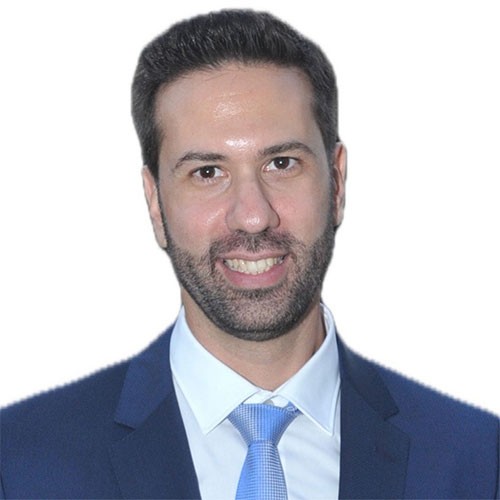
My career began with KPMG in Athens, before I moved into financial consultancy. I then worked with Unicef and then UNHCR, in finance, project control and risk management roles across Hungary, Rwanda, Iraq, Libya and Poland. In 2026, I returned to practice with Grant Thornton, using everything I had learned from genuinely high-stakes environments.
I stepped out of my comfort zone when I took on project control officer roles in Rwanda, Iraq and Libya. Moving from a finance role in Budapest into humanitarian operations in post-conflict settings meant applying financial and operational controls in situations that could change overnight, while also collaborating closely with partner organisations. Each posting pushed me to adapt without ever compromising on the fundamentals, and that combination of flexibility and rigour has stayed with me ever since.
Trust will remain fundamentally human, built on transparency and sound professional judgment
In today’s climate of tariff volatility, energy-driven inflation and geopolitical uncertainty, accounting firms add most value through structured risk management. Accountants help businesses stress test against multiple scenarios, such as strengthening controls over suppliers as trade routes shift. With internal discipline, businesses have clear accountability and early risk identification, so leaders can make confident, long-term decisions amid ongoing volatility.
In the next decade, I expect AI to have automated most routine work, with our value shifting firmly into judgment, oversight and advisory. ACCA’s own research describes accountants as increasingly strategic owners of AI within their organisations, rather than being replaced by it. Roles in risk and controls will likely expand to ensure AI-driven processes remain accurate, ethical and compliant. I feel trust will remain fundamentally human, built on transparency and sound professional judgment, however advanced technology becomes.
If I had law-making powers, I would require all organisations above a certain size to hold a continuous, real-time risk and controls certification, rather than relying on periodic audits, as I have seen how much can go wrong between annual reviews. A rolling certification validated by qualified professionals would identify risks and weaknesses far earlier, making governance genuinely dynamic rather than a once-a-year exercise.
What I enjoy most about my job is the advisory side, sitting with senior management, understanding the pressures they face and helping them build effective controls. I have often been involved in training my colleagues and I like seeing that translate into more resilient organisations. I also know that that good governance is never one-size-fits-all, and adapting it to each environment keeps my work engaging.
Good governance means confirming that trust is deserved through testing
My mantra is: ‘Trust, but verify’. This resonates with me as a fair summary of internal audit and risk management. It captures something universal, as relationships in business are built on trust, but good governance means confirming that this trust is deserved through testing and independent review, which is a principle I have carried across all my roles.
If I wasn’t an accountant, I’d be a pilot, something I wanted to do as a child. I think the appeal isn’t the flying itself but the discipline behind it, with checklists and zero tolerance for skipped steps, which is not so different from a well-run risk function.
Outside of work, I swim regularly, which is my way of staying disciplined and clearing my head before a demanding day. I also go spearfishing, which is almost a form of meditation for me, as it demands total focus and a calm, controlled approach, rather like risk and audit work. Both activities give me the same sense of balance, just in very different environments: one structured, the other freer and closer to nature.

