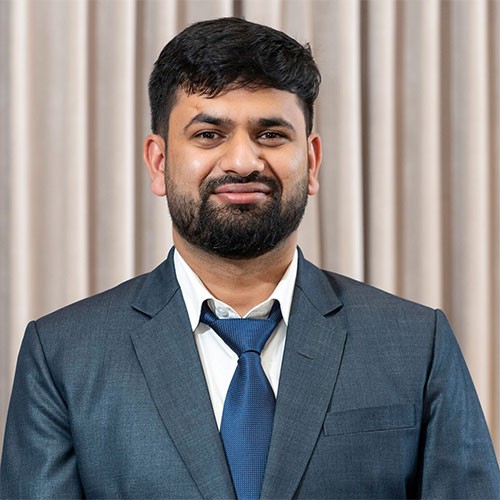
My career began as an audit assistant, where I discovered that my greatest strength was being meticulous, attentive and curious. However, my passion for travel and the outdoors inspired me to leave audit and co-found a trekking company, adding an entrepreneurial chapter to my life. After the Covid-19 pandemic, I embraced another challenge by pursuing my interest in sustainable development and clean energy. I currently manage finance for a hydropower company.
Nepal has a hydropower potential of around 83,000 MW, around half of which is economically feasible. However, current installed capacity is only about 3,983 MW, highlighting the country’s huge untapped potential.
Reinventing my career taught me the importance of continuous learning
The sector faces several challenges. Hydropower projects are highly capital-intensive, requiring substantial upfront investments, and projects need to go through a lengthy government approval process before construction can begin. The country’s limited transmission infrastructure also often prevents projects from operating at full capacity, reducing revenues. Climate change is another difficulty, as it can make river flows unpredictable, while flash floods and high sediment levels can damage structures and equipment. What’s more, most key components are imported, which poses foreign exchange risks.
I would like to see a ‘single window’ approval system for hydropower projects to reduce delays and improve efficiency. A change to the licensing framework would also be beneficial. Currently, hydropower companies are listed on the stock exchange, yet generation licences expire after 35 years, after which the projects are handed over to the government. This creates uncertainty for long-term investors and shareholders. A balanced policy that protects both public interest and investor confidence would encourage sustainable investment in the sector.
Electricity demand is closely linked to industrial growth and export opportunities. Nepal’s hydropower sector will reach its full potential only through more industrialisation and cross-border power trading. Fortunately, the country has recently opened up cross-border electricity trading with India and Bangladesh, and new transmission lines are being completed, which will support higher energy generation.
What I enjoy most about my job is analysing financial performance, improving profitability and strengthening future investments for our projects. I also find it rewarding to work on sustainability initiatives, such as carbon credit calculations, where finance contributes to business growth and environmental responsibility.
I set up a trekking business because I have a passion for travel
‘If there is no struggle, there is no progress.’ This favourite quote of mine from the American social reformer and orator Frederick Douglass reflects my own career from audit to entrepreneurship and now hydropower. It is a reminder that growth comes from analysing, adapting to change and developing new skills.
My biggest achievement has been to successfully reinvent my career. I had my own trekking company when the pandemic forced me into change. I gained my qualification and moved into hydropower, where I now contribute to sustainable energy development. The experience taught me resilience, adaptability and the importance of continuous learning.
If I weren’t in finance, I would have worked in tourism and adventure. I set up a trekking business because I have a passion for travel and enjoyed connecting people with Nepal’s beauty and culture. I’m interested in sustainable tourism and how it can support local communities and economic development.
Outside of work, I like travelling, trekking and exploring Nepal’s natural landscapes. These experiences help me recharge, appreciate nature and know my roots.


