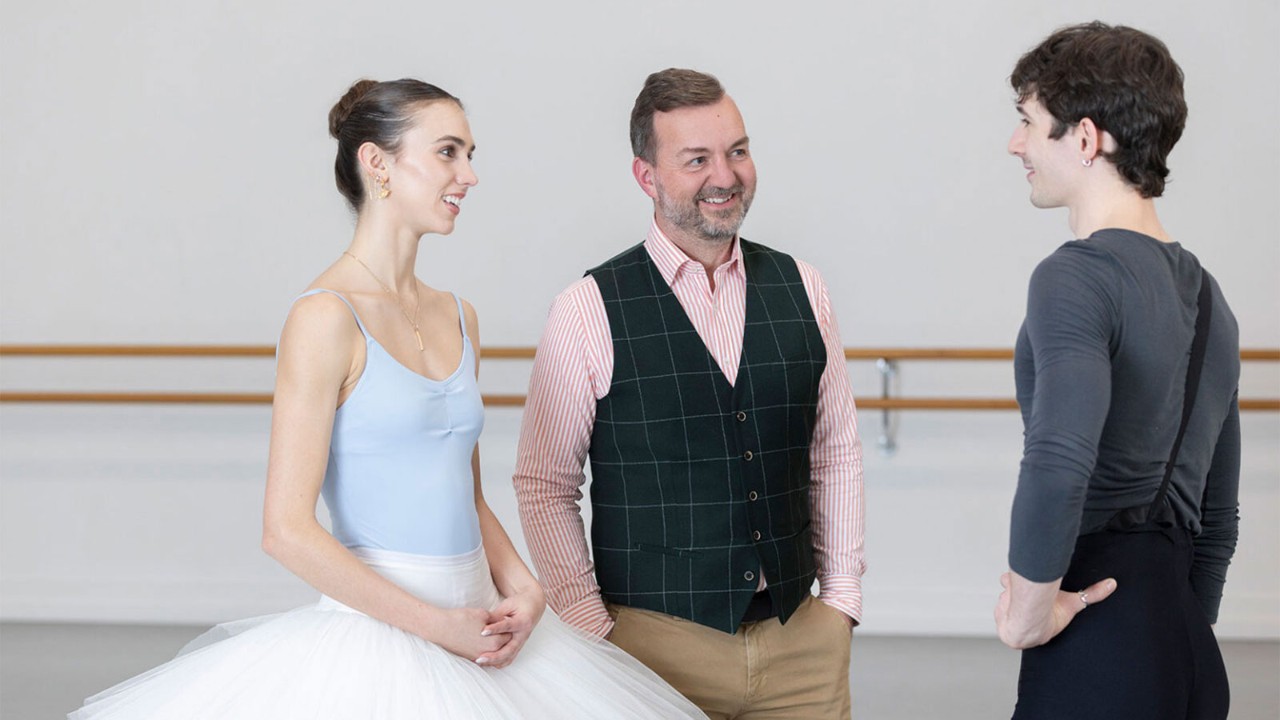
Savouring frequent ‘creative snacks’ helps to sustain James Lockyer in managing the financial complexities of one of the world’s leading ballet companies.
‘Dancers are walking through our administrative areas every day,’ says the CFO of The Australian Ballet. ‘Studio doors are open, a piano is playing, and staff are encouraged to stop for a bit to watch the rehearsals.’
‘In terms of performing arts in Australia, the Australian Ballet leads the philanthropic space’
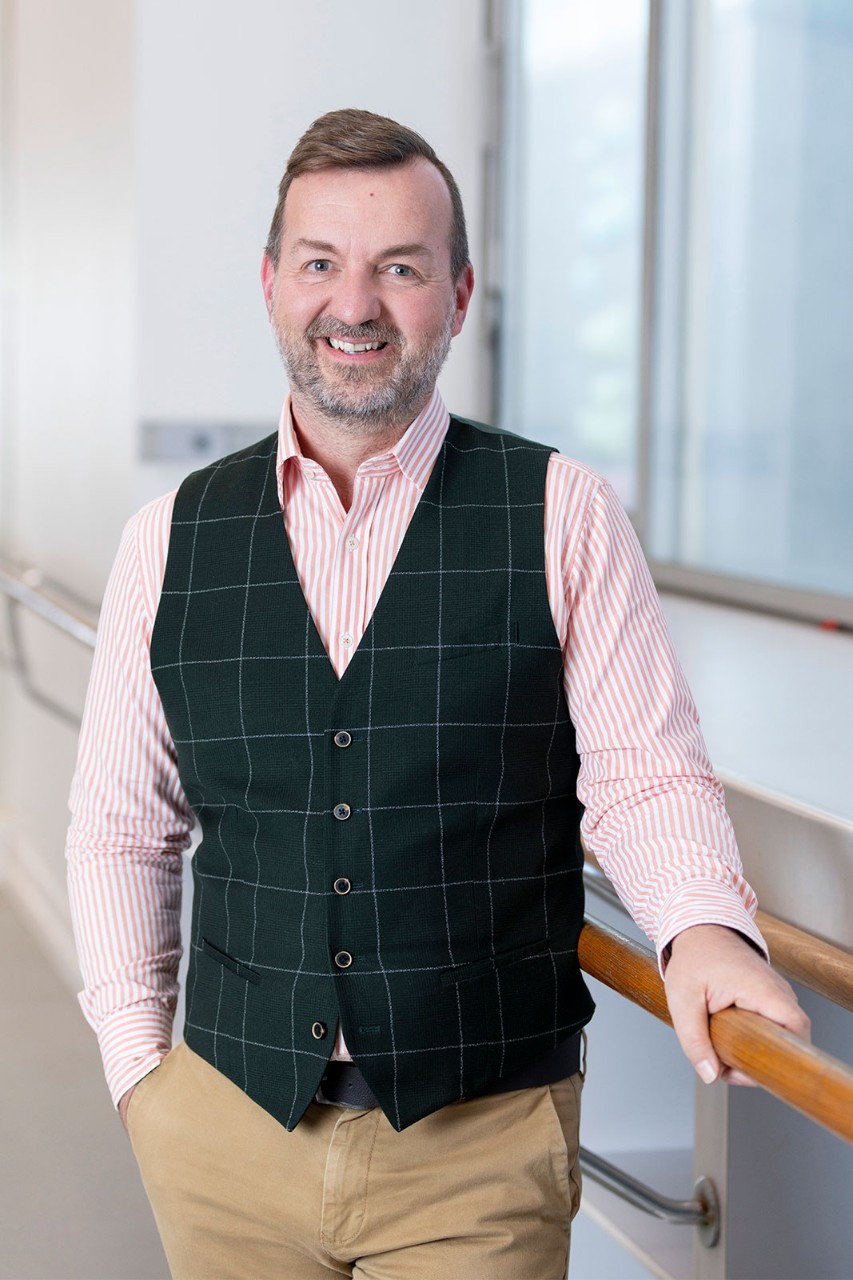
These ‘creative snacks’, a term coined by executive director Claire Spencer, are one of Lockyer’s great joys. ‘Accountants can command bigger salaries in other sectors, but experiencing art in such close proximity helps create a strong employee value proposition,’ he says.
Sobering time
Now a year into his role as CFO, Briton Lockyer joined Australia’s national ballet company during what he describes as a sobering time for the live performance sector. Rising operational costs, changes in audience ticket-buying behaviour and global economic uncertainty have converged to challenge the business in the years since the Covid-19 pandemic, compounded by a three-year displacement from its primary Melbourne home, the State Theatre, due to a redevelopment of the Melbourne Arts Precinct.
How does a relatively newly appointed finance head turn around a five-year operating loss, albeit one showing a slight improvement in its 2025 annual report? With philanthropy accounting for 20% of the company’s income stream, ‘donors are vital enablers of what we do, together with long-term corporate partners’. National telco Telstra has been the principal partner for 41 years, the longest continuous partnership in Australian performing arts, while national airline Qantas has been lead partner for 20 years.
‘In terms of performing arts in Australia, the Australian Ballet leads the philanthropic space,’ Lockyer says, noting that the philanthropic reserves of its foundation fund amount to around A$100m in gifts and investments. (Government funding is a modest A$9m.)
Fiscal agility
Even so, maintaining the 87% of self-funded revenue needed to keep the show on the road – including main-stage productions primarily in Melbourne and Sydney, touring internationally, and smaller productions in regional and suburban arts centres – requires fiscal agility.
Ticket sales generate half of that income, but the volume of longstanding annual subscriptions has shifted. Today’s audiences are increasingly likely to opt for single purchases and delay committing until much closer to the event date than before.
‘We have a role to preserve tradition, but we also have a role to tell new stories’
Given that the company’s repertoire is planned three to four years in advance, how can audience preference be predicted?
‘Our funding approach is very cognisant of how we can make our work welcoming and accessible for everybody,’ Lockyer says. ‘We do that through not only our repertoire but also our touring activities, education and outreach programmes – such as teaching dance classes in local communities ahead of a national tour.’
Blockbusters like Swan Lake, The Nutcracker and Sleeping Beauty remain reliable stalwarts, putting paid to American actor Timothée Chalamet’s feather-ruffling remark earlier this year that ‘no one cares’ about ballet or opera.
CV
2026
CFO and director of business operations, The Australian Ballet, Melbourne
2025
CFO, Cell Therapies, Melbourne
2024
Director, finance and project management, Arts Centre Melbourne
2015
Finance and business performance consultant, Avonmouth Bio Power, UK
2013
Finance manager, Nuffield Health Taunton Hospital, UK
‘As the national ballet company, we have a role to preserve tradition, but we also have a role to tell new stories,’ Lockyer says. ‘It might seem counter-intuitive, assuming that younger audiences would want new work, but one surprising trend this year is a spike in under-30s audiences supporting our blockbusters.’
Vision with stability
Balancing bankable traditional pieces with innovative new work takes collaborative effort. He cites a comment that visionary artistic director David Hallberg made during Lockyer’s interview process: ‘It’s one thing to have a bold artistic vision, but it can’t be at the expense of the company’s financial sustainability.’
Lockyer adds: ‘The artistic director develops the draft repertoire that he would like to be presented. Our planning and development teams work through the costings of that, looking at licensing obligations and the financial model for the ballet. Then our marketing team look at what ticket pricing the repertoire would command, and from that we can develop a draft budget, which we then might need to go back and refine.’
‘We cannot risk our reputation by compromising on the quality of work being produced’
Options in the budgetary toolkit might include tweaking the number of performances for each production, refreshing or hiring sets rather than rebuilding, or adapting the proposed repertoire.
Taking on the CFO role following two successive disruption events – the pandemic and the theatre redevelopment – required much analysis of the business model going forward. This means maintaining investment in areas where it needs to be, but looking at cost efficiencies where things could be done differently. There is one non-negotiable: ‘As a national company with an international presence,’ says Lockyer, ‘we cannot risk our reputation by compromising on the quality of work being produced.’
The Australian Ballet group includes its wholly owned subsidiary, Orchestra Victoria. ‘Live music is integral to our mainstage repertoire, with a large production including as many as 50 dancers on stage and 60 musicians in the orchestra pit. The considerable investment is matched by the impact on audiences.’
Technology optimisation
What Lockyer has done is optimise technology to leverage integration across the system’s architecture. ‘For example, we have recently deployed new finance, HRIS and payroll systems that are better suited to our needs, are more future-focused and have greater functionality,’ he says, adding that integrating business process as it flows through different systems not only improves efficiency but delivers richer data insights.
‘Our budget holders need to have confidence that we will have their backs’
Given the financial sustainability focus for the business, another area where Lockyer is driving change is management of risks and opportunities, including contingency planning.
‘Traditionally, our business units would factor contingency into their budgets but, from my perspective as a CFO, when that is done at a local level it lacks transparency and encourages conservatism, inhibiting our decisions to invest those funds in other initiatives,’ he says.
‘Instead, by discussing and managing risks and opportunities collectively, we can make informed decisions, but it requires a really trusting relationship between the CFO, finance and business units. Our budget holders need to have confidence that, at an enterprise level, we will have their backs when they need it.’
Opening doors
Lockyer originally graduated in hotel management before pivoting to accounting, attracted by the international recognition and clear industry focus of the ACCA qualification. ‘In choosing ACCA, it felt like I was allowing many more doors to remain open,’ he says.
Arriving in Australia with now-husband Rob on a Friday in 2015, their intention was to stay for a year. The following Monday Lockyer was being interviewed for a finance role at the Arts Centre Melbourne, which extended to more than eight years.
‘The way things quite often evolve is that you get really fantastic opportunities that just keep you here. That’s what Australia looked like for me,’ he says.
His vision as CFO of The Australian Ballet is clear: ‘To steer the “business of ballet” to a level of excellence that aligns with the artistic excellence that we see on stage – elite athletes and administrators alike.’
More information
Watch our video with James Lockyer FCCA on how he supports the artistic team in bringing world-leading performances to the stage

