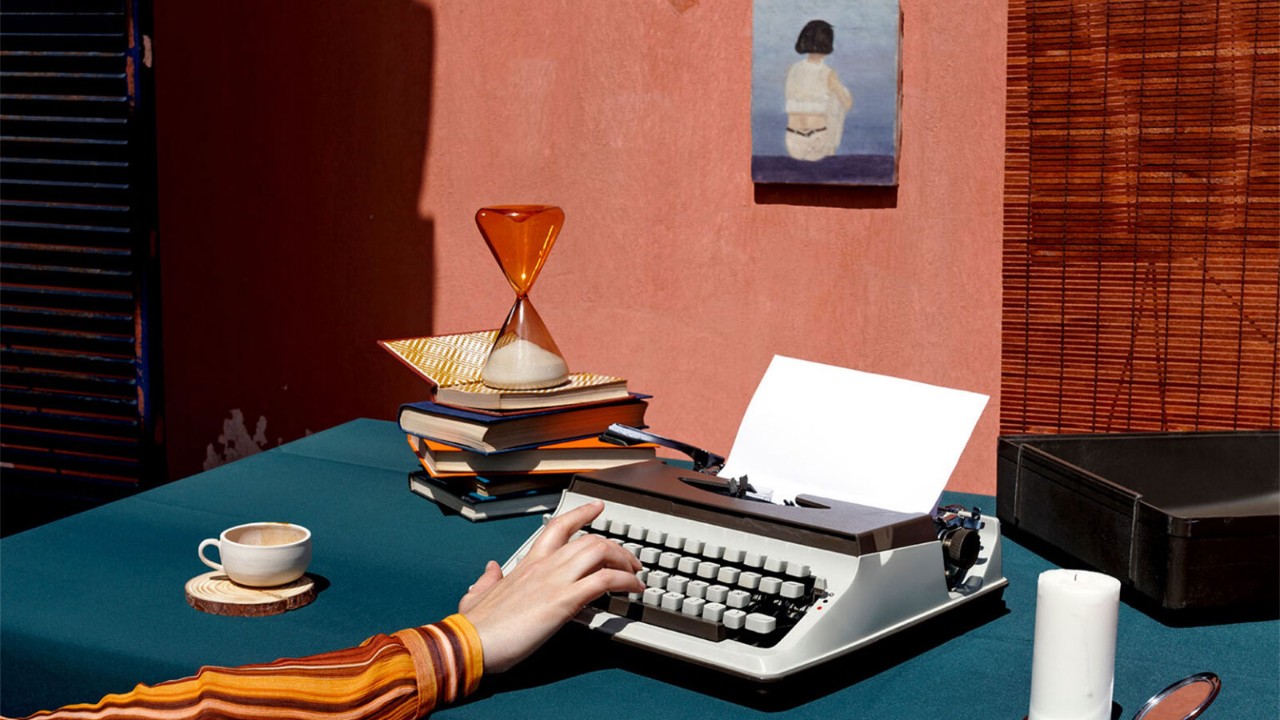
Hanging a certificate in your office might impress clients, but could what’s on the walls also trigger creative thinking, reduce stress and boost morale? That’s one question being explored by the emerging field of neuroarts, which examines how aesthetic experiences influence the brain, psychology and behaviour – and how those effects might be put to practical use to boost wellbeing.
Even rodents, it turns out, respond to a thoughtfully decorated space. In the 1960s, pioneering neuroscientist Marian Diamond found that rats living in enriched environments, with changing objects and textures, developed a cerebral cortex up to 6% thicker than those in bare cages. Her work helped to prove neuroplasticity – the brain’s capacity to change and form new connections – and demonstrated the powerful role environment plays in it.
New perspective
Today, fMRI scans and biomarker-tracking wearables are pinpointing exactly how visual stimuli translate into neurological and physiological reactions. This could mean a change of tack for workplaces positioning efficiency over enrichment.
‘We will see a rise in personalised microdosing of aesthetics’
‘We will see a rise in personalised microdosing of aesthetics,’ predicts Susan Magsamen, founder of the International Arts + Mind Lab at Johns Hopkins University School of Medicine, in her book, Your Brain on Art, co-authored with Ivy Ross. Holistic healthcare has already embraced sensory strategies: aromatherapy to relieve stress, light calibrated to ease headaches, personalised playlists to reduce anxiety. Magsamen now envisions strategic deployment of art where we work and learn.
‘Because research shows that sensory-rich environments help us to learn faster and retain information better, many schools, workplaces and public spaces are being reimagined,’ she says.
A fine art
Art isn’t as universally well received as, say, a Mac upgrade, though, which is why neuroaesthetics researchers have been unpicking how the brain and nervous system perceive beauty. The field precedes neuroarts – the latter concerned with putting those findings into practice – and seeks, essentially, to understand why one person can lose themselves in the colour-block canvases of Mark Rothko while another walks straight past, wondering what to have for lunch.
Appreciation (or not) isn’t random. Anjan Chatterjee, founding director of the Penn Center for Neuroaesthetics, identified a three-pronged brain response to art – known as the aesthetic triad. Sensory-motor systems ‘bring in’ information, such as colour, and reward circuitry activates, much like when you eat a delicious meal.
At the same time, meaning-making systems dig through your life experiences and culture to find personal significance in what you’re looking at. It’s this interplay between what we see, feel and understand that can make art so rewarding.
‘For men, having any art on the wall significantly reduced how much anger they reported’
When an artwork does move us, the brain’s default mode network comes alive – a collection of regions associated with memories and self-knowledge that’s engaged when we daydream or mind-wander. Research by Edward Vessel, a cognitive and computational neuroscientist at the City College of New York, suggests that activating this network through art could prime us for creative inspiration.
Beyond a blank canvas
So, what could the neuroscience of art-viewing mean for the workplace? That is the question motivating Professor Mick Cooper, acting director of the Centre for Research in Psychological Wellbeing at the University of Roehampton in the UK. In a recent paper published in the journal Psychology of Aesthetics, Creativity, and the Arts, he reviewed the existing research and drew some fascinating conclusions.
‘For men, having any art on the wall – abstract, nature or a mix – significantly reduced how much anger they reported after completing frustrating computer tasks compared with a bare office,’ Cooper says, adding that nature or mixed imagery specifically reduced self-reported stress. Interestingly, there was no measurable effect on women’s anger or stress – possibly, Cooper speculates, because women may show these emotions less readily.
The benefits were also greater when employees had a say in choosing and placing the art, rather than having it imposed on them. ‘As well as potentially helping employees feel more listened to and empowered, it’s also likely the best way to optimise fit for any given space,’ Cooper notes.
Calming nature imagery is the ‘safest and most consistently beneficial option’
While no workplace studies have tested if engagement affects art’s impact – for example, whether simply walking past is enough to trigger physiological benefits – Cooper suspects that greater attention brings greater benefit. As employees become accustomed to a piece, its awe-inspiring effects may also fade, suggesting a rotational approach (as per a gallery or museum) to maintain curiosity.
Interactive experience
Most interesting to Cooper is art’s potential to spark positive social interaction. ‘Placing art in locations where it’s likely to be the subject of discussions, like a kitchen or break area, could be a particularly good way of maximising its interpersonal benefits,’ he says.
As for what to hang, calming nature imagery is the ‘safest and most consistently beneficial option’, he says – fitting with our well-established tendency to find awe and comfort in the natural world.
While Cooper stops short of calling workplace art a silver bullet for productivity, he does see potential. ‘The science here is real; there’s solid neuroscience showing how humans respond to visual art, and workplace studies do show promising associations with psychological comfort, job satisfaction and organisational commitment.’
The caveat is that workplace-specific evidence remains in its infancy, based largely on small or simulated-office studies. For now, he says, art may be ‘a relatively low-cost, evidence-informed option worth including in a broader wellbeing strategy’.
More information
See further AB guidance on wellbeing and careers


