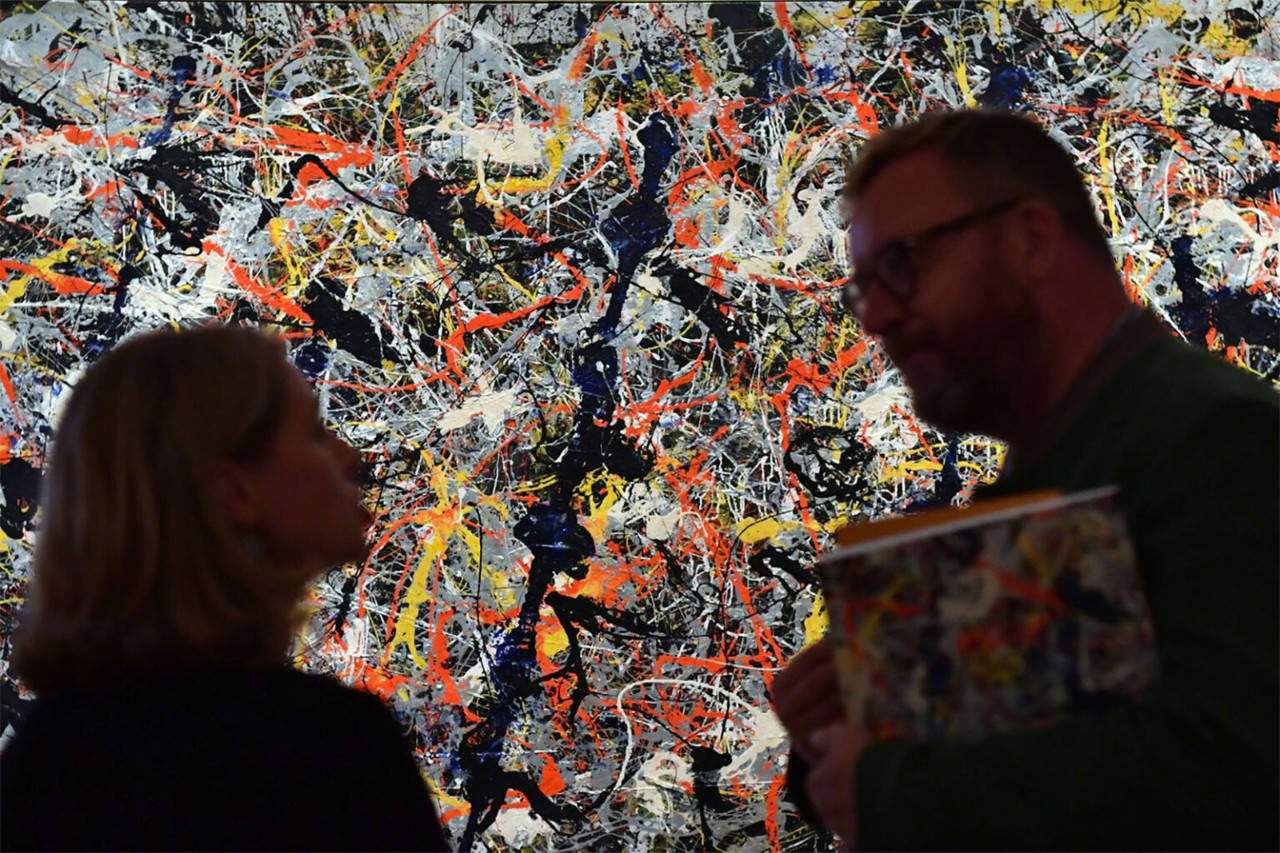
Recent figures show that the art market is in good health but, as with so many other sectors, it is affected by ongoing geopolitical uncertainties.
The high end of the market continues to make headlines for record-breaking sales of classic works, driving a combined US$25bn in sales of artworks by auction houses Christie’s, Phillips and Sotheby’s in just one week in May 2026. Among the big-ticket sales, a Jackson Pollock painting sold for US$181.2bn, a Constantin Brâncuși sculpture fetched US$107.6m, and a Mark Rothko painting that cost US$6.7m in 2003 sold for US$85.8m.
Yet these eye-watering numbers belie wider uncertainty across the art market. Here is a look, in graphics, at some of the key figures.
Global sales
The global art market returned to growth in 2025, with sales increasing 4% year on year to an estimated US$59.6bn. However, following two consecutive years of decline, the 2025 recovery was moderate and the market still below its 2022 peak, according to research by Art Basel.
In terms of sales platforms, public auctions showed the biggest uplift year on year, rising 9% in value since 2024, while sales through dealers rose by just 2%. Private auction houses sales declined by 5%.
The US, UK and China accounted for 76% of global sales, stable year on year. The US continued to lead the art market, accounting for 44% of global sales by value, up 1% year on year.
Online sales in 2025 fell to their lowest levels since 2019. Auction house online-only sales were mainly at mid and lower price levels, with lots in live sales achieving the highest prices.
Outlook
Optimism in the art market continues to strengthen, with 43% of dealers expecting sales to improve in 2026, up 10% year on year. However, political and economic volatility and its impact on demand is a major concern.

