Today, the Chinese mainland and the US are the world’s artificial intelligence (AI) superpowers, but their continued AI dominance tomorrow is not certain. In trying to avoid becoming vassal AI states, other nations are trying to build ‘sovereign AI’ ecosystems to support their own research and development, home-grown capabilities and local control over data, models and infrastructure.
As AI enters a more capital- and energy-intensive phase, and the next generation of innovations are developed, members of the Gulf Cooperation Council (GCC) are emerging as key players – and the global AI power balance may be shifting.
‘The region requires aligned AI initiatives that flow from clear and coherent national strategies’
GCC states have made no secret of their AI ambitions. Since the UAE Strategy for Artificial Intelligence was launched in 2017, every GCC state from Bahrain to Qatar has articulated a national strategy or roadmap. GCC countries now have an opportunity to harness AI’s transformative power and lead its advancement, according to research reports on the region’s AI preparedness from Boston Consulting Group and Deloitte.
But to fully exploit the potential opportunities, individual GCC states may need to plan and act collectively to enable and sustain a regional AI ecosystem.
Coherent strategies
‘The region requires aligned AI initiatives that flow from clear and coherent national strategies,’ says Izaan Allugundu, a senior consultant and specialist in digital and AI strategy with Deloitte Middle East. ‘Achieving this will depend on rapidly developing talent pipelines through specialised training and improved access to global expertise.
‘It also calls for strengthened innovation infrastructure – such as government-backed funding, testbeds, sandboxes and standardised procurement processes – alongside the establishment of formal AI governance bodies with genuine authority and robust data-sharing frameworks.’
‘The question is not whether to invest in AI, but how to do so in a way that preserves agency’
Some of the biggest and wealthiest GCC members states, such as the UAE and the Kingdom of Saudi Arabia (KSA), are much more advanced than others in building out their national tech and AI ecosystems, but this alone will not necessarily benefit the wider region. ‘Smaller GCC economies may not keep pace without shared infrastructure,’ says Allugundu. ‘Overlapping regional initiatives without coordination could waste resources, like multiple entities building similar AI platforms independently.’
AI hub
The announcement in May 2025 that Abu Dhabi will be the site for the largest AI campus outside the US is a significant development for the region. Stargate UAE will become one of the world’s largest AI data-centre clusters, with the potential to provide infrastructure and compute capacity within a 2,000-mile radius.
The World Economic Forum (WEF) argues that ‘the question is not whether to invest in AI, but how to do so in a way that preserves agency, safeguards equity and builds future-ready infrastructure’. Stargate UAE, it suggests, ‘offers an early glimpse into what this could look like; this is not just a data centre, it is national infrastructure’.
Building sovereign AI capacity that supports national strategic goals, adds the WEF, has implications globally – and for emerging economies in particular. AI sovereignty is not just about competitiveness; ‘it is about inclusion, about whether health algorithms reflect local disease burdens, whether agricultural systems speak local languages, and whether educational platforms embed local knowledge.’
Arabic LLMs take off
Although AI is much more than generative AI, this subset offers a glimpse of progress and potential in the GCC. Over recent years, the UAE and KSA have each separately developed and released their own Arabic-English large language models (LLMs), JAIS and ALLaM, powering JAIS Chat and HUMAIN Chat respectively.
As the world’s 400 million Arabic speakers and two billion Muslims can encounter language and cultural issues with offerings such as ChatGPT and the Chinese mainland’s DeepSeek, the availability of native-Arabic AI, which enables more people to create, learn and connect in their own language, culture and context, is significant locally and globally.
‘Globally competitive technologies can be rooted in our language, infrastructure and values’
‘The launch of HUMAIN Chat is a point of pride for Saudi Arabia – a historic milestone in our mission to build sovereign AI that is both technically advanced and culturally authentic,’ says Tareq Amin, CEO at Humain. ‘We are proving that globally competitive technologies can be rooted in our language, infrastructure and values – built in Saudi Arabia by Saudi talent.’
Both HUMAIN Chat and ALLaM are fluent in Islamic culture, heritage, classical Arabic and dialects, plus English. They will be globally available and HUMAIN Chat has already been rolled out locally and in the UK. ‘The potential is limitless,’ says Amin.
Expanding frontiers
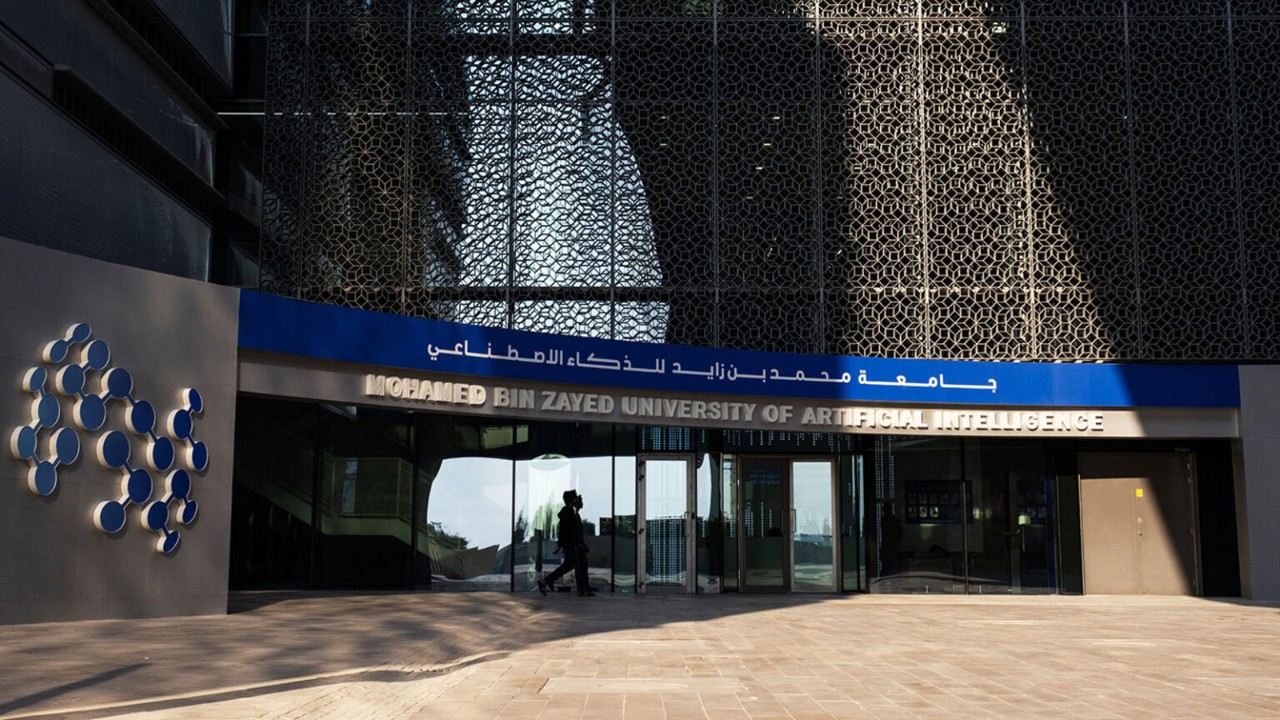
This can also be said of JAIS and JAIS Chat, which were developed in Abu Dhabi by the research-focused Mohamed Bin Zayed University of Artificial Intelligence and the technology group G42. Their latest collaboration is K2 Think, which performs faster in maths and step-by-step reasoning than models such as DeepSeek’s R1.
‘K2 Think has shifted the AI reasoning paradigm from “bigger is better” to “smarter is better”,’ says Peng Xiao, Group CEO of G42 and MBZUAI board member. ‘Proving that smaller, more resourceful models can rival the largest reasoning systems marks the beginning of the next wave of AI innovation.’


