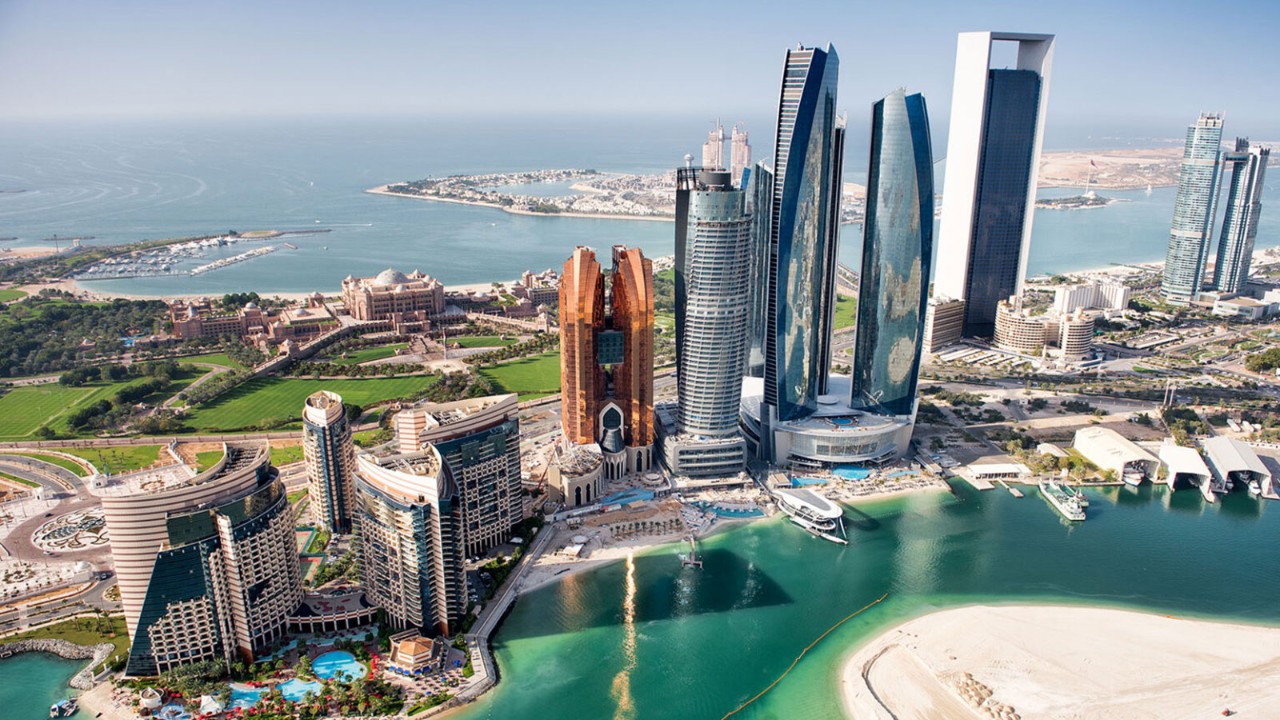
Millionaires have never been more mobile. This year alone, a record 142,000 of the world’s richest people are expected to relocate to other countries, according to Henley & Partners. And when the global rich look for a new home, the Gulf is increasingly where they land.
In 2025, the United Arab Emirates is expecting to see an influx of close on 10,000 millionaires, bringing with them around US$63bn in investable assets.
There is more to the UAE’s success than tax alone
On the surface, the appeal may be no mystery. The UAE levies no personal or inheritance tax and offers a highly competitive corporate-tax regime. But advisers stress there is more to the country’s success than tax alone. ‘The UAE has become one of the most attractive destinations for high-net-worth individuals and mobile capital, due to a combination of supportive policies, strong legal frameworks and a high-quality lifestyle,’ says Emilio Pera, CEO of KPMG Lower Gulf and deputy CEO of KPMG Middle East.
Global contest
Across the world, governments are experimenting with reforms to lure internationally mobile families; Italy, for example, has introduced a flat-tax regime for foreign income, and Greece offers ‘golden visas’. Yet sudden policy shifts, such as the UK’s changes to its non-dom tax rules, have the potential to unsettle mobile millionaires. ‘What clients want most is stability,’ says Matthieu Pinet, director of financial services at Deloitte Middle East. ‘In the UAE they find not just a tax-free environment but a system designed to be consistent and futureproofed.’
The net influx of resident millionaires in the UAE has doubled since 2014, a rate of increase exceeded only by Montenegro. The attractions are numerous. The UAE offers an extensive network of double-tax treaties, long-term golden visas, and international financial centres in Dubai and Abu Dhabi that operate under English common law.
Connectivity adds to the appeal, while global schools, top-tier hospitals and a thriving cultural scene round out the package. And when the wealthy come, they often bring a retinue. ‘Many of our clients are establishing family offices here to manage cross-border wealth and succession planning,’ says Jasleen Kaur, partner at Grant Thornton UAE. ‘The demand for accountants and advisers with international experience has risen sharply. Clients have global lives, and expect their advisers to understand multiple regulatory regimes and provide holistic advice that addresses their global needs.’
Saudi Arabia sees itself as a complementary hub to the UAE
Saudi Arabia is also becoming a contender, with a 55% increase in millionaire relocations, and sees itself as a complementary hub to the UAE rather than a rival. ‘With Vision 2030, Saudi Arabia is positioning itself as one of the region’s capital raising hubs,’ says Kaur. ‘Advisory demand around capital markets, corporate governance, IPO readiness and mega projects has been on the rise.’
But not every Gulf country is following the same path. Oman has announced that from 2028 it will introduce personal income tax of 5% on annual earnings above 42,000 Omani rials (US$109,000). The measure marks a departure from the region’s traditional zero-tax model and raises questions about whether others may eventually follow, although both the UAE and Saudi Arabia have reiterated that they do not intend to impose personal income taxes.
‘Oman’s decision marks a significant change from the Gulf’s customary tax-free labour environment, suggesting a noteworthy policy evolution in the GCC,’ says Manjot Singh Chug, tax partner at Deloitte Middle East. ‘While it is a slight departure from the region’s zero-tax image, the symbolic impact is more significant.’
In demand
The influx of wealthy families is creating opportunities for professional advisers. Accountants are helping to structure cross-border investments and establish family offices. Demand is also rising for succession planning and philanthropic advisory services. ‘Professional service firms play a critical role by providing trusted guidance across complex financial and operational landscapes,’ says Hadi Allawi, partner at Deloitte Middle East.
The professional opportunities extend well beyond compliance. ‘The role of accountants is moving beyond traditional compliance to become strategic, multidisciplinary partners, a shift that will shape the UAE’s competitiveness against wealth hubs like London, Geneva and Singapore,’ Pera says. ‘Today’s multidisciplinary firms are well positioned to help design holding structures, implement regulatory and ESG reporting systems, evaluate managers and assess risks in private market investments.
Family-office creation and succession planning are rising sharply
‘We’re seeing family-office creation and succession planning rising sharply, as both local and expat family founders look for stable governance structures to manage wealth transfer, philanthropy and the education of the next generation. Cross-border tax and mobility planning has become essential, while ESG reporting and assurance are also expanding, particularly since the UAE’s new climate law came into effect in May 2025.’
That evolution is reshaping the skills accountants need. ‘There is healthy competition for talent for roles that require multijurisdictional tax and regulatory knowledge, fund administration experience or ESG assurance,’ Pera says. To meet this demand, firms are increasingly partnering with government training programmes and universities to accelerate talent pipelines, and recruiting internationally.
Stability advantage
What sets the Gulf apart is not only low tax but predictability. The UAE, in particular, has positioned itself as the ‘Switzerland of the Middle East’ – politically neutral, economically stable and operating trusted financial centres.
‘A sense of stability is at least as important as the headline tax rate’
The message is cutting through. While Switzerland is expected to attract more than 3,000 millionaires with US$16.8bn this year, the UAE’s projected inflows are more than three times higher. ‘Clients want reassurance that the rules tomorrow will be the same as today,’ Pinet says. ‘That sense of stability is at least as important as the headline tax rate.’
Looking ahead
The competition for mobile wealth is unlikely to slow. The UAE and Saudi Arabia continue to expand visa schemes, financial hubs and cultural offerings to entrench their status as global magnets. Oman’s new tax may test investor sentiment, but the Gulf’s two largest economies look set to remain leading destinations for high-net-worth families.
For accountants and advisers, the message is clear: demand for expertise is rising. The Gulf’s success in attracting global wealth is creating as many opportunities for professionals as it is for the millionaires now calling the region home.


