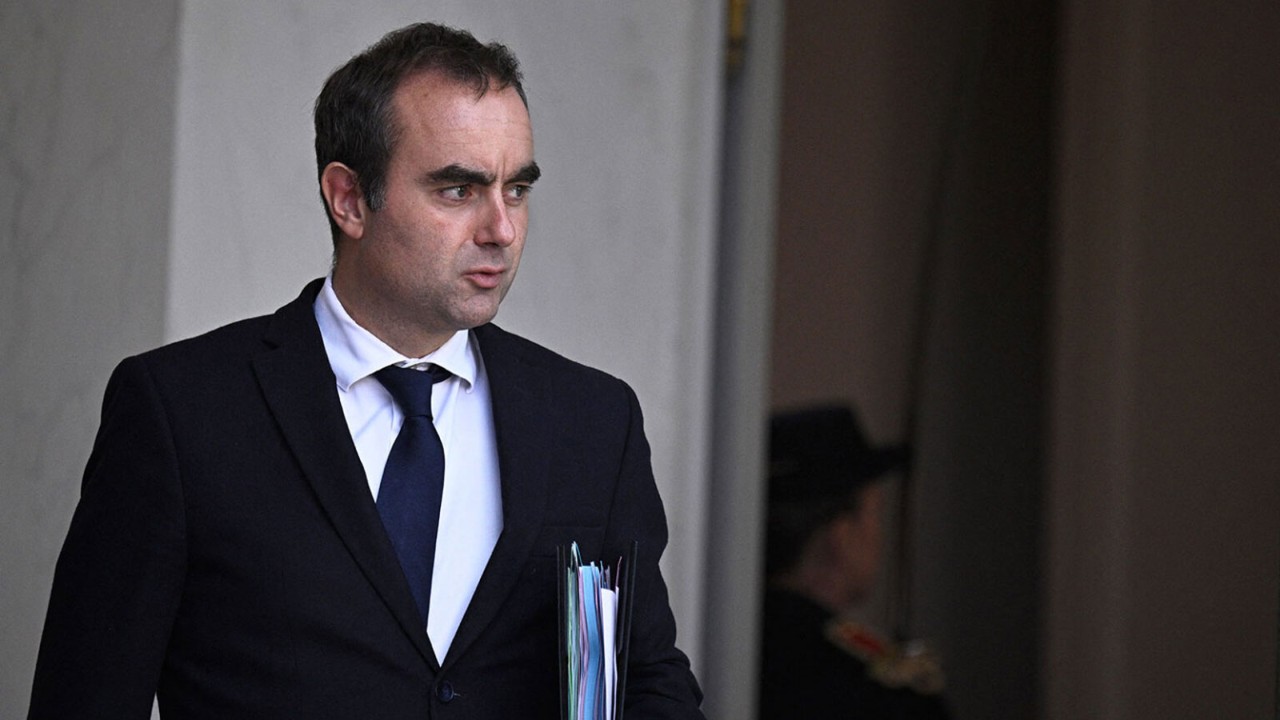
France appears to have a revolving-door government. The nation’s fifth prime minister in two years submitted his resignation earlier this month, after the latest effort to trim government borrowing was rebuffed by lawmakers.
While prime minister Sébastien Lecornu is being given a second chance to forge a working coalition, the task is an imposing one. And the recent inability of France to get control of its debt has disconcerted investors. Once regarded as a bastion of stability at the heart of Europe, investors now charge the French government more to borrow than historically more spendthrift peers such as Greece and, recently, Italy.
That unease has spilled over into equity markets. While Germany’s DAX index is up about 22% so far in 2025, France’s CAC 40 has gained just 7%, as of 14 October. The gap tells a story of diverging confidence: optimism over Berlin’s fiscal stimulus and hopes of an industrial revival versus caution over France’s stalled reforms and widening deficit.
‘Many business leaders are asking: are we back to the bad-old days?’
‘The big worry is that France could now drift back to being seen as a high-cost, high-tax economy,’ says Marc Lhermitte, partner at EY Consulting and global lead for foreign direct investment. ‘After years of steady improvement, many business leaders are suddenly asking: are we back to the bad-old days?’
Yet, he adds: ‘This is not panic. It’s hesitation. France still offers depth, talent and infrastructure that investors value.’
From confidence to concern
Between 2015 and 2023, France consistently ranked as Europe’s top destination for new investment projects. Corporate tax rates were lowered, labour laws simplified and global companies looked again at Paris as a top European base – especially after the UK’s decision to leave the EU. But that momentum has stalled as political rows over spending cuts grew louder.
Luxury market weathers the storm
France’s luxury goods giants, including LVMH and Hermès International, were among the hardest hit by worries over higher tariffs on exports to the US. The nation shipped around €4.5bn worth of luxury goods to America in 2024, along with around €2.4bn worth of wines and spirits.
But after a period of heightened uncertainty, there are promising signs that France’s top industry will weather the storm. Stocks in LVMH have climbed in each of the past four months, cutting its decline for the year to around 5% at the time of writing. The company also generates a quarter of its revenue from production in the US, output that is not impacted by tariffs.
Meanwhile, its affluent clients are less likely to be put off by price increases. ‘The company is almost 190 years old; we’ve experienced tariffs before,’ said Hermès luxury group’s manager Axel Dumas in mid-February. ‘If tariffs increase, we will raise our prices to compensate.’
Meanwhile, KPMG estimates that France will be less impacted by tariff headwinds than most of its eurozone peers.
According to EY’s 2025 Europe Attractiveness Survey, foreign direct investment into France fell 14% in 2024, while Spain and Poland enjoyed double-digit gains. ‘Around 20% to 30% of companies reviewed their presence in France last year,’ Lhermitte notes. ‘They are not pulling out, but they are waiting.’
The main culprits have been political gridlock, especially after a snap 2024 parliamentary vote further eroded the position of pro-business centrists, and the resulting inability to trim government borrowing. France’s budget deficit stands near 5.4% of GDP, and public debt has risen from 98% in 2019 to about 112% in 2024.
To bridge a financing gap estimated at €40bn–€50bn, the government has introduced a €7.8bn ‘temporary’ surtax on large companies – a measure analysts expect to continue into 2026.
A rare inversion
A striking development has been the inversion between sovereign and corporate borrowing costs. In recent months, the market yields on the bonds of several large French companies, including L’Oréal, AXA and Airbus, have fallen below those on French government debt of similar maturity. According to data compiled by Goldman Sachs and reported by the Financial Times, at least 10 major French firms were trading at negative spreads to the sovereign earlier this year – the highest number recorded since the data series began in 2006.
‘The greater risk is prolonged political deadlock that delays fiscal reform’
The inversion highlights investor trust in French corporates, even as concern grows over fiscal policy. For smaller firms, however, the picture is less benign. Banque de France figures show that 67,413 SMEs went bankrupt in the 12 months to July 2025, the highest cumulative total in more than a decade and roughly 14% higher than the average in the 10 years before the Covid-19 pandemic.
Not all doom
Political paralysis and a lack of fiscal headroom can be a challenging backdrop for businesses in general. Falling confidence diminishes the willingness of companies to invest. It can also make banks more selective in their lending.
But despite recent strains, France retains important strengths. Productivity per hour remains among the highest in the OECD, close to US levels. Yael Selfin, chief economist for EMEA at KPMG, points to the country’s underlying resilience. ‘The French economy is still wealthy and diverse,’ she says. ‘Its nuclear energy base provides stability against energy shocks and innovation remains strong.’
In addition, France’s interest payments on public debt remain sustainable, according to Andrew Kenningham of Capital Economics. The average tenor of French government debt is just over eight years, with an average rate of 1.85%, based on data from UBS. So, fiscal pressures are mounting only gradually as debt is rolled over at higher rates. ‘France isn’t facing a southern-style debt emergency. The greater risk is prolonged political deadlock that delays fiscal reform,’ Kenningham says.
For finance teams, that slower adjustment offers one advantage: time to prepare. Many companies are already taking a closer look at their cashflow projections and debt schedules, checking how higher borrowing costs could affect margins. Accountants say clients are asking for clearer visibility over refinancing risks and more frequent financial forecasts – practical steps to stay ahead in a more uncertain environment.