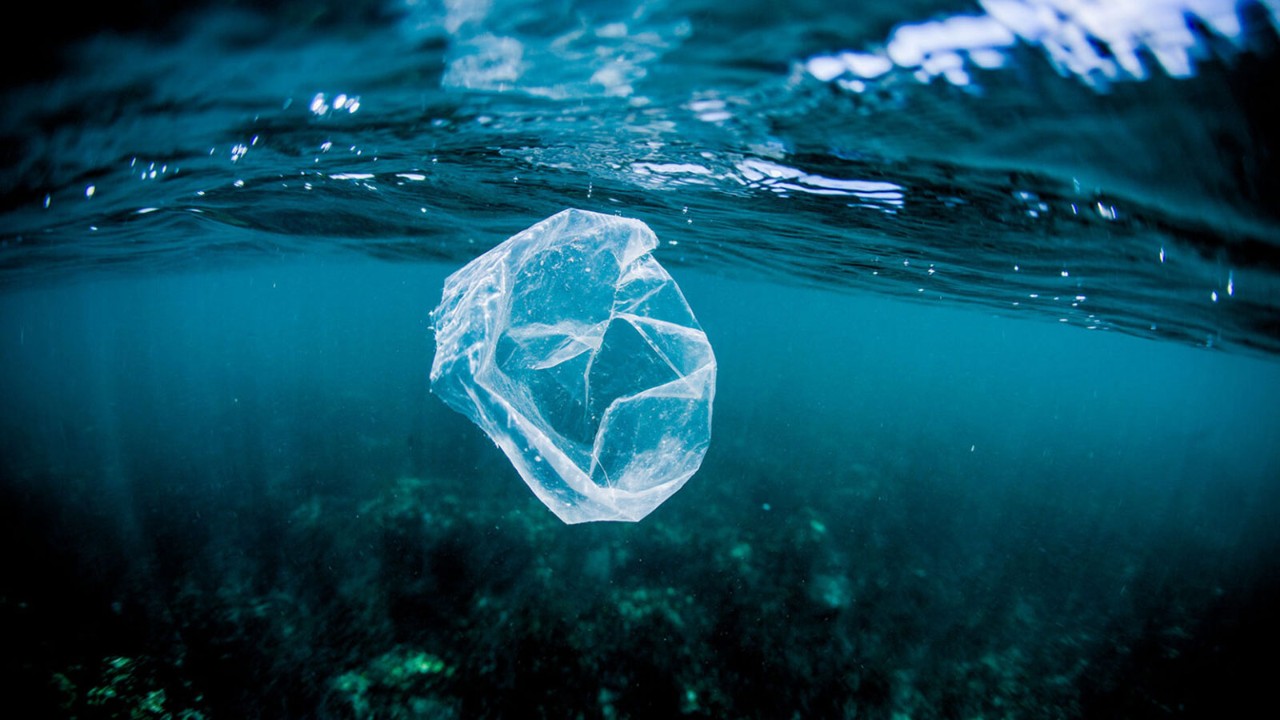
The Middle East is one of the world’s largest consumers and producers of plastic, due to the region’s urbanisation over the past few decades, its rapid industrial growth and its heavy reliance on single-use packaging. Countries such as Saudi Arabia, Egypt, Iraq and the United Arab Emirates (UAE) report some of the highest per capita plastic consumption rates globally, with Saudi Arabia alone generating more than 3.4 million metric tons of plastic waste each year.
Yet while the region is a major contributor to the global problem of mounting plastic waste, it could also be part of the solution. In particular, it could help to galvanise the circular economy for plastics by recycling materials made from plastic waste to create new products.
‘The Middle East has ports that can support with logistics and an educated workforce’
Capital pool
A report by consultancy Strategy& and the King Abdullah Petroleum Studies and Research Center (KAPSARC), The new plastics economy, argues that the recycled plastics economy is an opportunity for Middle Eastern countries, and particularly those in the Gulf Cooperation Council, to become a ‘global hub for circular plastics’. It says the region is well placed to pursue chemical recycling by linking plastic waste supply from Asia with recycled plastic demand in the West. To achieve this objective, the region can draw on its deep capital pool through sovereign wealth funds, established logistics infrastructure and petrochemical expertise.
‘The Middle East is a prime location that connects Africa, Asia and Europe,’ says Midhat Zwayen, president at Iraq-based Dijlah Consulting Engineers. ‘It already has ports that can support with logistics and an educated workforce. To become a circular plastics hub, it just needs to invest in recycling infrastructure, research and development, and safety procedures.’
The report by Strategy& and KAPSARC highlights that a strong presence in recycled plastics would support government diversification strategies and create new value chains beyond hydrocarbons: ‘Chemical recycling is knowledge-intensive and thus offers potentially higher economic multipliers and innovation-driven growth than traditional petrochemicals production,’ it says.
Scale of opportunity
Meanwhile, analysis by Grand View Research sets out the scale of the opportunity. In 2024, it estimated the size of the Middle East recycled plastics market as US$1bn but projects the market to grow at a compound annual growth rate of 8% between 2025 and 2033, reaching US$2bn by 2033.
Saudi Arabia dominated the recycled plastics industry in the Middle East in 2024, having a revenue share of 65.4%. According to the research, growing demand from the packaging and construction industries is driving market growth as companies seek out recycled plastics to meet their sustainability targets.
‘The GCC region would need to foster innovation and attract private investment’
Already there are some major chemical recycling projects under way in the region. One example is Oman’s Ladayn Polymer Park, which has been set up to integrate virgin plastic converters (technology that transforms plastic waste into virgin-quality materials) and plastic recyclers to increase Oman’s plastic self-sufficiency and circularity. The park has already pulled in US$220m in investments from investors around the world. Another project is the initiative by the SATORP refinery in Saudi Arabia to convert oil derived from plastic waste into certified circular polymers.
Barriers to progress
While the Middle East has the potential to become a global leader in circular plastics, it must overcome several barriers along the way – not least the region’s own inadequate recycling and waste management infrastructure, including limited material recovery facilities and collection systems, and low public awareness around recycling. Many countries in the region export their plastic waste while subsidised oil prices keep virgin plastics cheaper than their recycled alternatives.
Other challenges – highlighted by the Strategy& and KAPSARC report – include securing stable demand for recycled polymers and establishing plastic waste trade corridors with India, South-East Asia and other exporting regions.
Technological limitations are a further consideration. Recycling technologies can be expensive and chemical recycling processes such as depolymerisation, gasification and pyrolysis are still not fully mature. ‘More broadly, the GCC region would need to foster innovation and attract private investment in large-scale recycling plants,’ the report says.
‘We should take some ideas from what’s happening in Europe but reshape them to fit the region’
Zwayen agrees that public-private collaboration is critical to success, noting that policymakers can provide the incentives to encourage investment in recycled plastics while companies have the skills and knowledge to innovate and grow the market. He cites Europe as a good example of where policymakers are taking action to accelerate the circular economy through incentives, financial support and regulation.
‘We should take some ideas from what’s happening in Europe and apply them to the Middle East,’ he says, ‘but reshape them to fit the region.’
In 2024, Turkey, Iraq, Qatar and the UAE signed a memorandum of understanding to create the Development Road – a 1,200km railway and road corridor that would link the Al-Faw container port in Iraq with Turkey. Zwayen believes that if trains are used to send oil to Europe, they could potentially be sent back to the Middle East with plastics for processing. ‘There just needs to be a feasibility study,’ he suggests.
Positive impact
Less than 10% of plastic waste globally is currently recycled, according to the OECD. That’s a frighteningly small percentage given that 360 million metric tons of plastic waste is generated every year.
By leading the way in plastics recycling, the Middle East would not only reap the economic benefits of its investment, but it could also have a hugely positive impact on our society and natural environment. As Zwayen rightly says, ‘It’s a fascinating opportunity.’

