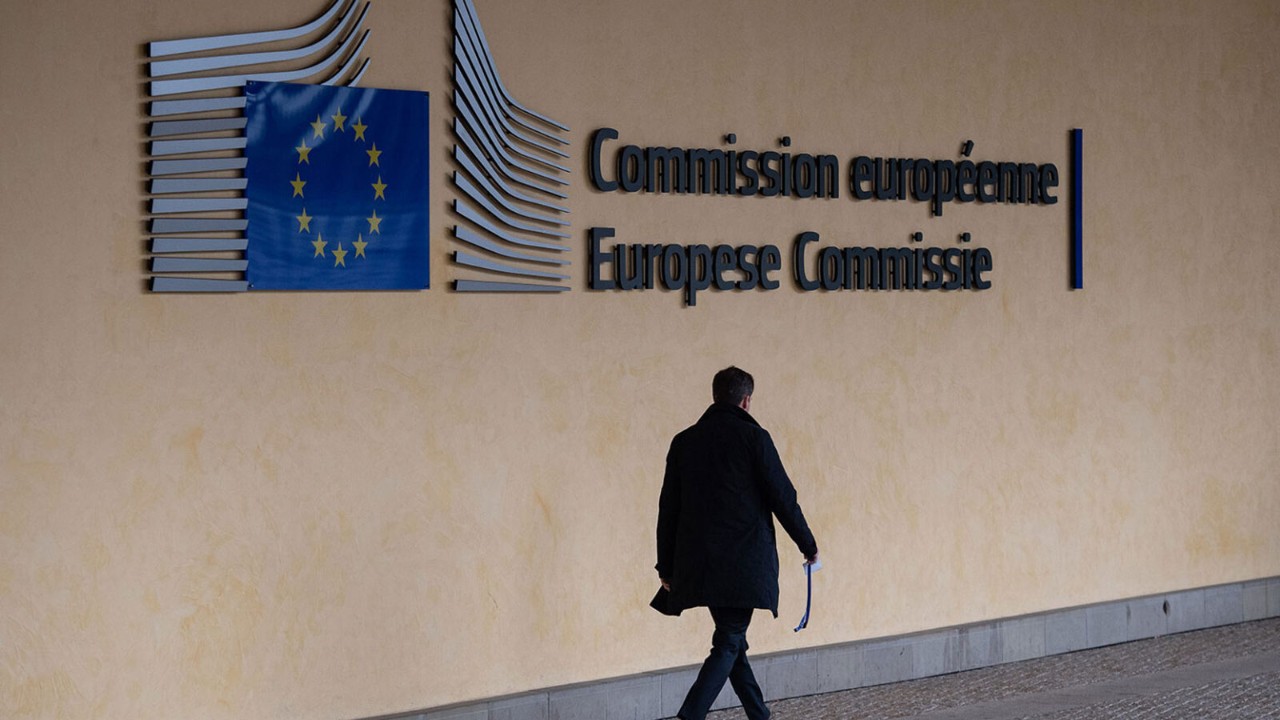
The European Commission has proposed its long-awaited EU Inc corporate registration and administration system, designed to create companies operating in all 27 member states. But will these corporations attract more capital?
That is a key question of the reform, set within the EU’s proposed ‘28th Regime’ package, designed to create an optional EU corporate law system, working alongside national systems.
One goal of the proposal is to reverse the trend of major companies growing in the US, benefiting from a single federal corporate law system, while EU companies fail to scale. EY said in January that the US had (as of 2024) 60 of the world’s 100 largest companies, followed by China with 11, the EU with just six (three in France and three in Germany), the UK with four and Switzerland with three.
‘The broader investment environment remains largely intact’
‘If you’re a founder, entrepreneur or investor, you’re faced with 27 national legal systems and more than 60 different company forms, Michael McGrath, EU democracy, justice, the rule of law and consumer protection commissioner, said at EU Inc’s launch. ‘This bureaucracy delays setups, it raises costs, it complicates scaling and ultimately it slows growth.’
What’s involved?
The commission wants the EU Council of Ministers and the European Parliament to approve the new regulatory system this year. If the co-legislators agree, EU Inc companies could be created via a digital interface over 48 hours for a €100 fee, bypassing notaries, with no minimum capital requirements and automatic national tax registration.
Corporate registration information would be sent to all competent authorities across the EU for processing. Subsequent corporate information, from digital shareholder and board meetings, would be similarly disseminated.
Such companies could use an EU Company Certificate (already authorised under EU law) and the Digital EU Power of Attorney, overriding various national corporate administrative requirements, (similarly approved). They could also use a proposed Digital Business Wallet to create and exchange documents, licences, permits and certificates. Under the 28th Regime package, stock options would only be taxed when cashed out, not when allocated.
‘There is little obvious incentive for investors in the current proposals’
But alongside progress there is also scepticism about whether more investment will flow, given corporate tax liability and tax law will remain national, as will labour laws. Also, no EU Inc corporate law tribunal will litigate and settle disputes, which remain under national courts.
In an analysis piece, David Marek, principal economist and director, clients and markets, Deloitte Czech Republic, noted that the reform would not create an EU version of Delaware, the US’s key company formation and administration centre. EU Inc ‘addresses the “packaging” of business, not its entire substance,’ he wrote. ‘The broader investment environment remains largely intact.’
Marek added that the proposal could help companies ‘that want to sell, hire people and raise capital across Europe from the very start’. But he added that it may not help those expanding from a domestic base, who may still struggle to tap foreign growth capital because company supervision and taxation remain national.
Pressure points
Paul Gisby, senior director, professional services, for accounting federation Accountancy Europe, believes that there is ‘little obvious incentive for investors in the current proposals’, despite the proposal modernising European corporate law, with ‘the removal of nominal value, capital requirements and the ability to use value in kind as consideration for share capital that may appeal to investors in start-ups, for instance’. Moreover, the stock option proposals ‘give clarity on the timing of the taxable event’.
Tax is a key complexity, which may even become more onerous under EU Inc
But Gisby stresses that ‘key pressure points for crossborder business’ such as labour law, VAT, business tax and specialist law relating to specific sectors – such as waste disposal and food hygiene – and enforcement all remain at the member-state level.
Tax implications
Tax is a key complexity, which may even become more onerous under EU Inc, Gisby warns. Under most (but not all) member states’ laws, tax would be collected in the country of effective management control. So, EU Inc’s potential separation of registration and management countries might spark double taxation, or at least disputes, with tax authorities over the location of a company’s tax residence.
‘The situation is complex and I would have hoped that, at a bare minimum, the 28th Regime would have addressed the issue of where the taxing rights would fall,’ Gisby says. The reform also did not transform VAT, which remains member state-controlled, with complex input tax recovery systems in place, he notes.
That said, EU Inc incorporation/conversion may help businesses bypass outdated or oppressive company law in their own member state. That is especially the case for countries still mainly using paper-based systems, relying on notarisation, for example, with expensive incorporation costs. If passed, EU Inc could push member states to modernise domestic company legal law, lest their corporations switch to the new system.
‘I think it will be very difficult for member states to continue with domestic company law that is substantially more onerous than that covering an EU Inc,’ Gisby says.
Raluca Enache, head of KPMG’s EU Tax Centre, and Ana Puscas, its associate director, agree that tax laws will remain largely unchanged by the reform: ‘If the EU Inc has management, production, sales or logistics hubs in other member states, such jurisdictions will apply their usual rules for tax residence, permanent establishment, local withholding taxes and other taxes where relevant,’ they tell AB.
‘Simplified tax registration would represent a significant improvement’
The same applies for VAT; with proposed provisions governing the issuing of VAT numbers in member states where branches are established, separate VAT numbers will still be required: ‘However, the registration process is expected to be significantly simplified,’ Enache and Puscas note. ‘Overall, we expect that the simplified tax registration procedures would represent a significant improvement and an incentive for entrepreneurs to use the EU Inc system.
According to Dr Thorsten Ehrhard, a corporate and commercial lawyer and partner at PwC in Germany, EU Inc companies should employ accountants and bookkeepers in every EU country where they do substantial business: ‘You are certainly going to need to hire accountants in those countries,’ he says.
He underlines how EU Inc follows the ‘European Company’ (Societas Europaea or SE) stock corporation model, based on 2004 EU corporate law, but which insists on minimum capital of €120,000.
The SE also lacks the user-friendly registration system offered by EU Inc, insisting on four specific formation systems involving a merger, subsidiaries, conversion of an existing company or creating a holding company.
Dr Ehrhard believes the EU Inc system offers significant advantages, especially for start-ups – but will more capital flow? ‘I’m curious but optimistic that it will work out,’ he says, assuming that the proposals are not pared back by MEPs and EU ministers prior to approval.
‘What is taken off the table in the end of 2026 might be a bit different.’


