Cyprus has recently found itself caught up in the Middle East conflict with fears mounting that the island could be targeted by Iranian drones. The country is at the boundary between Europe and Asia and has its own history of geopolitical tensions.
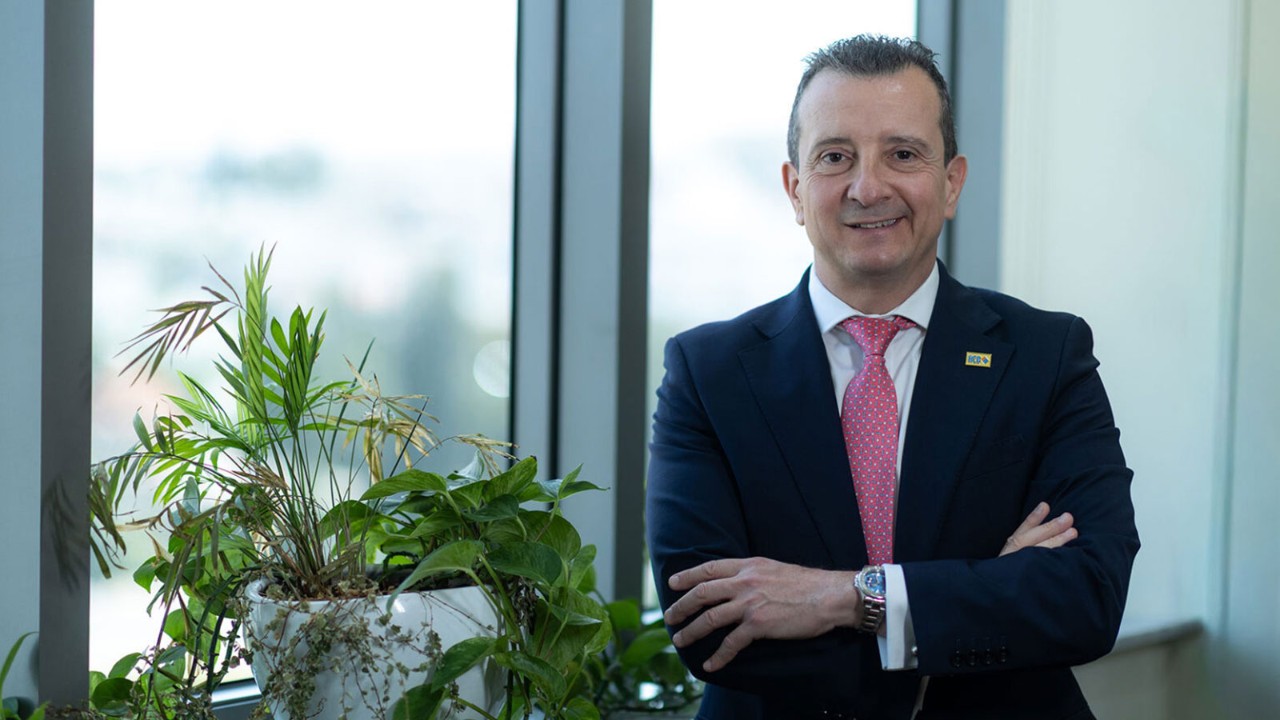
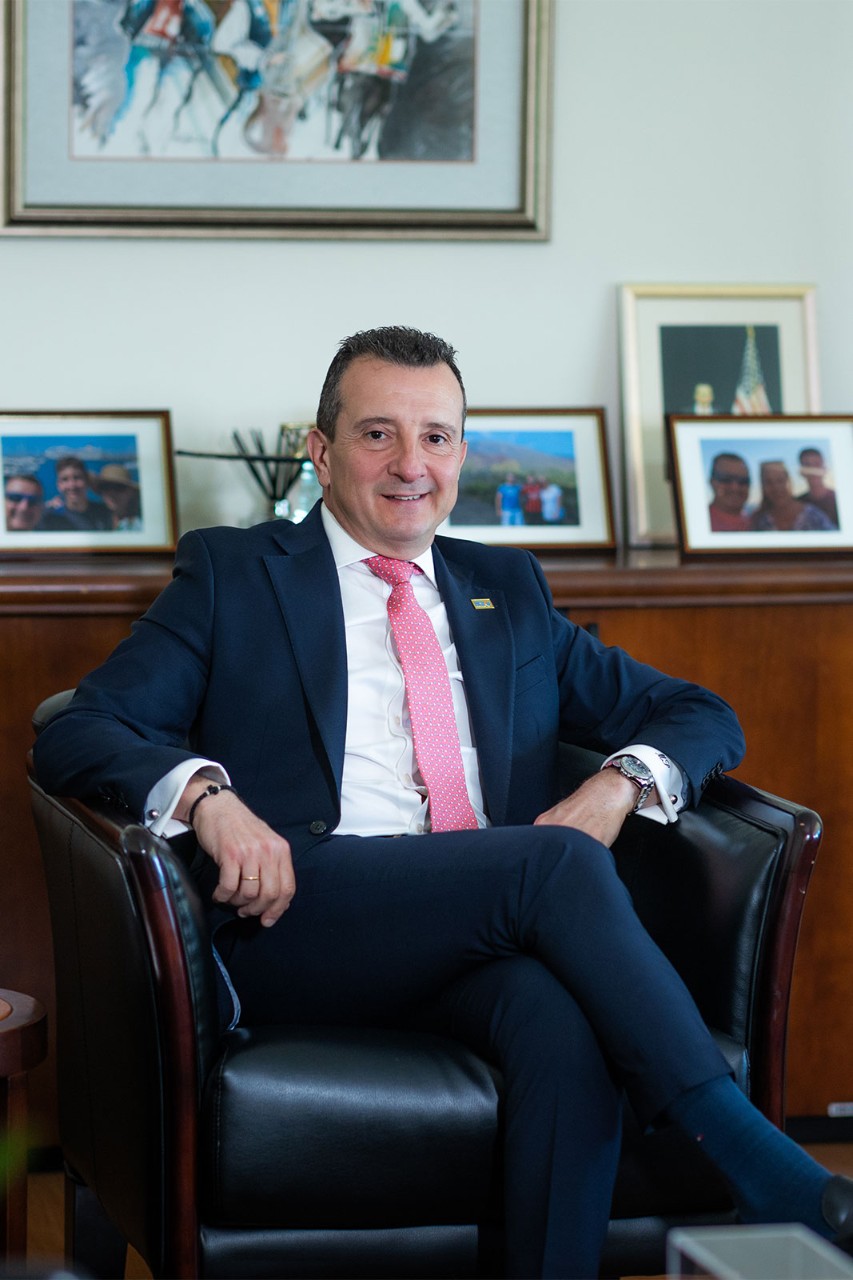
For Mario Skandalis FCCA, newly minted director general of the Association of Cyprus Banks (ACB), coping with crisis and international disorder is part of being in business in Cyprus, and an unavoidable element in the island’s banking sector which, since the crisis of 2013, has gone through significant reform.
The banking sector had to derisk from a leverage ratio of eight times GDP
‘Geopolitics is in our DNA,’ he notes, observing that while the recent regional tensions initially sparked widespread industry concern, the situation remained consistently managed and the sector’s response stayed firmly under control.
So – it is an unavoidable question – are Cyprus and its banks prepared? ‘This is probably one of the most certain answers that I am going to give in this interview: I am more than certain that the Cyprus banking sector is today at a level that provides all reasonable certainty that we have the best means … to fight effectively any of these exogenous risks and threats.
‘I feel confident in that, 100%.’
Three decades
Skandalis is not without considerable experience on which to base his assessment. His career began at EY in 1995 – the same year he qualified with ACCA – where he rose to became an audit supervisor. After five years with the firm, he moved on to the Bank of Cyprus Group.
During the quarter of a century he spent with the bank, he held senior roles in its insurance division, led the organisation of overseas banking operations, became legal representative for the bank in Greece, and led the institution’s compliance division for 12 years.
He is also a founding member and former chair of anti-corruption body the Cyprus Integrity Forum, a fellow of the Chartered Governance Institute, and a fellow of the International Compliance Association. He is also a member of the Institute of Certified Public Accountants of Cyprus, where he served as its president as well.
He became leader of group compliance at the Bank of Cyprus at a critical moment, taking on the role just after the banking crisis sent an earthquake through the country. The national economic crisis, which stemmed from Cypriot banks’ huge exposure to poorly performing loans, commanded headlines around the world and was resolved only after a €10bn bailout by a troika of the European Commission, European Central Bank and the International Monetary Fund. The deal also involved the closure of the Cyprus Popular Bank, the country’s second largest bank at the time. The stakes were brutally high.
The Cyprus banking sector then had to derisk from from a time when its size was eight times the country’s GDP. Skandalis says the figure is now at a fraction of less than three times, a much safer position to be in. Likewise, non-performing loans have gone from around 50% of the industry’s loan book to 3.2% now. Moreover, the liquidity and capitalisation of all banks today are at the highest level within the European Union.
Life or death
The adjustment represents a massive change, and Skandalis was at the heart of it, helping lead the recovery effort at the Bank of Cyprus. ‘At the start, it was a very grey horizon. I didn’t know whether we were going to succeed or not,’ he confesses. He says his ‘professional’ nature and desire for new challenges got him through the everlasting days.
‘We were at a crossroads of survival or extinction’
‘It was a very stressful experience, working long hours. But the fact that we had one common goal, and that common goal derived from the fact that we were at a crossroads of survival or extinction gave us the relevant power, confidence and commitment to work harder and harder and harder until the positive results started showing up.’
The experience has had a lasting effect on the country’s banks, and set a sustainable and robust basis for the future. ‘The biggest good we got after the crisis is that it changed our culture and our mindset. We were not any more focusing on cosmetic or superficial kinds of change. We felt we needed to change everything holistically, from top to bottom.’
Critical sector
Skandalis assumed leadership of the ACB in January, taking over from a predecessor who had been at the helm for two decades. The job is to keep watch on international developments and ensure the sector adapts, grows and enhances its support to both individuals and businesses.
Banks play a leading role in the Cyprus economy, ‘supporting the state, supporting the business community, supporting the public’, says Skandalis. He wants the sector to be a ‘proactive leading enabler’ of innovation and inclusiveness and build a reputation as a ‘model of national and international good governance’. He wants to further enhance and establish its status as the most reliable and credible partner to the state, demonstrating an even greater support to both the public and business community.
‘We need to concentrate on the potential the sector can bring’
‘The biggest challenge is to educate people, and for people to understand the criticality of the banking system to the country’s viability and prosperity. Like every other sector, yes, we may go through certain bad times, but we need to use those bad times as a point of reference to make us stronger and be concentrating on the potential for the positive change that the banking sector can bring to an economy and its people.’ His vision is for the Association to be the key enabler to a sustainable future for Cyprus and its people, leading to real financial prosperity and social equity.
ACCA will be playing a big role in what Skandalis does next. He says it is a ‘key that opens the door to endless professional opportunities’, and in creating a ‘highly skilled, mature professional’ in an individual. But he goes even further.
‘ACCA provides the means for all its members to look forward and take the right decisions and steps to direct today’s events as facilitators and catalysts, accomplishing future goals and objectives. That is what ACCA is!’
The big goals
After a long career working through some of the country’s biggest challenges, and potentially facing another, Skandalis has some wisdom to impart. Achievements are not about a singular event ot task, he says, but are about the ‘small and solid steps’ along the way leading to that achievement. They form ‘a robust armour and a clear pathway for leading all young professionals in attaining their dreams. It is these steps that led me where I am today’.
And high achievement, he adds, is something within everyone’s grasp. ‘I have confirmed throughout my whole career that in this life there are no extraordinary or exceptional people, but rather there are simple, normal people that seek, accept and eventually accomplish extraordinary goals and challenges.
‘If people realise this, then they will never question themselves and achieve the impossible!’


