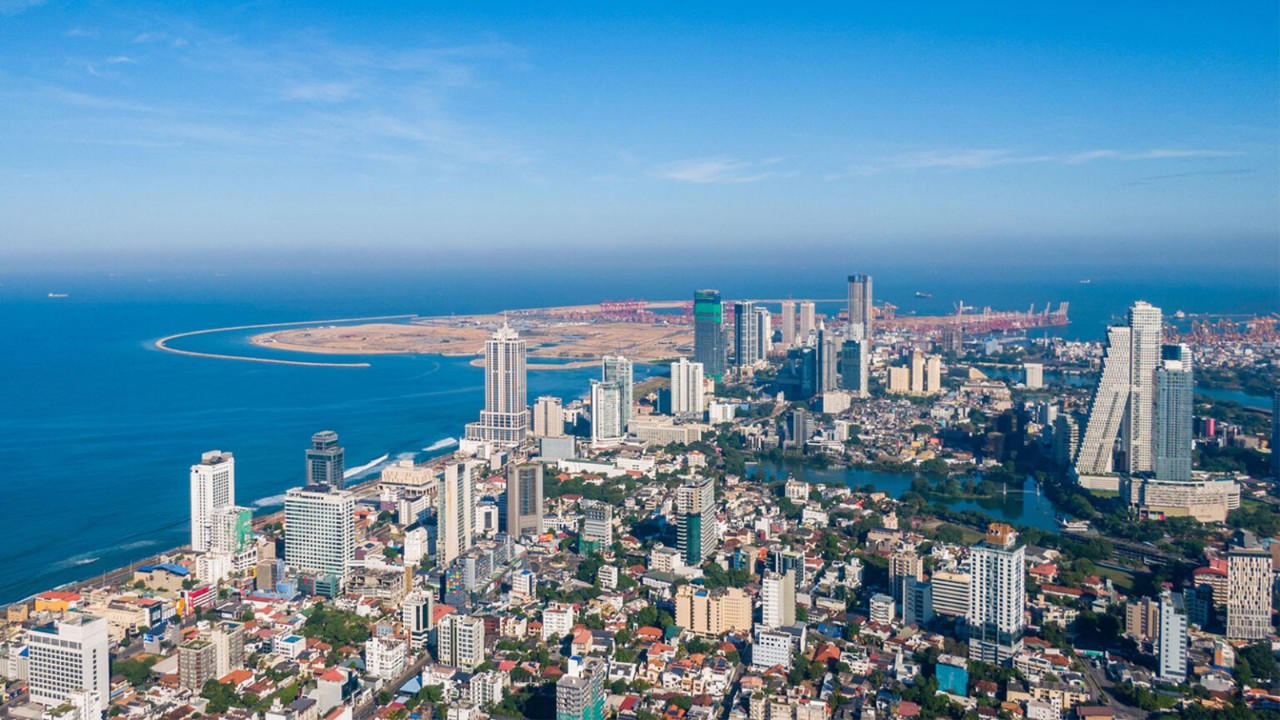

For the first time since Sri Lanka descended into economic crisis in 2019, the country’s future can be viewed with exuberance. Not only are the empty petrol stations, power blackouts, runaway inflation and sovereign credit default simply bad memories, but local businesses have started committing significant capital to the Colombo Port City megaproject designed to transform Sri Lanka’s economy.
For years Port City was no more than a humungous spit of reclaimed land on the edge of Colombo waiting for the economy to catch up. It now has, following a number of Sri Lankan companies making large, long-term investments in the projected international financial and business hub. It is a significant moment.
When local companies commit their own capital, it validates the market for investors
Port City’s big step forward has been driven by a series of large-scale property developments. Prime Lands and Melwa signed a deal in May 2026 for a 22-storey residential development that is already under construction, while Home Lands is currently building a US$300m project with over 600 apartments. A US$120m luxury marina by Browns Investments, the investment arm of LOLC, is also going up. A Singapore-led consortium is preparing to start construction on Colombo Gateway Tower One, a 34-storey office skyscraper, with completion set for 2029. And the Business Centre, a nine-building office complex managed by the state-linked master developer that opened last year, has been fully leased out to tenants.
Lower interest rates, improved access to credit and rising household purchasing power in Sri Lanka have all worked their magic. Prime Lands studied Port City’s master plan for years before finally taking the investment plunge this year. While its units are priced in US dollars, they can be paid for in Sri Lankan rupees, attracting interest from buyers seeking dollar-linked property without needing to hold foreign currency themselves. The Home Lands development is also attributed to stronger demand from overseas Sri Lankans, foreign buyers and the local market, with the company expecting foreign purchasers to account for more than half of planned sales.
Confidence
Why does all this matter so much? Because these are corporate investment decisions, which carry more weight than investment inquiries or promotional events. Real estate developments of this scale require capital to remain committed through design, approval, construction and sales cycles lasting several years, and that demands a substantial degree of confidence.
Foreign investors usually enter unfamiliar markets with less information than domestic companies. They may understand the regional opportunity but not the approval process, political environment, consumer market or operational difficulties. Established local companies on the other hand understand those risks more closely, so when they commit their own capital, it validates the market for outside investors.
Smaller businesses must also be able to participate in the new activity
Sure, not every local investment will automatically attract foreign direct investment (FDI); nor does domestic investment become foreign investment simply because it occurs inside a special economic zone such as Port City, which is free of Sri Lanka’s foreign currency controls. The real value of local investment is that it reduces uncertainty, creates activity and shows that companies with direct knowledge of the country see a powerful commercial case for being there.
The power of that case can be seen from the latest figures. Sri Lanka’s Board of Investment reported just over US$1bn in FDI for 2025, a 72% year-on-year rise. The 146 approved projects during that year were worth a combined US$1.9bn, with Port City-related development accounting for a sizable portion.
A bigger vision
Yet all this good news comes with caveats. Port City must avoid becoming overwhelmingly dependent on luxury residential development. Apartments can finance early construction and attract foreign buyers, but the larger economic case rests on recurring foreign exchange from IT, financial services, professional services, maritime businesses, regional headquarters, healthcare and education.
Local suppliers, professionals and smaller businesses must also be able to participate in the new activity. Otherwise, Port City may generate impressive investment figures but have limited economic effect.
Environmental compliance, transport links, public access and regulatory transparency likewise require continued attention. According to a 2026 case study on Colombo Port City published in Is Sri Lanka Revitalising Its Economy?, consistent governance, clear rules, environmental safeguards and alignment with national economic policy are all necessary conditions for its long-term success.
Two years ago, the question was whether Port City could attract any serious capital at all. Today, the question is whether that capital can be converted into occupied buildings, paying tenants and recurring forex earnings. It is a more advanced problem to have, and it is one within Sri Lanka’s own ability to solve.


