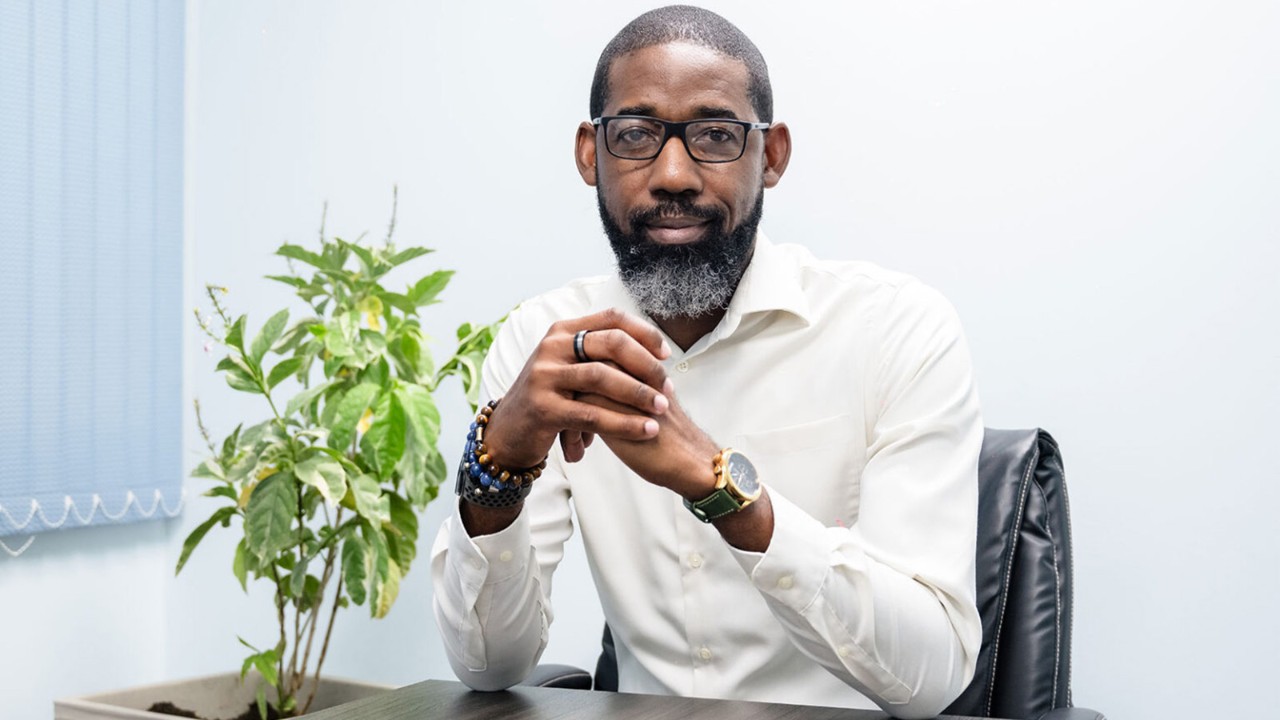
Maths is not David Simpson’s favourite subject. That may not be what the world expects to hear from a finance professional, but the lead consultant and managing director of Prestige Accounting in Barbados says it is a common misconception that accountants must love maths.
Accountants, he points out, have tools to do the actual maths (AI now being one of them). ‘We depend on calculators for the complex functions, or spreadsheets,’ he says. ‘It’s the theory and the knowledge behind it all that we focus on.’
‘It’s a matter of showing how AI can be employed alongside people’
That pretty much reflects Simpson’s entire approach. He has guided the firm through a collection of challenging moments in recent years, and the emergence of AI is another likely game-changing moment that must be embraced and managed.
With what can only be described as epic calm, he rejects the notion of AI as a ‘doomsday’ scenario for accountants. ‘It’s a matter of training and showing people how the technology can be employed alongside people to increase efficiency and effectiveness,’ he says.
Shifts
Simpson set up Prestige in 2000. He has managed the firm through the economic crisis that hit the Caribbean in 2017–18 and again after Covid-19 struck. During that time the firm has transitioned from acting principally as an ACCA trainer and serving other accountancy firms to providing business and financial services to the region’s small and medium-sized companies.
He not only leads Prestige but has also served on ACCA’s International Assembly, representing Barbados, and been chief executive of the Institute of Chartered Accountants of the Caribbean (ICAC) since 2024. He is a director of the Barbados Entrepreneurship Foundation and member of the board of trustees of the Barbados Youth Business Trust, and only recently stepped down as chair of the Barbados Agency for Micro Enterprise Development (FundAccess).
‘Too many are focused on what the traditional accountant has been’
Tradition and transition
These days, though, he is fully focused on managing Prestige, ICAC and serving its client base and has recently returned from the 2026 ICAC annual conference in Guyana where the future of the accounting profession was a hot topic. Needless to say, Simpson has some strong views about the profession and its reaction to AI.
‘It’s a conversation that we’ve been having slightly too long now, without definitive action,’ he says. ‘So we know what is likely to come. We know the impact of technology, we know the role that we have played historically. But I think that too many of our members are focused on what the traditional accountant has been.’
He doesn’t blame individuals, reckoning few have been properly exposed to the technology to make a proper judgment call about their next move. But he does worry that many small firms ‘have not looked to change their product or service offering to the public’.
‘You have to adapt and change, or you get left behind’
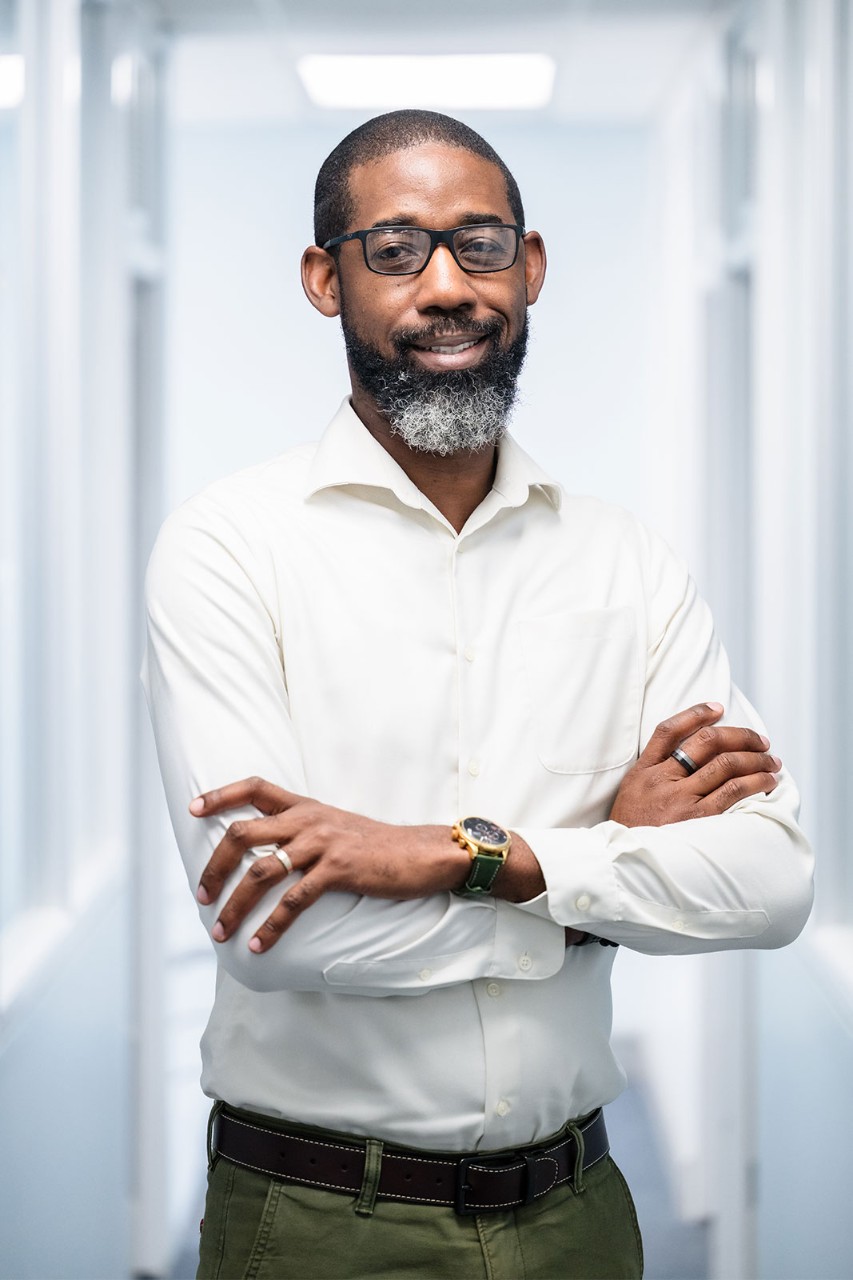
One hindrance to moving forward is a preoccupation with the regularity of accountancy work – annual tax returns, accounts filing, audits. He says the profession must move past that and that ‘the external accountant has to be more involved in the day-to-day running and discussion’ of their clients.
Accountancy firms will need to be strategic partners, solving client problems through analysis that shows a way forward rather than fixating on backward-looking financial statements – as useful as those may remain. ‘That’s where finance professionals can fill a role,’ he underlines.
Fast lane or slow
Simpson himself is examining how AI can improve his firm, but crucially, sees no reason why it should replace his staff. He is a manager accustomed to looking for and flexing with the demands of the times. ‘Early on in my career, I think that’s one of the things I recognised. You either have to adapt and change, or you get left behind.’
Despite this, Simpson did not imagine himself as a leader at the outset of his career. He was drawn to accountancy and the ACCA qualification after taking an ‘out of faculty’ accounting option at university, where he was studying science and technology – gadgets were an early passion, he says.
‘I promoted myself as an introvert working in the background and supporting everything that had to be done,’ he says. While he still sees himself as an introvert, he has come to ‘embrace’ leadership and interaction with others. ‘I’ve found ways to manage it,’ he says of his natural inclination.
‘Once accounting involves technology, it will get digital natives’ attention’
However, he speculates that the traditional view of the accountant as quiet and inward will end with a new generation of recruits who, ‘by nature of the time they’re born into’, are more extrovert and accustomed to having public personas through social media and the internet.
These digital natives are also likely to be more attracted to a sector switching from the customary repetitive tasks of the past to a strategic role supported by AI tools. ‘There are many more options to attract them,’ says Simpson, ‘and once it involves technology I think it will get their attention.’
The vision
Simpson is a Bob Marley fan and a part-time DJ. Marley’s influence on him goes beyond the music. In fact, Simpson says Marley’s thinking on prejudice, fairness and equality are important. ‘There is a place for that in our profession.’
After a quarter of century in the profession, Simpson has some lessons of his own to impart to a new generation of entrants. The first is ‘patience’, a single word delivered emphatically. Enough said.
The second is ‘understanding that you are a guardian of the profession’, and taking that guardianship responsibility to heart. ‘It’s a lifelong responsibility that you carry as a professional,’ he says.
The CV
2000–present
Lead consultant and managing director, Prestige Accounting Inc, Barbados
2010–present
Director, GDA Investments Inc


