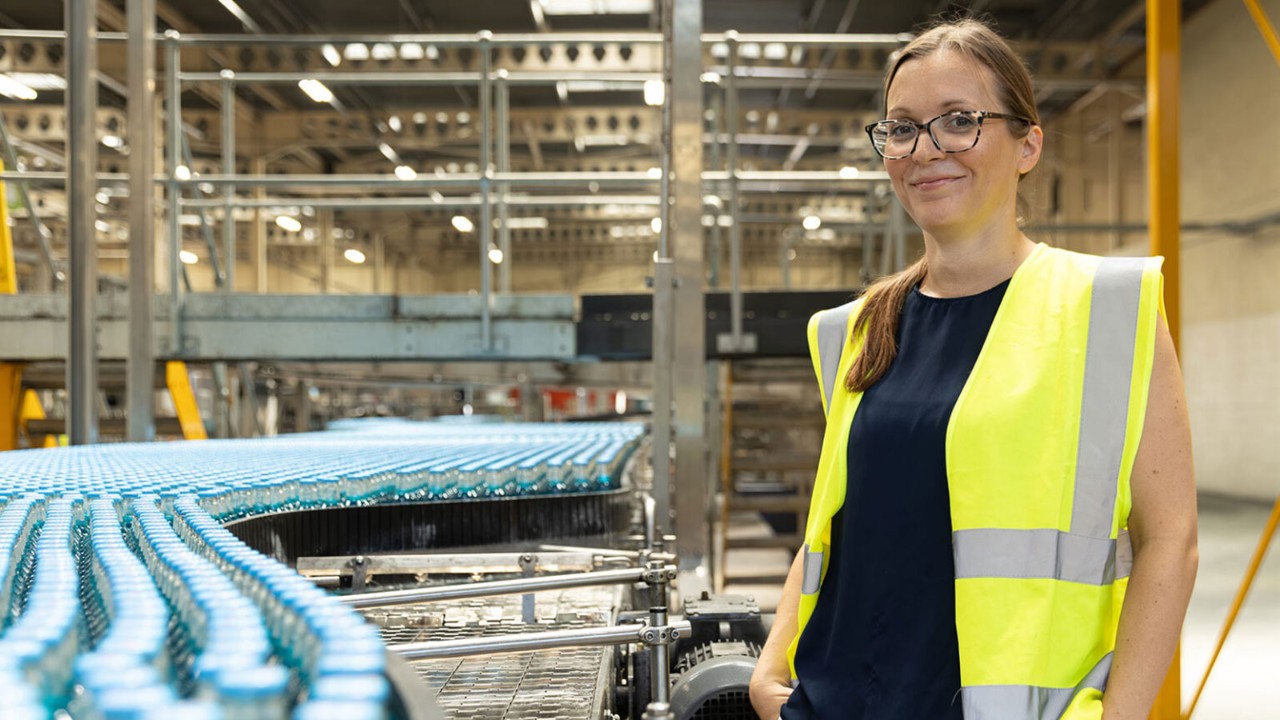
Anyone who has been to the Glastonbury Festival in the past 30 years will probably have heard of Brothers Drinks. The Somerset cider producer first set out its stall (literally) at the festival in 1995, selling pear cider to thirsty revellers. Three decades later, its fruity ciders are still on the festival circuit, but that, as its CFO Laura Ash FCCA explains, is only a fraction of the story.
The financial success of Brothers Drinks has more to do with its contract manufacturing and packing business than with the ciders that carry its name. As well as producing own-brand cider for Tesco, Lidl and others, Brothers supplies cider, beer and soft drinks for many well-known brands in cans, glass and plastic bottles and kegs.
‘I can tap into our data lake and get an AI chatbot to talk about our data’
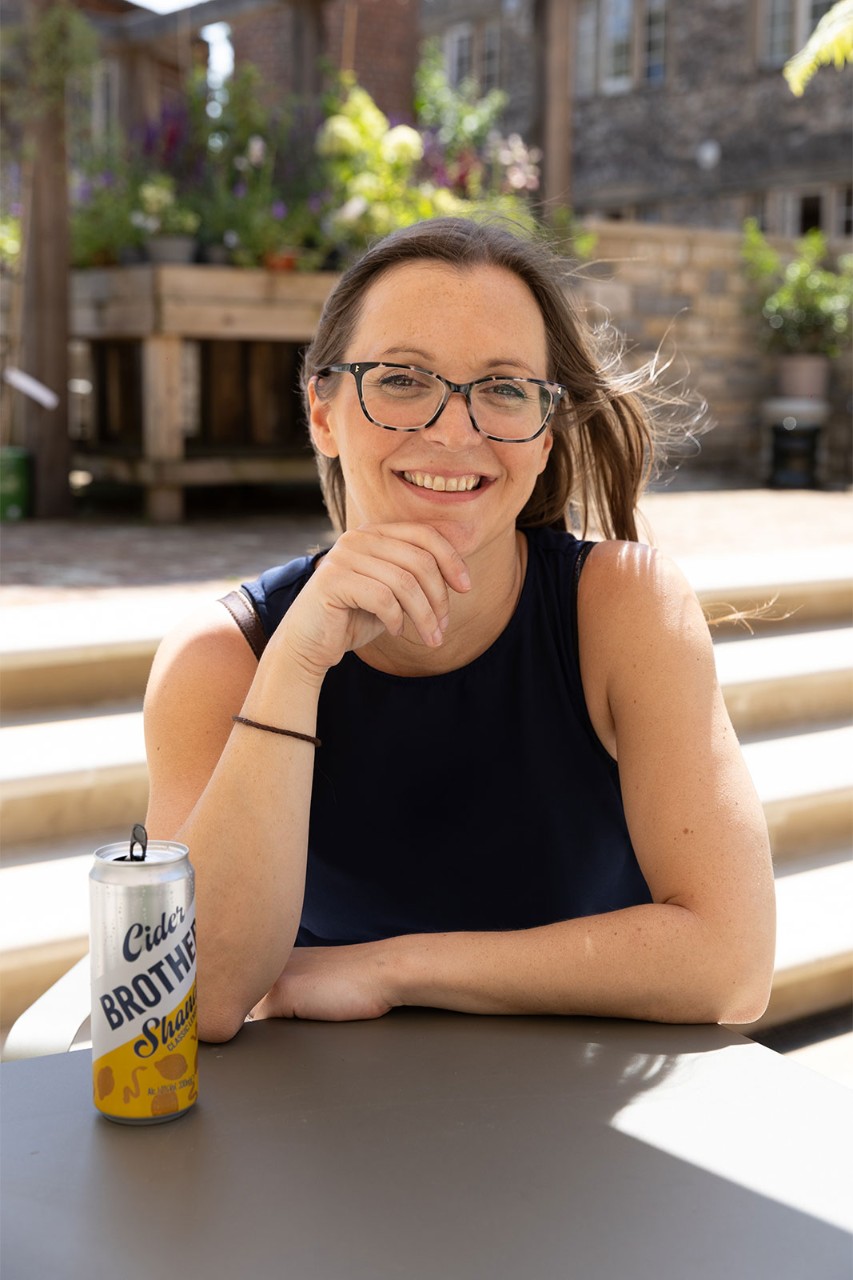
The scale is huge; Brothers’ mill at Shepton Mallet accounts for around a quarter of the UK’s total cider production, and the contract business accounts for over 80% of the company’s £92m annual revenue. ‘When it comes to co-packing, business finds us, due to the history of drink-making within the family,’ Ash says. ‘And our factory is one of the few in the country with the capability to produce cider on a mass scale.’
As if producing cider under its own name and for others weren’t enough, Brothers also runs Kilver Court and Gardens, a former lace factory surrounded by three-and-a-half acres of gardens that has been transformed into a luxury shopping destination and busy café.
‘We have three businesses in one and that makes my role both varied and challenging,’ Ash says. ‘Even within those businesses there are multiple revenue streams. There’s a lot going on. Never a dull moment.’
Bringing structure
While the business has been consistently successful, its finance function lagged behind until Ash arrived in 2022. She was headhunted after successfully steering another family business through finance transformation.
‘When I arrived, the management accounts were taking six or seven months to be produced and board-level reporting was very basic,’ she explains. ‘Absolutely everything needed to be done, from setting up a finance team to getting the ERP infrastructure, which had been purchased but not really implemented, to the right place.’
With the basics now in place, Ash is developing the financial planning and analysis capability. ‘I want finance to be the function that people come to and rely on – for them to need us for help and support. We can help the business in every area, not only with numbers but also with our mindset as finance professionals.’
‘We work with a lot of growing brands, which means forecasts can change at short notice’
She is also in the process of implementing AI. ‘It’s helping me maximise the resources of the finance team, which is quite small for such a big business. I’m using it for modelling and for exploring how we can speed up our processes. I can tap into our data lake and use an AI chatbot to talk to me about our data, rather than relying on Excel models for everything.’
The owners, she says, ‘have really bought into everything I’m doing’, but bringing a family SME along with the transformation has taken real effort. ‘You’re pushing for change when people here have not necessarily seen how things work in the corporate world. The challenge to overcome is not being aware of what the end-game is. So I have to educate as I go.’
Headwinds
The latest accounts describe 2024 as ‘a challenging year’, with rising distribution costs and a flood that temporarily closed Kilver Court. Turnover fell by almost 6% to £92.2m, from £97.9m in 2023, while operating profit dropped from £4.9m to £2.4m.
An added challenge for Brothers in 2026 is the extended producer responsibility (EPR) legislation, which makes companies that produce branded packaging financially responsible for its entire lifecycle.
Babycham
In 1953 the grandfather of the four Showering brothers who currently own and run Brothers Drinks invented a sparkling perry, bottled it in individual servings at his mill at Shepton Mallet, and called it Babycham. By the 1970s, the mill was churning out 144,000 bottles of the fizz every hour. The original family business, which went back 375 years, had been sold to Allied Breweries in the 1960s, but in 2016 the brothers bought back the mill – and five years later the Babycham brand, too.
The immediate impact has been a shift away from glass (which has a potentially higher EPR cost) to cans, creating both demand and planning problems for Brothers’ contract packaging business. ‘Capacity is an issue,’ Ash says. ‘We’re currently experiencing can shortages, which are adding to the challenges that our planning team are facing.’
‘Everything is tangible – you can touch the product, and your numbers have meaning’
Another challenge for Brothers is dealing with the rapidly changing demands of multiple clients. ‘We’re at the mercy of other people’s forecasts,’ Ash says. ‘We work with a lot of new and growing brands, which we love; however, this also means their forecasts can change at short notice. Compound that with the fact that many are shifting to cans at the same time, and capacity becomes one of our biggest challenges.’
As for the future, one of the challenges is the company’s identity: with such a variety of revenue streams, what does it want to be known for?
‘We have many of our own visible brands, including Brothers, Babycham [see panel] and Showerings. Ideally, we’d like to see our production lines manufacturing Brothers products 24/7, which is an area we’re focusing on currently.’
Whatever the future holds, the company’s CFO is clearly at home in a manufacturing business. ‘I love the variety and fast pace. Everything is tangible – you can touch the product, and your numbers as a finance professional have meaning. It’s a real passion for me.’
The CV
2022
Head of finance, then CFO (2025), Brothers Drinks
2018
FP&A manager, Bailey of Bristol
2017
Group financial accountant, Spandex
2014
Senior financial accountant, GKN Aerospace


