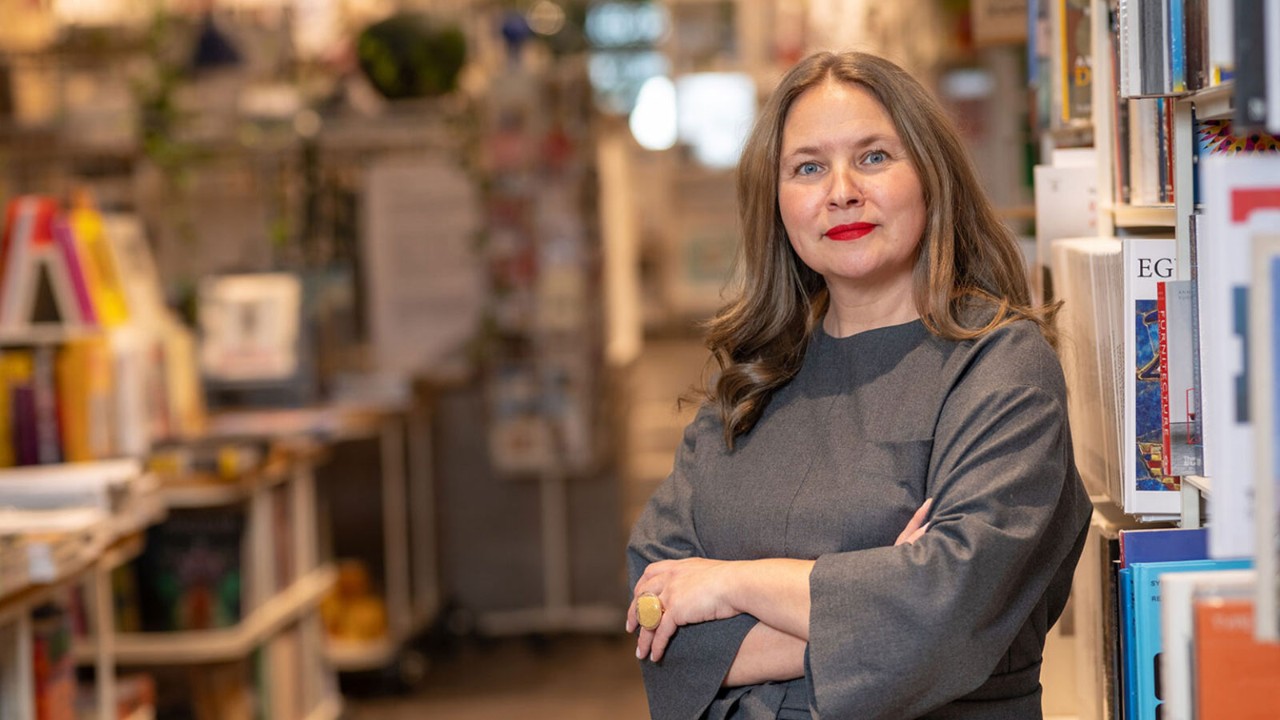
When Ruxandra Ștețca FCCA co-founded her landscaping and arboriculture business with her husband Ioan back in 2009, she believed they would make a dream team. On her side, she brought years of business, finance and project management experience while her husband had a background in forestry engineering and research. Having studied the history of art, Ștețca also had an interest in Renaissance-style gardens.
‘We put all our knowledge together in one pot – my experience of business and art history and his knowledge of plants and forestry,’ says Ștețca, who is based in the Romanian capital of Bucharest.
‘Now, people place much greater value on connection to nature’
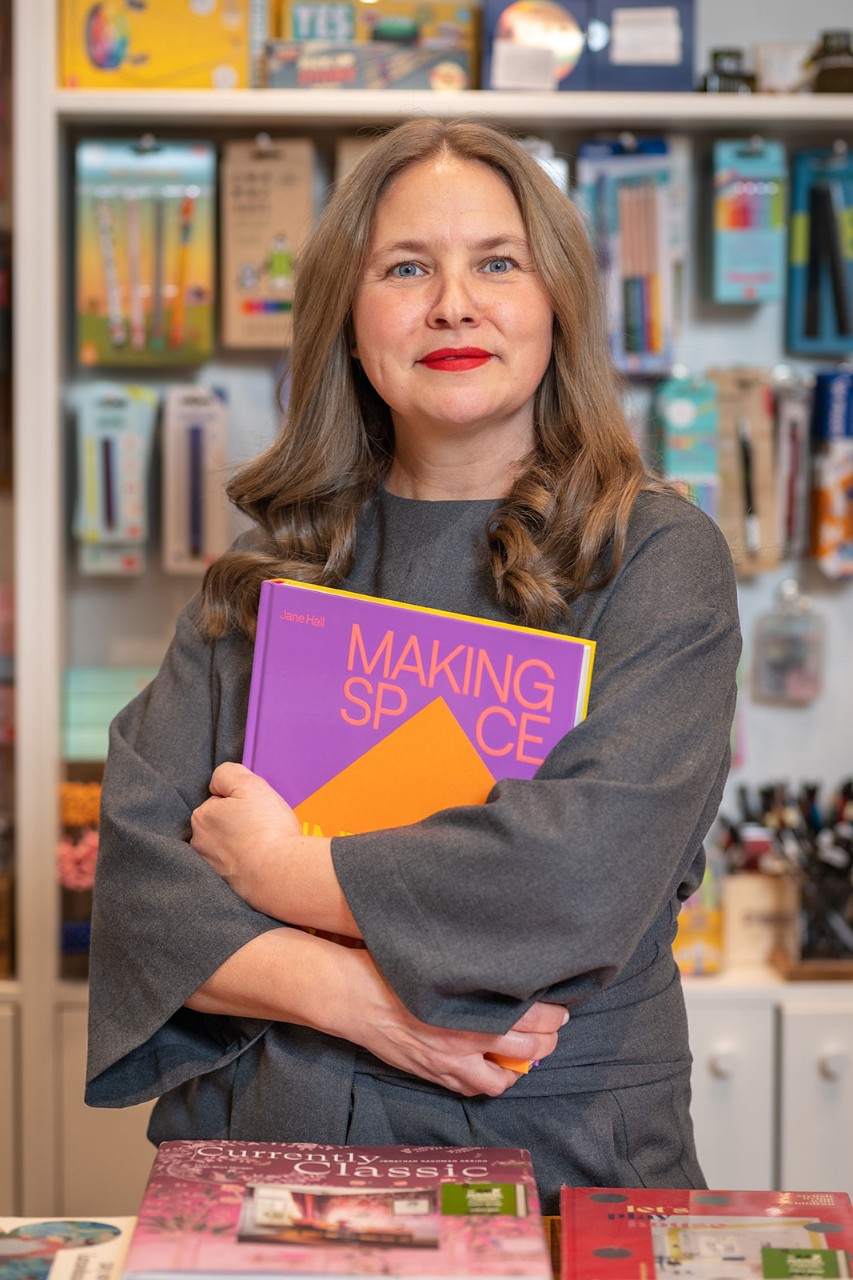
Despite the couple’s impressive breadth of skills, the business struggled in its early days due to unpredictable market demand. ‘When we started, landscape design was not widely understood or valued in Romania,’ she says. ‘But this gradually changed over time, particularly after the Covid-19 pandemic reshaped priorities. Now, people place much greater value on outdoor spaces, wellbeing and connection to nature.’
Today, Ștețca’s business, REwildSCAPE, designs gardens for high-net-worth individuals as well as property developers and other organisations. Its designs are typically inspired by the wildflower meadows and forests of Transylvania – the mountainous region where she and Ioan grew up. The project she’s most proud of is a rehabilitation centre for disabled children, created for the personal foundation of Mihai Neșu, a former Romanian footballer who was left paralysed after a severe neck injury.
‘That was a very challenging project,’ she says. ‘We had to design a garden that would harness the healing power of plants and was completely flat so the children could use it in their wheelchairs. That required a lot of research.’
Literary ambitions
As a teenager, Ștețca didn’t plan to pursue finance; instead, she longed to study English literature or art history. But her parents didn’t consider Shakespearean sonnets or Caravaggio’s chiaroscuro a suitable academic option for a girl growing up in poor, post-communist Romania and urged her to study either architecture, engineering or medicine.
So, Ștețca embarked on a degree in electrical engineering and business administration at the Polytechnic University of Bucharest. While researching her thesis, she came into contact with EY, which offered her a role in its audit practice following graduation. And it was at EY that her ACCA journey began.
CV
2010
Finance director, Art Promo Cultural Foundation
2009
Co-founder, REwildSCAPE
2007
Management consultant, CII Partners
2004
Relationship manager, UniCredit Tiriac Bank
2002
Project manager, Union Fenosa Internacional Sociedad Anonima
2000
Auditor, EY Romania
By the time Ștețca qualified with ACCA, she had a new day job, as a project manager with Spanish energy company Unión Fenosa, which planned to enter the Romanian market by buying newly privatised energy companies. Ștețca was tasked with researching business opportunities and undertaking financial analysis. Although she had liked working at EY, the Unión Fenosa position was too good to pass up, she says, because of the potential to have a country-level leadership role in future.
Unfortunately, Unión Fenosa ultimately decided not to enter the Romanian market, so Ștețca joined HypoVereinsbank Romania (now UniCredit Bank) as a relationship manager, supporting 75 corporate clients. Two competitive advantages helped her land the role: she spoke German and was ACCA qualified. During her time with the bank, she was involved with the largest credit line it had made until that point – a loan of €100m.
‘ACCA has been a constant anchor throughout my career’
After three-and-a-half years with the bank, Ștețca returned to project management, joining Austria-based consultancy CII Partners, where she was responsible for setting up a shared service centre in Bucharest. She then joined the Art Promo Cultural Foundation in Bucharest, acting as the finance director for an employment project backed by EU funds – a role her ACCA qualification helped her to secure.
Ștețca regards her ACCA qualification as a cornerstone of her career, in both entrepreneurship and her previous corporate roles.
‘ACCA has been a constant anchor throughout my career,’ Ștețca explains. ‘It gave me the technical finance knowledge and credibility needed to succeed at EY, in banking, consulting and cultural projects, and ultimately to start and run my own business.’
Myriad interests
Since co-founding her business, Ștețca has juggled entrepreneurship with studying for a BA and MA in art history from the Bucharest National University of Arts and an executive MBA from London Business School. A speaker of five modern languages, she has also home-schooled her three children and is studying Latin and ancient Greek.
‘Lifelong learning has broadened my perspective’
Studying for the art history degrees and MBA were long-held aspirations for Ștețca. ‘As a teenager, I dreamed of studying art history and, later, as a young professional in my 20s, I aspired to pursue an MBA,’ she says. ‘I never abandoned these goals, even as my life and career evolved.’ Both have proved invaluable in her entrepreneurial endeavours – the MBA because it broadened her skillset and network, and the art history degrees because they enabled her to inject ‘a touch of art’ into landscaping projects.
Given how much she stretches herself, it’s no surprise that Ștețca has big future ambitions for her business. ‘My aim is to go global and have international projects,’ she says. Already, the business has a project under way near Barcelona and is targeting arboriculture in the Middle East as a potential growth opportunity due to the rise of state-led green initiatives in the region.
Ștețca’s advice for other accountants who dream of starting their own business – whether it’s in landscaping or another sector – is to deliver consistent results, stay true to your values and vision, have the courage to say ‘no’ to clients who are not the right fit, and embrace lifelong learning. She herself is a passionate advocate of continuous personal and professional development, taking her inspiration from the way nature evolves. ‘Lifelong learning has broadened my perspective,’ she says. ‘Everything you do and learn is stored somewhere so you can use it at a later date.’


