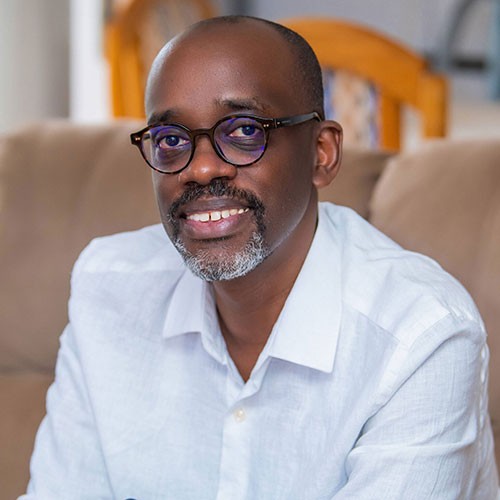
My career began in the reconstruction period following the genocide against the Tutsi in Rwanda. At that time, I felt strongly that my career needed to have meaning, which is something I found in public service at the Office of the Auditor General of Rwanda. By providing independent assurance, we helped strengthen accountability and credibility within government institutions and supported the mobilisation of donor resources. It demonstrated how technical work could contribute to national recovery, the rebuilding of institutions, and the restoration of public trust.
I’ve worked for 25 years in both the public and private sectors. I now serve as manager of the corporate performance and accountability division at the African Development Bank Group (AfDB) in Côte d’Ivoire. The work we do at the AfDB affects millions of lives and entire economic sectors across 54 countries. That sense of scale – and the responsibility it brings – is one of the defining advantages of a career in the public and development sectors.
I wanted analytical rigour linked with real-world outcomes
I initially trained as an economist. What drew me towards finance was how it could be used to improve how organisations function. I wanted to work in a field that connected analytical rigour with real-world outcomes, where the numbers and systems really support sustainable development.
Currently, we operate with increasingly constrained resources, which makes efficiency essential. Artificial intelligence will inevitably play a role in this, not as a substitute for human judgment but as a way to strengthen it. By speeding up analysis and helping make sense of information, AI allows people across organisations to spend more time on what matters most: judgment, strategic thinking and decision-making.
What I enjoy most about my job is building and leading teams to deliver complex projects. This involves assembling the right mix of skills, motivating people and providing the necessary support, often from a distance. Individuals are motivated not just by pay, but also by being trusted to solve important problems themselves. Watching teams grow in confidence is deeply satisfying to me.
I recently led a team that created a tool to measure how effectively AfDB is delivering on its 10-year strategy, which is exceptionally complex. The exercise required close collaboration across the entire institution, as the aim was to provide measurable indicators to keep the bank focused on its objectives for the next decade. It demanded persistence, collaboration and strong commitment.
Sketching lets me relax and observe the world more carefully
Achieving large, complex goals requires trust in a clear process and commitment to small, daily steps. It’s why my favourite mantra is: ‘Progress is built incrementally, through consistency and discipline, rather than sudden breakthroughs.’
If I had law-making powers, I would focus on tackling youth employment. I would make recruiting young people easier and more attractive to employers, by giving the private sector clear incentives and working with businesses to rethink how skills are developed.
If I weren’t a qualified accountant, I would probably pursue a career in art. I have a strong interest in modern art and music, so I can easily imagine combining the two in creative projects.
Outside of work, my priority is my family. I am a husband, and a father of three boys. With my wife, I try to guide them, preparing them for their future while also listening to their viewpoints, which can be as surprising as they are insightful. I also enjoy sketching, which lets me disconnect, relax and observe the world more carefully. Developing new skills and perspectives, whether through work or art, is something I have always found rewarding.


