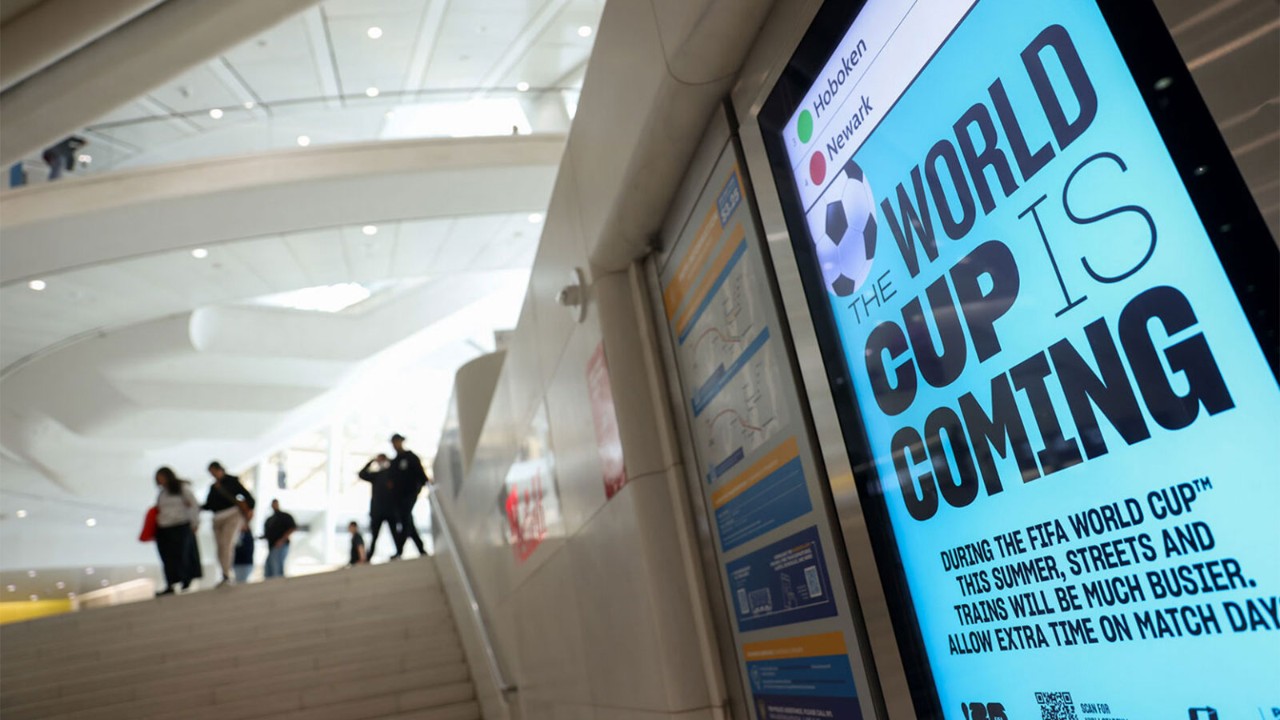

All global sporting events tend to be beset by stories of impending disaster before they start (remember the London Olympics or the Paris Olympics) and tales of triumph afterwards. But the impending soccer – or football, take your pick – World Cup in North America looks strangely unsettled.
It is, of course, all down to the culture. Football in the US is American football, intensely stylised, brutal and the game, typically, for older granite-faced followers. Soccer, what most of the rest of us call football, is the game that attracts younger folk.
When my cousins, who live in New Hampshire, visited London earlier in the year, my teenage cousin had two requests: could he join and play in a pick-up soccer game while he was here, and could he see a Premier League match, preferably Arsenal. Sadly, the Gunners weren’t playing. The only option midweek was Millwall. He and his parents went along. And he loved it.
The president’s problem-solver says it is like ‘juggling chainsaws’
This was the winter game he plays week in, week out, back home in New Hampshire, in fields where the farmers’ market takes place in summertime. Soccer in the US is a world away from the slick commercial product that will dominate the impending tournament – more Hackney Marshes than the Emirates. And that is where the tensions will emerge as the tournament gets going this month.
Out of the way
With a name like mine I support Scotland. They qualified this time around after what has been described as 28 years of hurt. And they will play their first two games near Boston. Not in the centre of the city, where you can stroll on a sunny night to Fenway Park, the baseball park, but 20-odd miles from the city centre at the ground of the mighty New England Patriots, an American football team – football, not soccer, keep up at the back there. There is not an ordinary football stadium deemed big enough in the US to meet the pitch-size criteria of Fifa, the sport’s governing body, whose World Cup it is.
Ticket pricing is, of course, dynamic (or, as the fans will say, extortionate), as my young cousin has found. But it is an important economic lesson at that age. He reports that the odds of winning the right to buy a ticket by lottery are ‘farcically’ low, while the resale market displays ‘farcically’ high prices. The estimated cost of attending all three group games is well north of US$3,000 for a team like Brazil or Portugal, and not very much less for Scotland.
The spectators will not be the raucous folk who give football its character
’Twas ever thus, as any good economics professor could have pointed out. And all this after fans have negotiated aggressive immigration enforcement, visa problems, security threats and travel schedules, not to mention the possibility of presidential whims and disruptions as the games draw nearer. The chap appointed by the president to smooth out the problems, or not, was quoted as saying it was like ‘juggling chainsaws in a bouncy castle’.
Drama without passion
The other downside is that the people able to negotiate the high economic hurdles and actually be there as spectators will probably not be the raucous folk who give football so much of its character. If the prices are uniformly high, the matches might still sell out, but the crowds will not remotely resemble the traditional roaring mass of inventive chanting and overexuberance that we would find elsewhere.
In true American fashion, it may be that corporates have gained the upper hand and the sense of fun is lost. But fans will find a way. The mission is always for fans to be, well, adventurous in a foreign land. Mayhem of a bibulous sort will doubtless ensue whatever the efforts of the authorities.
Me, I am staying home. The Scotch Malt Whisky Society promises a highland malt they call ‘a belter for America’. Perfect for the Scottish sweet tooth, it has, according to the tasting details, ‘notes of chocolate, caramel and candied fruits’. Sláinte, as they say in Brazil.


