
In March, ACCA Singapore hosted its annual Employers Forum with the theme ‘Career Paths Reimagined: Future Skills’. The event brought together more than 150 of ACCA’s approved employers and employability, technology and learning partners to discuss emerging trends shaping business and employment.
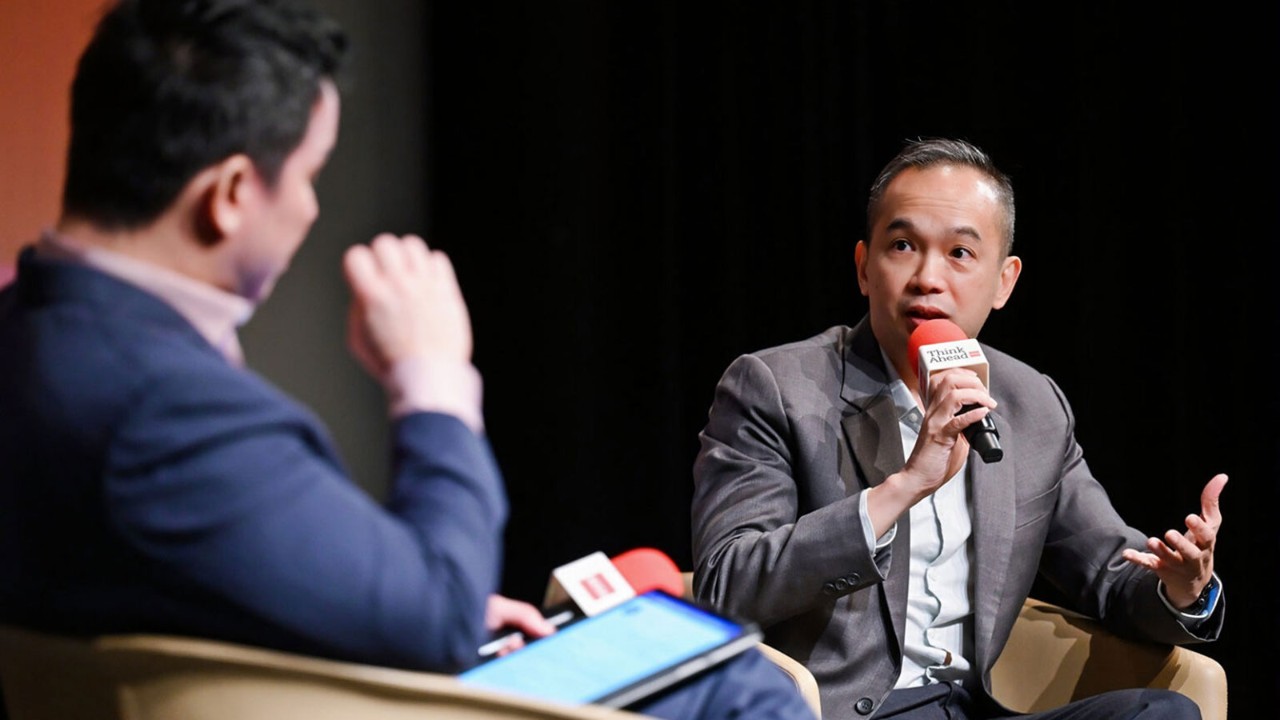
One of the highlights was a fireside chat between Tan Kok Yam, chief executive at SkillsFuture Singapore, and Daniel Leung FCCA, country manager at ACCA Singapore. Their conversation explored navigating non-linear careers in an age of AI, and the human behaviours that can make or break a culture of lifelong learning.
Workplace transformation
Technology and AI was a key theme of the conversation, following an announcement in January that the Singapore government will invest S$1bn (US$780m) to position the city-state as a regional AI hub. With statistics indicating the demand for AI-related skills in Singapore has more than doubled over the past three years, Leung asked Tan whether he thought this trend would continue.
Tan said that some workplace tasks were already supported by AI tools, and cited SSG’s research showing that around 24% of tasks requested in job postings in Singapore could now be significantly aided by AI. However, he distinguished between tasks that individuals can quickly enhance with off-the-shelf AI tools, and AI use cases that required deeper organisational transformations.
‘The CEO is not the expert but helps the experts do their jobs better’
‘Part of it will grow and part of it will take longer to grow,’ said Tan. Tasks such as desktop research and speechwriting can already be ‘significantly aided by AI’, while large-scale uses such as integrating AI into company workflows will take longer before automation can deliver its full value.
Tan gave the example of using AI for customer management. ‘It depends on whether the company is digitally capable of making use of what they already know about the customer to allow that kind of automation,’ he explained.
Leung also asked him whether older workers face greater challenges in adapting to the new technologies. Tan suggested that such assumptions would be ‘slightly overstated’, adding that any barriers are more likely related to language and user interface design than age.
‘When people need to move, they can move,’ Tan said, recalling how swiftly food vendors at Singapore’s ‘hawker centres’ adopted e-payments during the Covid pandemic.
Leadership
The conversation also touched on leadership development in a rapidly changing workplace. Asked whether leadership can be taught, Tan said he believes it is largely developed through experience and opportunity. He added: ‘The most helpful thing for a leader to know is that you are not there because you are the expert. You are there because you help the experts do their jobs better.’
In an age when younger employees may possess more up-to-date technical knowledge – particularly in areas such as AI – leaders should be open to learning from across the organisation, he said. ‘You really need a mentality to say, “Just because I’m the CEO doesn’t mean I have all the answers.” Leadership today requires engaging people at all levels and bringing out the best ideas.’
Future skills
Asked which capabilities will matter most for professionals, Tan outlined three broad areas.
First, strong domain expertise remains critical. While information is widely accessible online, deep knowledge within a specific discipline remains difficult to replicate.
Second, professionals need technological awareness – the ability to understand and apply emerging tools, including AI, within their work.
Finally, interpersonal capabilities will become increasingly important. ‘The ability to interact across different domains, to engage engineers, developers or other specialists – that’s becoming a key skill. No individual can know everything, so collaboration across disciplines is essential.’
‘Talent mobility should be seen as a strength rather than a threat’
Training
The conversation concluded with a consideration of the cultural ingredients of successful lifelong learning organisations.
Training is closely tied to a company’s broader identity and strategy, Tan said, with each company having ‘a certain internal narrative that links training to its business success’. He explained that when learning is embedded into how the organisation sees itself succeeding – through continuous improvement philosophies such as kaizen, for example – employees are more motivated to develop new skills.
He advised organisations to view talent mobility as a strength rather than a threat. Instead of worrying that trained employees will leave, businesses should recognise the reputational value of developing people. ‘If I lose people and they get higher salaries after five years with me, it’s not a bad thing, it’s a good thing.’ He added that such cultures attract ambitious employees eager to grow.
‘Investing in people first allows innovation to emerge’
In the age of AI and digital technologies, companies must sometimes invest in training before knowing exactly how new skills will be used. ‘Should the finance guy learn Python? Should the HR guy learn AI? You don’t know what they’ll come up with, but why not let them try and surprise you?’ He pointed out that organisations that adopt the mindset of investing in people first and allowing innovation to emerge are often the ones that implement training most successfully.
In a rapidly changing economy, organisations that prioritise continuous learning are better positioned to adapt for the future. Leung closed the session with a quote from the legendary American blues singer BB King: ‘The beautiful thing about learning is that nobody can take it away from you.’


