
In his 2026/27 Budget presentation, Paul Chan, financial secretary of Hong Kong SAR of China, announced the continuation of the government’s reinforced fiscal consolidation programme focused on long-term growth.
That growth will be delivered through AI, technology and investment in the Northern Metropolis, an innovation and technology zone spanning a third of Hong Kong SAR’s land area. To pay for the Northern Metropolis infrastructure projects, Chan proposes transferring HK$150bn (US$19bn) from the Exchange Fund, which would involve tapping foreign reserves for the first time since 1984.
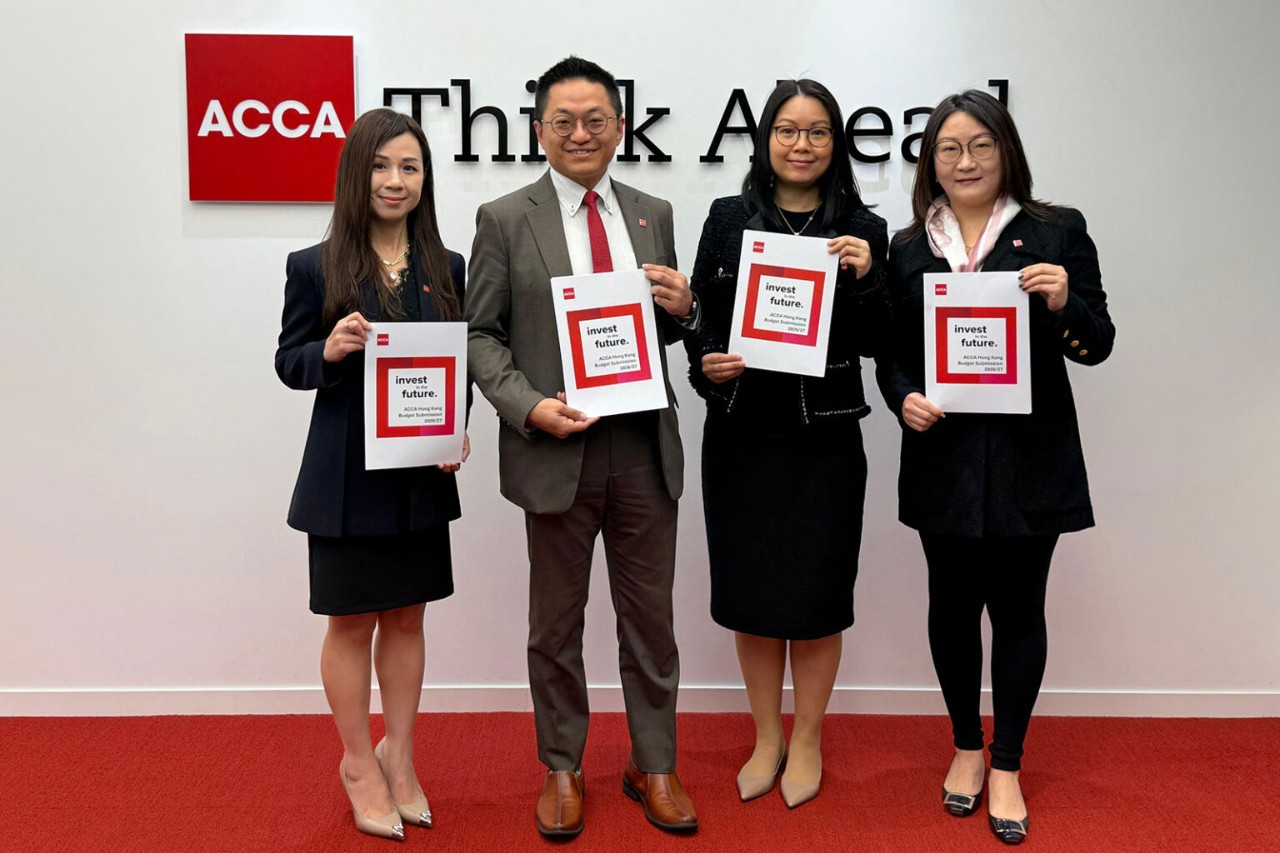
In this article, ACCA Hong Kong chairman Wilson Cheng and tax subcommittee co-chairmen Gloria Chan, Rebecca Wong and Polly Wan give their views on these measures, and look at which recommendations from ACCA’s Budget submission were included.
The centrepiece of the Budget was the focus on the Northern Metropolis. How did the Budget outcomes align with ACCA submissions?
Wilson Cheng: The Budget reflects a deliberate attempt to balance strategic investment with fiscal discipline, especially in light of the government’s focus on long-term competitiveness and the need to maintain market confidence. The consolidated surplus, which is broadly in line with ACCA’s earlier forecast, suggests that the government is managing its fiscal position prudently.
The strong emphasis on accelerating the Northern Metropolis closely mirrors ACCA’s long-standing advocacy for a more strategic, investment driven approach to drive the cross-boundary economic engine. The deployment of Exchange Fund resources demonstrates a shift from conceptual planning to tangible execution and is also broadly consistent with our recommendations to prioritise long-term competitiveness and fiscal sustainability.
As the Northern Metropolis moves from blueprint to construction, would it have been prudent to consider introducing favourable tax-loss measures for enterprises there?
WC: The case for cashflow-positive tax treatments would need to be considered, as capital-intensive, early-stage and innovation-driven enterprises could operate at a loss in their formative years. Our proposed measures (group relief, carry back and cash out of losses) were designed precisely to address this liquidity challenge and to signal that Hong Kong SAR is prepared to incubate enterprises in a similar way to other regional innovation hubs.
The Budget outlines efforts to align with the Chinese mainland’s 15th five-year plan. How could this lead into strengthening Hong Kong SAR’s ‘going global’ activities?
Gloria Chan: The Budget provides a well-defined policy mandate for Hong Kong SAR’s ‘going global’ efforts by directly linking its development priorities to the Chinese mainland’s 15th five-year plan. The policy mandate reaffirms Hong Kong SAR’s strategic roles as an international financial, shipping and trade centre, an innovation and technology hub, and a high-end talent gateway.
It also positions Hong Kong SAR as both a ‘super connector’ and ‘super value adder’ for enterprises looking to ‘bring in’ and ‘go out’. This direction aligns closely with ACCA Hong Kong’s recommendations, particularly the need to enhance Hong Kong SAR’s tax framework to better support mainland Chinese enterprises expanding overseas.
What are some of the potential benefits of going global for the professional services sector, especially the accounting sector?
GC: The policy direction is positive, but execution will determine impact. Hong Kong SAR must translate these ambitions into practical tax rules, deeper professional collaboration and clear, competitive incentives. For the accounting profession, this translates into stronger demand for cross-border tax advisory for outbound investments; assurance, governance and transaction support for international expansion; and valuation, commercialisation and financing advisory for intangible assets to support Hong Kong SAR’s ambition to build a regional intellectual property (IP) trading centre.
Fast-tracking innovation and technology (I&T) development is a core feature of the Budget. How did the various measures align with ACCA’s Budget submission?
Rebecca Wong: We welcome that a number of initiatives to enhance Hong Kong SAR’s I&T position proposed in our submission have been considered in the Budget. The financial secretary specifically made it clear that tax deduction for capital expenditure incurred for purchasing IP or the rights to use IP would be allowed. Also welcomed is the announcement that the R&D super-deduction related to cross-boundary R&D activities in the Greater Bay Area will be revisited.
AI features prominently in the Budget, including the establishment of a committee on AI+ and industry development strategy. How will this work?
RW: The establishment of the committee on AI+ and industry development strategy is essential to efficiently collect ideas from industry players. Together with other measures in the Budget, including the HK$10bn Innovation and Technology Industry-Oriented Fund, it is important that technology transformation, upskilling and talent development will be boosted.
With the government’s push for ‘industry AI’ and the adoption of AI tools in accounting practices, accounting professionals have a role to play in building a robust and AI-literate financial services ecosystem.
Hong Kong SAR’s economy has showed a strong recovery. How would you describe the Budget measures directed towards livelihood issues?
Polly Wan: In general, the quantum of relief measures is quite generous. The Budget proposals are people-oriented and foster social cohesion. The Budget includes various supportive measures, including rates concessions, tax relief and allowances for eligible social security recipients. For middle-class working families that used to pay more tax but received less assistance from the government, tax relief measures could help to ease financial pressure.
Beside tax relief measures, the Budget proposed various financial and non-financial initiatives designed to benefit different sectors of society. How will they work?
PW: The proposal to provide more internship and exchange opportunities for young people as well as internship placement in government departments and public bodies for post-secondary students can help to broaden the vision of young people and help them to gain experience to pursue career aspirations.
The Budget also specifies that the government will continue to promote the integrated development of culture, sports and tourism to provide a better urban living experience for residents and visitors. This echoes the ACCA Budget recommendation to introduce a comprehensive and unifying theme to boost tourism.


