In Boca Chica, Texas, a company town is rising around a rocket launch site. Incorporated in May 2025, Starbase is a city that doubles as a headquarters for Elon Musk’s SpaceX enterprise and symbolises how far the space economy has shifted from state missions to private ambition.
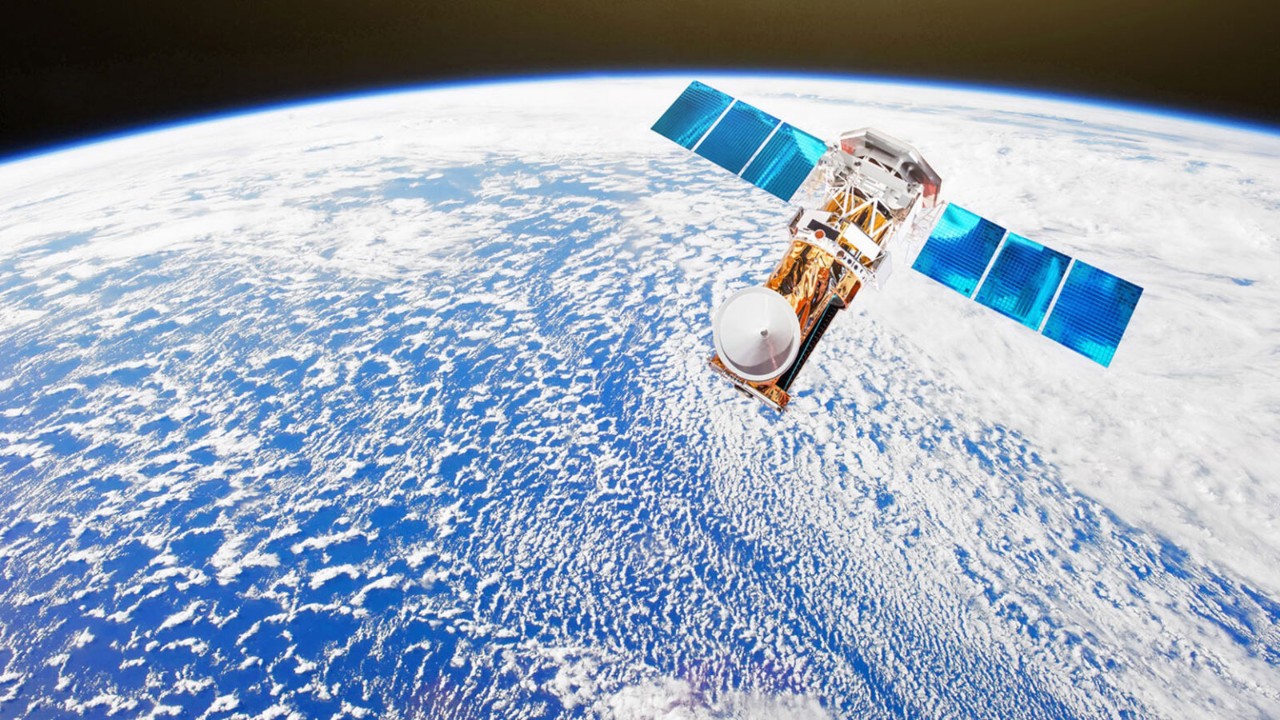
Private launch providers, satellite operators and data businesses are transforming an economy that was once the sole preserve of national space agencies. Commercial aims, such as better communications, navigation and Earth observation, have become increasingly central to the space industry.
Governments are increasingly acting as customers and co-investors
Lower costs and improved access to these space-enabled technologies could take the global sector to US$1.8 trillion by 2035, up from US$630bn in 2023, according to a 2024 report by the World Economic Forum and McKinsey.
‘The risks around launch are becoming better understood, which is helping to bring down the cost, allowing for more missions to be launched,’ says Louis Head at law firm DLA Piper. ‘The payloads that can now be put in orbit and the value they can generate have changed substantially.’
Global competition
International competition in the global space industry is intensifying. Over the past five years, investment and spending in the two leading space markets, the US and China, have outpaced European efforts.
To catch up, European nations agreed in November to increase spending on space over the next three years by about 30% to €22.1bn. By comparison, the Middle East and Africa space market in now valued at $18bn.
Governments remain central players but are increasingly acting as customers, co-investors and regulators rather than sole operators. A wider mix of public and private organisations is now reshaping the governance and incentive structure of the sector.
New Space era
According to a report by American thinktank Brookings, the ‘New Space’ era, defined by falling entry costs and reduced launch costs, has opened the door to previously unviable activities such as microgravity manufacturing, orbital tourism and space-based solar power. This has enabled new entrants and commercial ventures to take on roles previously reserved for state-led missions. But it also means that frameworks need to be updated to manage shared risks and align investment.
For instance, the internationally agreed 1967 Outer Space Treaty prohibits national ownership of space but provides no enforceable property rights framework. As satellite activity in low Earth orbit accelerates, this legal ambiguity complicates liability and congestion management.
In space, there is no enforceable property rights framework
Orbital congestion
With thousands of satellites now operating in low Earth orbits – and thousands more planned – certain orbital bands are becoming increasingly crowded.
The financial implications are growing. Brookings puts expected losses from collisions across the commercial sector in low Earth orbit at roughly US$28m–US$33m a year. At the same time, active debris removal remains expensive, potentially exceeding US$1m per kilogram.
In the UK, the sector is awaiting the outcome of a 2023 consultation by the UK Space Agency on introducing variable liability limits for orbital operations, proposing a more flexible framework for determining how much satellite operators should be liable for in the event of incidents in space. The move aligns with wider efforts to embed space sustainability into governance frameworks, encouraging operators to adopt debris mitigation and other responsible practices in return for regulatory incentives.
‘Space sustainability is becoming a more significant factor being considered by regulators when deciding whether to provide a licence to launch and/or operate,’ Head says. ‘The orbital environment is becoming congested, which could affect the risk profile relating to future missions. As a result, operators could, for example, become more exposed to liabilities and could find it more difficult to obtain insurance policies. This could affect the commercial palatability and, in the worst case scenario, viability of future missions.’
Tax-exempt financing
Financing remains a barrier as space projects are typically characterised by heavy upfront expenditure and long payback periods. But efforts are underway in the US to make it easier for private businesses to scale more effectively.
The One Big Beautiful Bill Act reclassified spaceports as similar to airports, allowing them to qualify for tax-exempt bond financing. This new category of bond financing should lower financing costs, encourage private investment by leveraging public-private partnerships for spaceport construction, expansion and related improvements, while imposing no statutory limit on bond amounts.
Cheaper capital comes with heightened disclosure obligations
‘For spaceports and the manufacturing in and around that, they are really capital-intensive projects,’ says Kevin Roche at law firm Orrick in New York. ‘Adding tax-exempt bonds to that toolkit of possible financing sources – traditional financing, federal state support, public-private partnerships – just helps the entire market.’
For finance leaders, however, access to cheaper capital comes with heightened governance and disclosure obligations. ‘For a public, or even a private company, that may be a new experience in providing disclosure about a project, the sources of repayment and ongoing disclosure responsibilities,’ Roche says.
Uncertain horizons
Brookings says that even with cheaper launches and broader infrastructure, progress can be uneven. Emerging areas such as in-orbit servicing, space tourism and lunar applications face long development timelines and uncertain revenue models.
Space projects are known for their complexity, long development cycles and delayed revenue generation. These factors create unique financial and operational challenges that require specialist support to navigate successfully, says Alex Bird, director at Deloitte UK’s space practice.
The long horizons add to the cashflow and risk difficulties
‘It starts with bidding and contracting, where it can be incredibly hard to estimate costs for new technology. Strong reviews and careful checking of contract details – such as deadlines and penalties – are vital to avoid big financial risks down the line,’ he says.
Once a space project is underway, strict cost management and scope control are essential. To prevent arguments and budget blowouts, particularly with complex government funding, clear rules are needed on what costs are allowable, and project changes must be actively managed.
The long horizons for these projects and technical uncertainty also add to the difficulty of forecasting, cashflow and assessing supply chain risks. ‘This requires ongoing financial oversight, meaning regular, organised checks of contracts and clear, timely information to help us predict future finances and spot problems early,’ Bird says. ‘Predicting the future amid technical uncertainty requires smart ways to reduce risk, while managing cash carefully and guarding against supply chain disruptions are critical to sustaining these ambitious ventures until revenue eventually materialises.’


