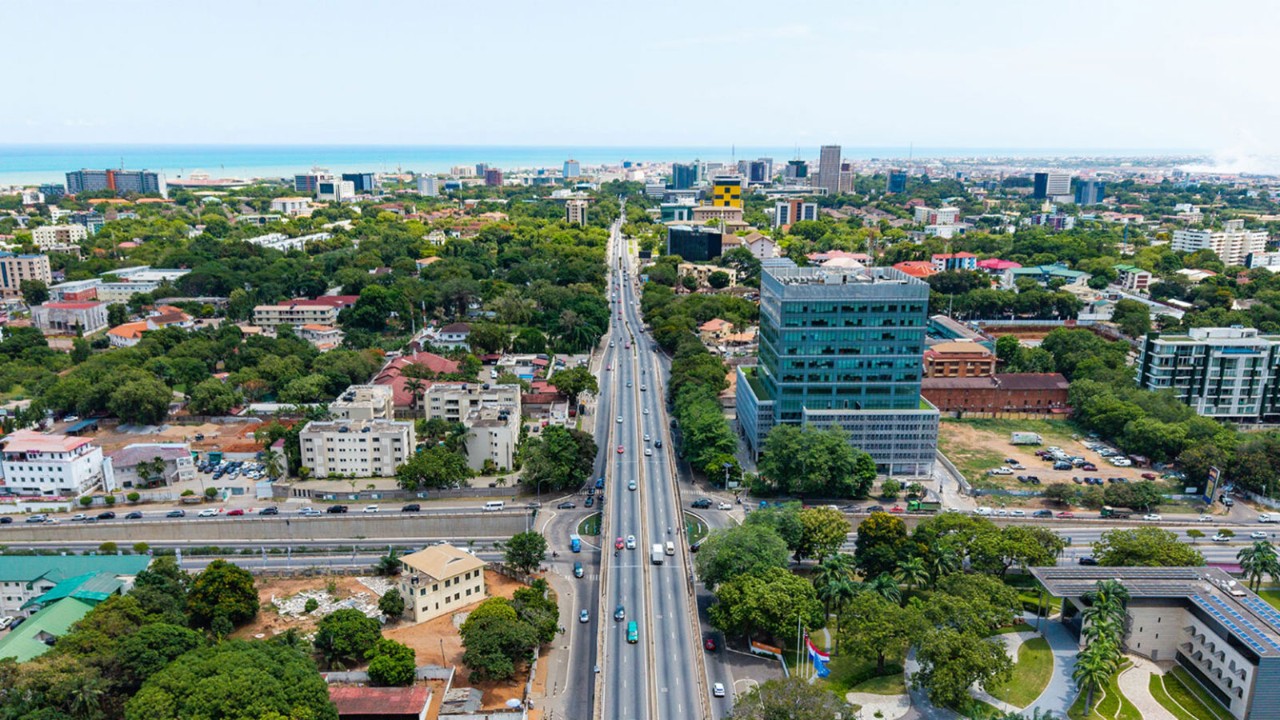
The passing of the Ghana Investment Promotion Authority Bill 2026, replacing the Ghana Investment Promotion Centre (GIPC) Act 2013 (Act 865), is set to comprehensively reshape the country’s investment law for foreign investors and, crucially, dismantle longstanding minimum foreign capital requirements for overseas investments (see boxout).
The minimum capital requirements for foreign businesses in Ghana has long been a vexatious issue, particularly for the numerous Nigerian SMEs operating in the country, which have gone as far as to lobby the Nigerian government to enact retaliatory laws.
‘Requirements were a barrier for small and mid-sized foreign investors’
A firm implementation date has yet to be set as the legislation awaits presidential consent. However, given the significance of SMEs for Ghana’s economy and the wider region, hopes are high that the new law will go some way to reducing the country’s SME funding gap which has been estimated at US$4.8bn.
New ecosystem
Speaking at the Africa Prosperity Dialogues 2026, held in Accra in February, Abdul-Razak Baba, deputy CEO of the Ghana Investment Promotion Centre (which will be renamed the Ghana Investment Promotion Authority), also announced the development of a digital investment marketplace, the InvestGhana portal, designed to match global investors with local SMEs.
The idea is to build an ecosystem where smaller investors – including diaspora funds and early-stage financiers – can participate in economic growth, notably leveraging opportunities under the African Continental Free Trade Area (AfCFTA).
Thresholds removed
For decades, Ghana’s investment regime imposed minimum capital thresholds – often as high as US$1m for foreign investors – effectively screening out smaller players. ‘Historically, these requirements acted as a barrier to entry for small and mid-sized foreign investors,’ says Dr Evans Duah, a chartered accountant and financial economist based in Kumasi. ‘Their removal is expected to democratise access to Ghana’s investment space and increase deal flow into SMEs.’
‘The critical constraint is the absence of credible financial information’
The reforms align with a broader continental push under the AfCFTA to deepen intra-African trade and unlock private capital. By lowering entry barriers, Ghana is betting on volume – more investors, more partnerships and more SME transactions – leading to a reasonable share of AfCFTA trade flows.
Legislation highlights
The new law abolishes the US$200,000 minimum for joint ventures with Ghanaian participation and the US$500,000 minimum for wholly foreign-owned enterprises. The requirement for foreign enterprises operating in Ghana to employ Ghanaians has changed from a fixed minimum of 20 workers to 75%. For the first time, it imposes detailed obligations on investors in relation to sustainable development, environmental protection and human rights compliance. A new registrations cycle and updated incentives framework, aimed at attracting smaller businesses and capital to Ghana, will be overseen by a reconstituted registration body, the Ghana Investment Promotion Authority.
Duah notes, however, that there is a risk of ‘volume without readiness’ – a surge in investor interest that fails to translate into actual deals because SMEs lack the financial credibility to attract capital.
Record-keeping failure
Accountants have a key role to play in solving this problem, says Duah: ‘The most critical constraint facing Ghanaian SMEs is not necessarily the absence of capital, but the absence of credible, decision-useful financial information,’ he explains.
Investors, particularly those entering unfamiliar markets, rely heavily on due diligence – a process that hinges on robust accounting systems. Without proper records, SMEs remain effectively invisible.
Gordon Dardey FCCA, partner at KPMG Ghana, sees this challenge daily: ‘Sometimes SMEs have done the right things, but record-keeping is a problem,’ he says. ‘They talk quite a lot, but they don’t have any proper records.’
‘Accountants are credibility architects in the investment ecosystem’
For investors assessing risk, the implications are stark. Poor documentation can derail deals, delay funding or expose capital to regulatory threats, says Dardey. ‘If a company has not paid taxes and the government steps in, the investor’s money is at risk,’ he adds. ‘That’s why due diligence – financial, legal and regulatory – is critical.’
Continental blueprint
The InvestGhana portal should go some way to improving the situation by connecting investors directly with SMEs, while integrating accountants, tax specialists and transaction advisers into a financial ecosystem.
‘Accountants are not just record-keepers; they are credibility architects in the investment ecosystem,’ says Duah, adding that deals do not close on enthusiasm; they close on credible numbers.
Meanwhile, Ghana’s reforms are being closely watched across Africa as a possible blueprint for other African economies seeking to attract SME-focused investment: ‘If Ghana gets this right,’ Duah says, ‘it will not just attract more investors; it will convert investor interest into sustainable, scalable enterprise growth.’
But as Isaac Kofi Marfo ACCA, senior auditor with the Ghana Audit Service, stresses, smaller businesses must embrace accounting first. ‘Without financial statements, businesses cannot approach banks or investors,’ he says. ‘Their accounts are what allow others to assess them.’
Recommended reading


