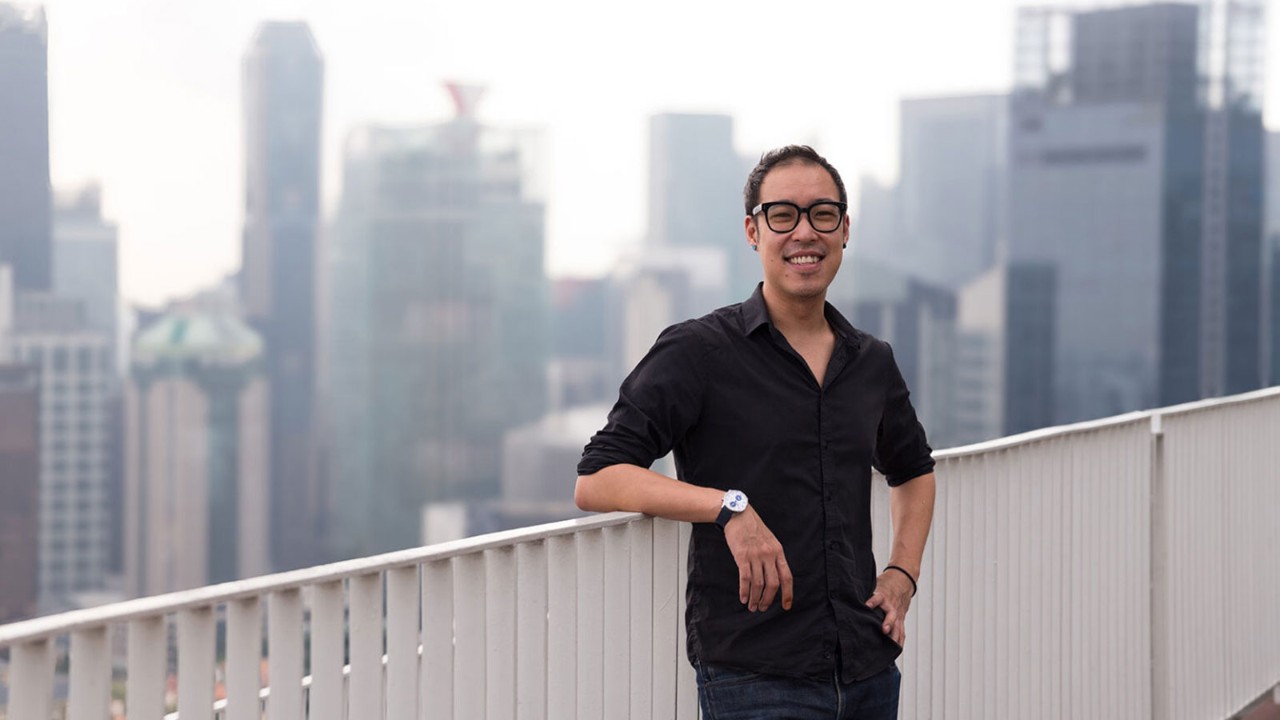
Global food safety company Mérieux NutriSciences has been on an expansion spree in the past few years, acquiring a series of companies that have doubled the size of its Asia Pacific operations and given it a network of 140 accredited laboratories across more than 30 countries. This expanded footprint follows the strategic global acquisition of the Bureau Veritas food testing business.
For its French-born, Singapore-based Asia Pacific CFO Georges Kuoch ACCA – whose domain stretches from China and Japan to Malaysia, India and Australia – it has required an extraordinary integration effort. ‘It’s a newly created region, with a new management team,’ he says. ‘We’ve had to build everything – teams, processes and governance – from scratch.’
Finance integration enables a fragmented organisation to grow
Central vs local
Integration at this scale is not a great deal more than a technical exercise. Each market brings its own systems, regulations and ways of working, demanding a careful balance between consistency and flexibility.
For Kuoch, the challenge lies in establishing common financial structures, such as reporting standards and ERP systems, while still allowing local teams to operate effectively. He describes it as finding the right level of centralisation – enough to ensure control and visibility, but not so much that it stifles decision-making. He also acts as ‘a firefighter’, stepping in and getting his hands dirty when needed.
It’s a tough job, though he enjoys the complexity. ‘I wanted to do something meaningful in my life and along came complex integrations,’ he says. ‘It’s interesting, you learn a lot.’
Integration, he believes, is where finance can have the greatest impact, bringing structure to a fragmented organisation and enabling it to grow.
Worlds of difference
Integration has been a lifelong skill for Kuoch. Born and raised in Paris to Chinese immigrant parents, his early life was shaped by contrasting worlds. ‘At home it was Chinese, at school it was French,’ he recalls. ‘And the cultural difference was a bit of a struggle at first.’
His parents had arrived in France with little, and worked long hours in factories and later in restaurants. ‘I never really understood it when I was young, but now, with age, I see how much they sacrificed,’ Kuoch says.
Another key influence was his grandmother, who helped raise him and had trained as an accountant. Watching her manage the family’s finances sparked an early interest in the profession. ‘She used to do everything without a calculator,’ he remembers. ‘That’s probably where it started for me.’
A demanding start
After studying economics and finance at Paris Dauphine University, he interned at KPMG and was then taken on as a junior auditor. ‘I didn’t realise how hard audit would be,’ he admits. ‘I was finishing at 11pm or midnight. It was a shock.’ Like many who enter the profession through audit, though, it taught him discipline, attention to detail and how businesses operate under pressure.
‘I travelled around 44 countries in four years as an internal auditor’
Subsequently recruited into internal audit at Bureau Veritas, he was soon travelling extensively. ‘I travelled around 44 countries in four years as an internal auditor,’ he recalls.
The theme of exposure to different cultures continued with a move to Hong Kong SAR of China and later Shanghai, where he became a financial controller – a shift from audit to operational finance that marked a significant turning point for him. ‘I moved from reviewing businesses to actually running finance within them,’ he says.
His language skills, particularly his ability to speak Shanghainese, proved valuable in navigating local markets and building relationships.
Culture clash
Mobility hasn’t always been plain sailing, though. A move to London to integrate two businesses proved particularly challenging. ‘The two CEOs didn’t get along,’ he recalls. ‘And integrating the systems, processes and cultures was extremely difficult.’
The experience tested both his technical and interpersonal skills, and required him to adapt to a very different working culture. ‘I’d been in Asia for several years by that time, so coming to the UK was for sure a cultural shock,’ he says.
Adaptation came through connection. ‘Once you understand the local culture and build relationships, things get easier – for example, going with British colleagues to a pub and needing a bacon sandwich the next morning.’
Late return to study
Despite an already successful career, he chose to pursue the ACCA qualification during the Covid-19 pandemic, driven partly by a desire for a challenge. ‘I didn’t need it,’ he says. ‘I wanted to do it.’
Studying while working full-time was tough, but he approached it with the same discipline that had defined his earlier education, ultimately achieving top affiliate status in Singapore.
‘I want to combine technology with people, not replace them’
The qualification has strengthened his professional standing and broadened his perspective. ‘It gives you credibility,’ he says. ‘And it connects you to a global community.’
Looking ahead
For Kuoch, the future of finance lies in embracing change, particularly the rise of AI. His ambition is to combine technology with people, rather than replace one with the other, a philosophy that reflects his broader approach to leadership.
‘AI is a tool to help us go faster and focus on value-added work,’ he says. ‘But you still need human judgment.’
Outside work, he unwinds through boxing, chess and gaming, alongside a close circle of friends he describes as ‘pillars’ in his life.
Looking back, his journey – from a childhood shaped by migration to a global finance career – has been defined by resilience and curiosity.
‘I never realised how lucky I was to see so much of the world,’ he says. It’s a perspective that continues to drive him forward.
CV
2025
Asia Pacific regional CFO, Mérieux NutriSciences, Singapore
2011
Started as internal audit manager, ended as regional financial controller, Bureau Veritas
2008
Financial auditor, KPMG France


