State-owned enterprises (SOEs) are key institutions in many African states but their importance also places them under a microscope. In the latest example of close scrutiny, the International Monetary Fund (IMF) has issued a call for improvements to Ghana’s SOEs.
‘Strengthening SOE governance and oversight is essential to contain fiscal risks, as SOEs remain loss-making in aggregate, with increasing liabilities putting pressure on the central government,’ the IMF warned in an economic healthcheck published in September.
The fund’s comments come after Ghana emerged from a three-year US$3bn IMF bailout in June, which was replaced with a three-year non-financial Policy Coordination Instrument targeting longer-term fiscal stability.
‘Profitability in one year does not automatically mean the underlying risks have disappeared’
While praising the country for ‘impressive progress toward macroeconomic stabilisation and debt sustainability’, the IMF also called for improved financial transparency and reduced contingent liabilities – and that includes a strategic review of the SOE portfolio. It wants Ghana’s government to decide which SOEs should be restructured, commercialised or divested.
Accountants can help
Dr Valentin Kwasi Mensah FCCA, an Accra-based accountant and auditor who is CEO of CBS Consulting and Training, says accountants should help the government and SOE boards understand the source of losses and how much debt each company can realistically carry; and whether taxpayers are receiving value for the resources committed to these businesses.
‘That requires timely audited accounts, proper cashflow forecasting, stronger internal controls and honest reporting of liabilities and contingent risks,’ he says.
‘An audit has little value if the same problems appear again the following year’
He stresses that decisions about an SOE should be driven by reliable financial information rather than politics or sentiment. ‘The latest figures actually show why we need to look beneath the headline numbers,’ he says. ‘Ghana’s SOEs returned to overall profitability in 2025, which is encouraging, but they were still carrying GHS282bn [US$24.3bn] in liabilities, while some major entities continued to record persistent losses.
‘So, profitability in one year does not automatically mean the underlying risks have disappeared.’
Accountants can help distinguish businesses that have genuine operational problems from those carrying unsustainable debt or performing important public-service functions that may never operate like commercial companies: ‘The real objective should not simply be to sell state assets, but to know what Ghana owns, what those assets cost the taxpayer, what value they produce and what must change to make them financially sustainable,’ says Dr Mensah.
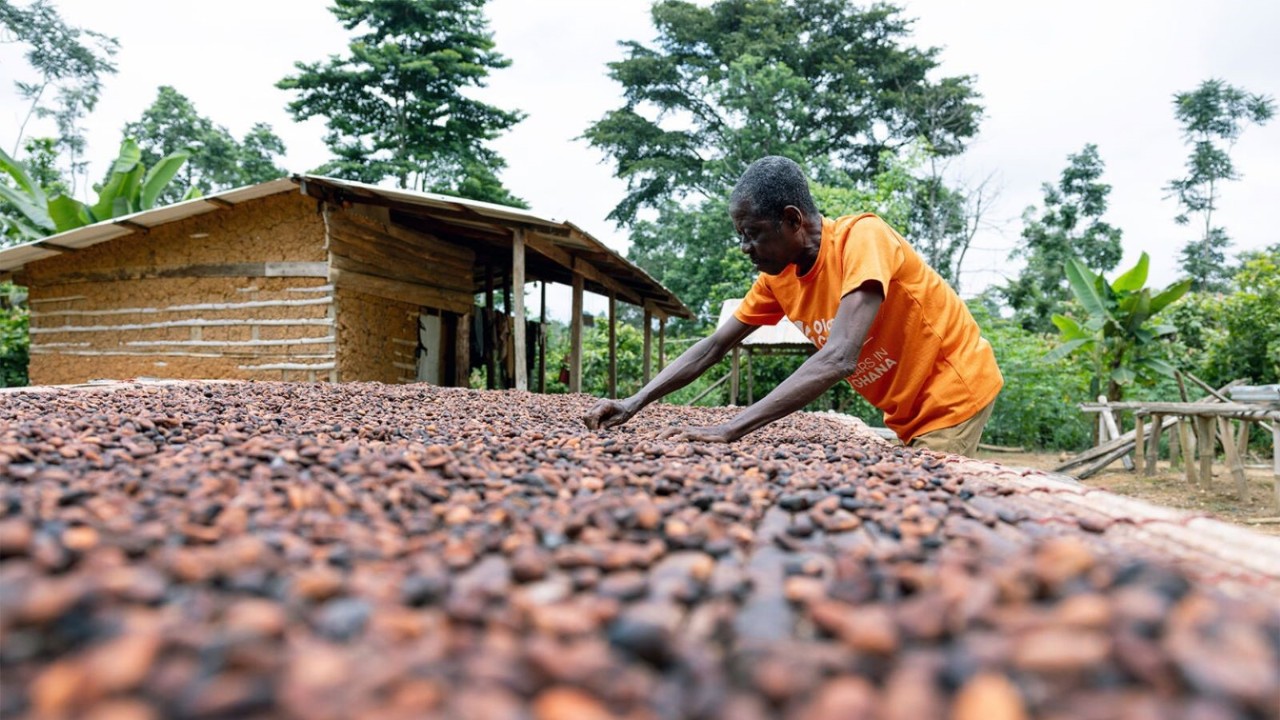
Given the scale and complexity of the SOEs concerned, such assessments will be comprehensive and complex. For example, resulting changes may involve the Ghana Cocoa Board (Cocobod), which coordinates one of the country’s key exports, worth over US$3bn.
Insider intelligence
Evans Mensah Awuley, an accountant at the Ghana Audit Service, an independent government auditing body, says: ‘Cocobod is too important to Ghana’s economy for financial control to be treated simply as a year-end accounting exercise.
‘Accountants should be involved when budgets are prepared, contracts are assessed and major financial commitments are being made,’ he says. ‘We need to know whether expenditure is within approved budgets, whether procurement represents value for money and whether the organisation has the cashflow to meet its obligations before commitments are made.
‘Where auditors identify weaknesses, there must also be a clear system for management and the board to implement those recommendations. An audit has little value if the same problems appear again the following year,’ he adds.
Awuley says there was a strong case for giving internal auditors greater independence within the SOE, ensuring that Cocobod publishes timely, understandable financial information. Accountants shouldn’t be running Cocobod, but finance professionals can provide reliable information to the board and management.
‘Accountants should be able to flag rising debt, procurement risks, unusual expenditure and weaknesses in internal controls before they become a burden on taxpayers,’ he notes.
Energy focus
Other major SOEs the IMF highlights for assessment include hydropower player the Volta River Authority (VRA); the Electricity Company of Ghana (ECG); the Ghana National Petroleum Corporation (GNPC); and the Ghana National Gas Limited Company (GNGLC).
In a recent consultation paper, IMF staff warned that priority should be given to tackling distribution and collection losses in the energy sector, including by finalising private sector participation in distribution, enhancing payment discipline, clearing legacy arrears and reducing generation costs.
‘If losses or arrears are building up, boards should see the warning signs early’
At ECG, the key questions are how much power is purchased, how much is billed, how much revenue is collected and where the gaps occur. ‘Those figures should be reconciled regularly and independently audited,’ says Dr Mensah. At VRA, accountants and auditors should scrutinise generation costs, fuel purchases, major contracts and capital projects, assessing value for money: ‘If losses or arrears are building up, boards should see the warning signs early rather than wait until government has to step in with taxpayers’ money,’ he says.
At GNPC and GNGLC, meanwhile, the challenges vary because both institutions manage commercially valuable national resources and large transactions. Accountants should ensure that hydrocarbon revenues, receivables, loans, guarantees and investments are properly recorded and disclosed, and that commercial decisions are separated clearly from government policy obligations, says Dr Mensah.
The IMF’s September economic health check noted that ‘SOE board appointments must be merit-based and audited financial statements should be submitted in a timely manner,’ warning of occasional ‘weak tax compliance’. Here, the IMF identified the need to reform administration at the Ghana Revenue Authority (GRA): ‘Despite the introduction of digital tools, compliance gaps remain large, reflecting GRA structural weaknesses, limited use of risk-based approaches, and operational inefficiencies.’
Civil society
Civil society analysts have also called for greater scrutiny of Ghana’s state enterprises. Bright Simons, honorary vice-president of Ghana-based thinktank IMANI Africa, has challenged Ghana’s State Interests and Governance Authority’s (SIGA) interpretation of the GHS19.8bn (US$1.68bn) aggregate profit reported by SOEs for 2025, arguing that foreign-exchange movements and other factors significantly influenced the improvement.
‘It shows,’ he says, ‘how the organisation is performing from its day-to-day operations, rather than from external or one-off factors’. He argues that government, boards and the public should distinguish between improvements generated by management and gains made from wider economic conditions.
For state enterprises, the GRA could improve oversight by treating SOEs as a clearly identifiable risk segment and systematically matching tax returns against audited accounts and SIGA/finance ministry data, he says.
SOEs remain critical institutions across Africa. Ghana’s SOEs have made great strides, according to the IMF. Improved financial information and transparency remain a critical part of the recipe for future success.

